Winter whittling project starts often stall when beginners overinvest in specialized tools they don't truly understand yet. You'll learn how to keep costs low by choosing versatile equipment that turns simple wood into meaningful, hand-carved keepsakes.
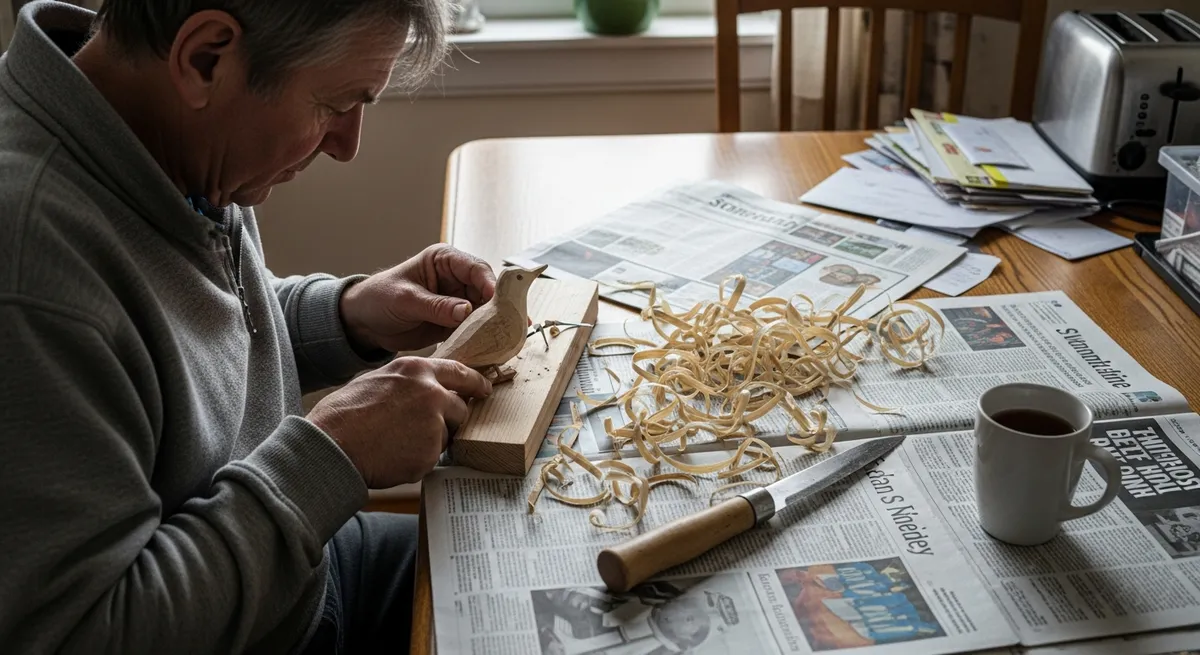
The pine was too pale for what I had in mind - but I took the knife anyway, borrowed it from his workbench on a Sunday when he wasn't home. I laid the edge across the grain the way I'd seen painters do with a palette knife, long and sure, and the blade skated left like it had someplace else to be, opening a trench where the bird's shoulder was supposed to rise. A thin curl of blond wood fell on the newspaper I'd laid down. I held the chunk up to the window and looked at it the way a doctor looks at an x-ray when the news is already plain. The shoulder was gone and nothing I did to the rest of it would matter.
He didn't say anything about the trench. He pulled open the cabinet and unhooked a blade from the strip inside - narrow as a thumbnail, and drew it twice across the leather hanging there, slow, the way someone turns a page they already know. The edge came up with a white line down it, thin as a crease in paper. He set it in my palm without looking at me.
The Blank on the Kitchen Table
The blade took maybe a quarter inch before I understood I wasn't leading it anywhere. I pressed my thumb behind the spine the way he'd shown me without showing me - and the wood opened like it had been waiting - one long transparent ribbon that curled at the end and came to rest on the newspaper over a photograph of a man accepting an award. Underneath, where the curl had been, the wing was already there, beveled and light, the hollow of it catching the window and going almost gold. I set the blade down on the workbench and looked at what I hadn't made.
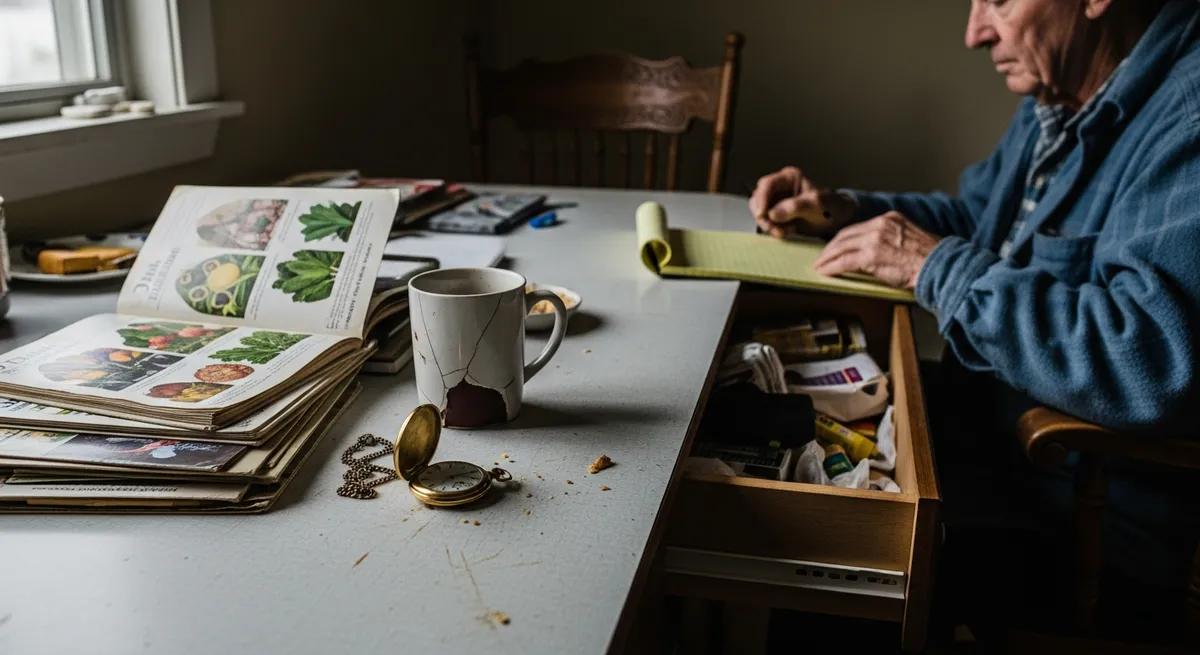
The folding knife was already in my hand before I saw what it was - and by then the light outside had gone and I hadn't turned on the lamp. I leaned into the cut the way I'd learned not to, and the blade jumped the grain and found my finger so fast there was a half-second of nothing before the red came up in a thin bright line, and then another half-second before a drop fell and spread on the photograph and covered the man's face entirely. My father drove with both hands at ten and two and the radio off, the way he drove when there was nothing to say. The urgent-care carpet was the color of dried mustard and a woman across the room was knitting something very long, and I sat there holding a paper towel against my finger while a drop of my blood dried brown on the knee of my jeans. The nurse who threaded the stitches said - without looking up, that it was always the dull ones.
The bird had a thin film of dust on its back the way things get when they've been still long enough to become furniture. I picked it up with the same hand, the one with the small white seam along the first knuckle that had gone silver and faintly raised, and my thumb found the tail feather that dips a little to the right before I even looked for it. Outside, the neighbor's dog was barking at something it would never reach. I turned the bird once - the way he used to turn the blank, and set it back in the same oval of clean wood it had left in the dust. The lamp was on and the window was dark and somewhere in the house the heat clicked off, and the room went very quiet, and I left it there.
The Cut That Cost Something
The box of unfinished blanks was still under the workbench in a shoebox with a rubber band around it, and when I pulled it out the rubber band crumbled in my fingers and fell in two pieces on the floor. There was a walnut piece in there I'd bought the winter after the stitches - ambitious, nearly the size of my palm, meant to be an owl with spread wings, and I'd never touched it. I turned it over and the grain ran the wrong way for what I'd planned, a long diagonal sweep that would have meant fighting every feather - and I could feel in my thumb where that fight would have gone. I set it on the workbench next to a pine scrap no bigger than a matchbook, something my father had started rounding at one end before he stopped, and sat there a while with both of them in the lamp's circle. The walnut was beautiful and I put it back in the shoebox.
The pine scrap fit in my shirt pocket and I carried it that way for three days, through the laundry and out again, and when I finally sat down with it the fabric had left a faint weave pressed into the soft flat of it - pale crosshatches that caught the light if I tilted it right. I found the grain with my thumbnail first, the way he'd taught me without teaching me, running it along until I felt the wood give a little in one direction and stiffen in the other. The knife went with it and the shaving came off in one piece, translucent, and landed on the table next to my coffee cup. An hour passed and then another and I didn't hear the neighbor's dog or the heat or anything - only the small sound of the blade finding the seam the wood had already decided. When I looked up the window was dark again and in my hand was something that was almost a wren.
I set the almost-wren on the windowsill above the kitchen sink, where the condensation from the glass sometimes left a ring, and for a week it sat there while I washed dishes and forgot it and remembered it again. My daughter picked it up one morning without asking, the way children handle everything they love, and turned it in both hands and said it looked like the one that got into the garage last spring - the one we'd had to chase out with a broom. I hadn't seen that bird at all, or hadn't named it, and I looked at what I'd made and saw that she was right. The tail still dipped a little to the right, and she put her finger on that, too - the way my thumb always found the seam on the carved bird upstairs, the one collecting dust, and I understood she would remember the tilt of this tail the same way I remembered the silver seam along my knuckle. She set it back on the sill and went to find her shoes, and the morning light came through the glass and the grain in the wood went amber for a moment and then ordinary again.
Disclaimer
This article is for general informational purposes only and doesn't constitute professional, financial - medical, or legal advice. Consult a qualified professional about your specific situation.