Cooking a fresh meal from scratch just for the pleasure of it often gets buried by the demands of a busy life. Even if you rely on every available shortcut, this small shift can restore your focus in 2026.
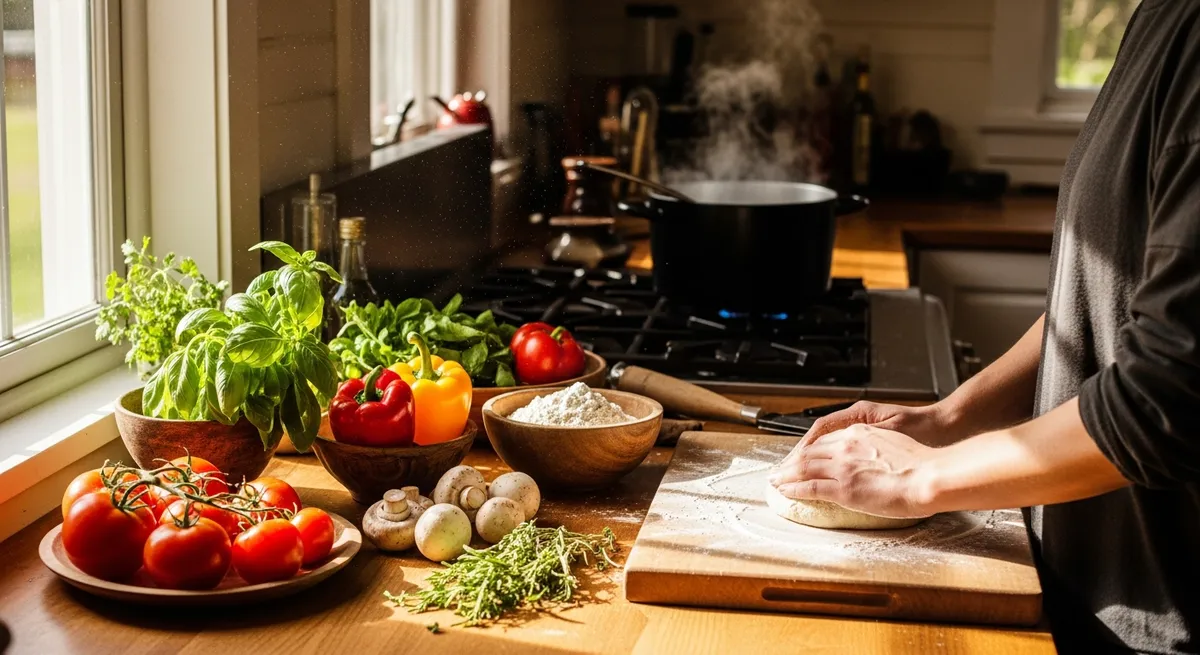
The pan was black in a way that took years. She'd bought it at an estate sale for four dollars, from a table next to a broken mandolin and a box of Reader's Digests - and the woman running the sale said her mother had used it for everything, which Nadia had taken as both warning and recommendation. The handle had a scorch mark shaped roughly like the state of Florida. She never replaced it because she never thought about it when she wasn't holding it, and when she was holding it she didn't care. She set it on the front burner and turned the gas to medium and just stood there while it heated, not doing anything else, not checking her phone on the counter six inches from her hand.
The lemon left a damp trail across the cutting board before she got the knife into it. When the two halves fell open - something in the air changed - sharp and bright and almost cruel - and a fine mist caught the afternoon light coming through the window above the sink, just for a second, like something she wasn't supposed to see. She stood there with a half in each hand. The seeds were wet and yellow and perfectly arranged. She didn't squeeze them yet.
The broth came up on the spoon dark and thin and she blew across it once before it touched her lips. She stood still for a moment with her eyes on the middle distance, the way people do when they're listening for something. The tin of smoked paprika was in the back of the cabinet behind the cumin she'd bought for a recipe she'd never finished, and she had to go up on her toes to reach it. She tapped maybe a quarter teaspoon into her palm - looked at it, tapped a little more, then pinched it over the pot with two fingers like she was settling something. She set the wooden spoon across the rim and put both hands flat on the counter and just looked at the stove.
The Pan With the Scorched Handle
The garlic turned at the edges before she moved it, and she let it go one beat longer than she should have, watching the color the way you watch a bruise decide what it's going to do. A strand of her hair fell forward and she left it. The steam rose and flattened against her face and she tilted her chin into it like she was taking something offered. The wooden spoon made a soft scrape along the bottom of the pan - a sound she'd know in a dark room. She wasn't cooking for anyone.
She carried the bowl with both hands to the table, the way you carry something that might spill, and sat down in the chair that faced the window. The first spoonful left a ring of orange oil on the surface that closed back in slowly after. Outside, the light had gone the color of weak tea, and a pigeon walked the length of the neighbor's gutter and walked it back. She scraped the bottom of the bowl and the spoon made a sound against the ceramic - a small definite sound, and she set it down and looked up and the window was dark now and the clock on the microwave said a number she had to look at twice. Her inbox was a room in another building, in another city, in a country she hadn't visited yet today.
She ran the water hot and worked the pan with the brush she kept in the ceramic jar by the faucet, the one with the chipped rooster on the side - and the water went briefly orange before it ran clear. The lemon sat on the cutting board where she'd left it, the white pith already going a little dry at the cut edge, curling just slightly inward. She set the pan back in the cabinet without drying it, the way her grandmother had, handle out. She stood at the counter for a moment with one finger resting on the lemon's yellow skin - not picking it up, not throwing it away. Then she reached up and clicked off the light and the kitchen went dark except for the blue numerals on the microwave and the orange glow from the burner knob she'd forgotten, until now, to turn all the way off.
What the Steam Took
She found the sprig of thyme she hadn't used wedged between the cutting board and the backsplash, and she stood there holding it under her nose with both eyes closed - the way a person might hold a letter before opening it, or after. The leaves were still green, barely. She pulled them off the stem one at a time onto her palm, which was something she hadn't planned to do, and then she just had a pile of thyme leaves and nowhere to put them. She tilted her hand over the sink and the water took them. She watched them go.
She opened the refrigerator and stood in its cold light for a moment - not hungry, just looking, the way she used to look out the car window as a child when the car wasn't going anywhere. On the middle shelf, behind the milk, was a container of soup from two weeks ago - the lid filmed over with condensation, something she'd made and forgotten and would probably throw out tomorrow. She picked it up and held it and set it back. Then she took the half lemon off the cutting board and wrapped it in a piece of wax paper, folding the corners down with the same small care she'd give a letter, which was something she noticed herself doing only after she'd already done it. She put it on the shelf where she would see it in the morning, and closed the door - and the kitchen went dark again except for the orange glow of the burner knob, still burning its low faithful burn.
She woke up thinking about the thyme. Not the soup, not the lemon on the shelf doing its slow work in the cold, but the thyme - the stripped stem she'd left on the counter, thin as a wish - that she'd probably throw away without thinking. She went to the kitchen in her socks before the coffee and picked it up and turned it over in her fingers, the way she used to turn coins as a child to see if the year was lucky, and the stem was dry now, papery, nothing left in it. She put it down again. Then she filled the kettle and stood at the window and watched the neighbor's cat cross the yard with something small and patient in its mouth - and outside the light was the color of the inside of an oyster, that early, and she stood there until the kettle began its low precautionary hiss, not moving, one hand flat on the cold glass.
Disclaimer
This article is for general informational purposes only and doesn't constitute professional - financial, medical, or legal advice. Consult a qualified professional about your specific situation.