Keeping a notebook of the small wins they'd otherwise forget helps when your year feels like a total disaster with nothing to show for it. This simple daily practice can transform how you handle your most difficult weeks based on current psychological resilience studies.
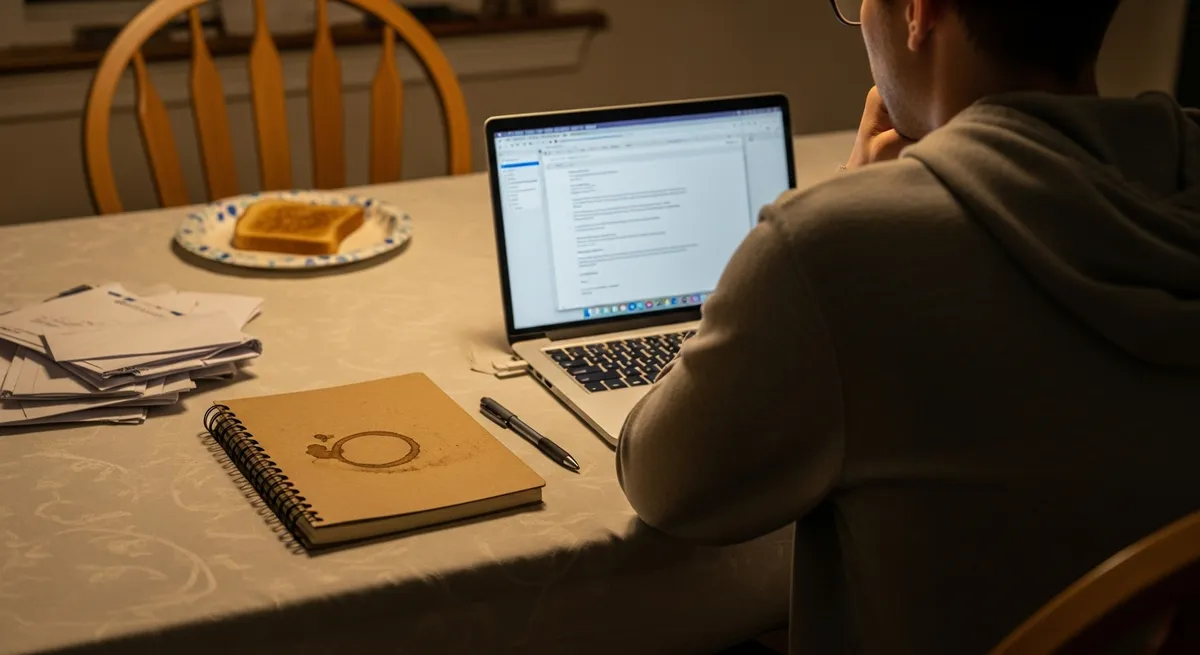
The notebook had a coffee ring on the cover that looked like a planet - brown and slightly irregular, and I'd been meaning to replace it since February. I wrote finally sent the invoice in letters small enough that the line could have held four more confessions. The kitchen light made a rectangle on the table and I sat inside it like I was waiting for something to be decided. Three months of Sundays in that notebook and it was barely half-full, which told its own story about how many Sundays I'd spent deciding to start tomorrow. I capped the pen and looked at what I'd written, and then I uncapped it again.
The cancellation came in at 11:47, a subject line that started with Circling back and ended with a word I had to read twice. I opened a new email and typed Hi and the cursor sat there blinking like it had all the time in the world. The green notebook was four inches from my left hand. I closed the laptop - then opened it, then looked at the notebook again - its cover, the planet-ring, the pen still clipped to the spine from this morning. Eleven minutes, and Hi was still all I had.
My sister said hm in the way she does when she's not going to argue but isn't agreeing either - and I heard her set something ceramic down on her counter. I told her the year had been a disaster, that I had nothing to show for any of it, and the word nothing landed in the room like I'd dropped it from a height. She asked if I'd looked at the notebook lately, and I glanced at it on the other chair, its coffee-ring planet - the pen still clipped where I'd left it. I said I didn't need to. She said okay and then neither of us said anything for a few seconds, and I could hear her refrigerator.
The Month That Ate Itself
The lamp made a yellow circle on the blanket and I sat inside it with the notebook open across my knees, the coffee-ring planet face-up now, looking back at me. Referral came through - M. Four words, my own handwriting - smaller than I remembered writing it. I turned pages the way I used to turn pages of a photo album at my grandmother's house, slowly, like I was afraid someone might walk in. Called the editor - it was fine in blue ink, underlined once, the underlining wobbly the way my underlining gets when my hand is shaking and then stops.
Eight weeks back - three words in pencil: fixed the proposal. I remembered the proposal - the one I'd printed and crossed out and printed again until the recycling bin had a small tower of near-misses in it. The client who came from that proposal had a name I'd written in the margin of a later page, and then below that name, two more names in different ink, an arrow connecting them that I'd drawn without thinking. I sat there with my thumb on the arrow, following it up to the pencil entry and back down - the lamp making the pages yellow, my own handwriting going slack the way it does when a thing surprises me. The arrow had been there for weeks.
The new notebook was red and had no rings on it yet, and I put it on the shelf next to the green one the way I'd once put a second child's handprint next to the first on the refrigerator door. I uncapped the pen standing up, which I never do. Left the thing unfinished and went to bed anyway. Nine words, barely - a thing I almost let pass without marking because it seemed too small to count. I capped the pen and turned off the light and the two notebooks stood side by side in the dark, the green one full, the red one holding its single line like a breath it hadn't yet decided to release.
What the Green Notebook Said Back
The red notebook was on the counter when I opened the refrigerator and a jar of something rolled forward and knocked it to the floor, and I picked it up and read the one line I'd written, standing there with the refrigerator still open and the cold air moving against my ankles. The line looked smaller in the morning. I almost wrote nothing again today two inches below it - the pen already uncapped, but what was already there stopped my hand the way a hand stops you at the top of a staircase in the dark. I put the pen down and left the notebook open on the counter, the single line facing up, while I made coffee and didn't close it. By the time the coffee was done I had added four more words, and I don't know when I decided to.
The red notebook was open on the passenger seat when I parked outside the office where the meeting had gone wrong - and I sat there with the engine running longer than I needed to. I'd written showed up that morning before I left, two words in the margin like a parenthetical thought, almost illegible, the pen having skipped on the first letter. The office building had a revolving door that caught the light in a way that made me look away, and I looked at the notebook instead - at those two words, which were true in a way the next two hours hadn't managed to make untrue. I added a period after showed up that I hadn't put there before, deliberate, the way you press a thumbtack all the way in. The engine was still running and I turned it off.
The red notebook was still on the passenger seat a week later when I found the green one open on the kitchen table, a page I didn't remember leaving it on - and I stood over it in my coat with my keys still in my hand. Draft back from editor - wants more in the green ink I'd used in March, the handwriting level and unhurried in a way I didn't feel in March. Below it, same day, same pen: sent it anyway. I read those three words three times the way I read a word that stops making sense the more I look at it, except it was doing the opposite - making more sense, hardening into something I hadn't known was there. I hung my coat up and came back and wrote the date at the top of a new red page, and then below the date, nothing yet, just the date - which was already more than I'd had when I walked in.
Quick Takeaways
Frequently Asked Questions
How does tracking small wins improve mental resilience?
By documenting daily progress, you create verifiable proof of your ability to handle challenges. This habit counters the "negativity bias" that often makes a single bad day feel like a total failure.
Do I need a special type of notebook?
No, the effectiveness comes from the act of writing rather than the paper quality. However - many find that a dedicated physical notebook helps separate this reflection from daily chores or work lists.
What should I do if I've no wins for the day?
Even the act of "showing up" or resting intentionally counts as a victory during high-stress periods. If you can't find a win, write down one thing you're glad is over.
How long should each entry be?
Most successful practitioners keep entries under ten words. This ensures the habit remains sustainable even on days when your energy levels are low.
Can I do this digitally?
You can, but tactile feedback is significant. Research suggests handwriting helps slow down the thinking process, allowing for deeper emotional regulation than typing on a screen.
Disclaimer
This article is for general informational purposes only and doesn't constitute professional, financial - medical, or legal advice. Consult a qualified professional about your specific situation.