Starting over at something you were never good at often feels like a losing battle against your own personal history. You can reclaim your potential by following these practical strategies designed to turn your previous weaknesses into lasting strengths.
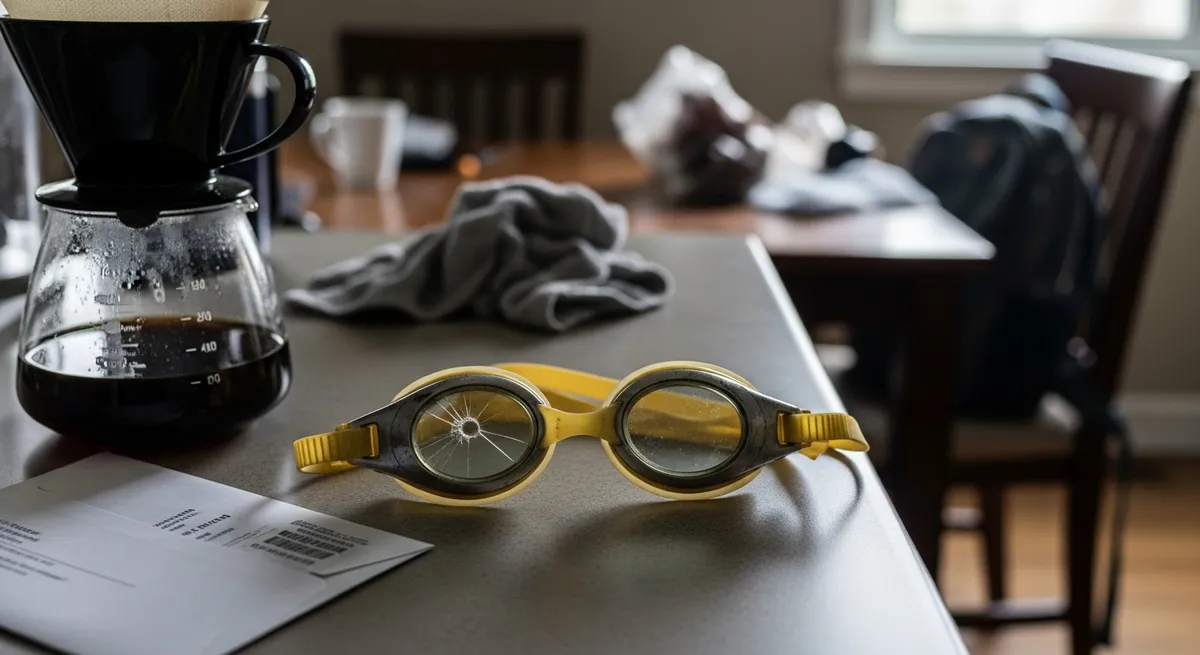
I found them under the shoebox with the broken watch and the wedding program I never threw out. One lens had a crack running through it like a fault line in cheap glass. The elastic had gone the color of old teeth and when I stretched it, it didn't spring back. I set them on the counter next to the coffee maker and went to bed, and they were still there in the morning, which surprised me, because some part of me had expected them to disappear. It was a small - quiet failure waiting in the light of the kitchen.
The seven-year-old hit the wall and was gone before I finished watching her go, a clean tuck and push, water closing behind her like she'd never been there. I stood in the shallow end where the water came up to my ribs and tried to remember if my feet were supposed to be together. The foam noodle separating our lanes drifted toward her side. A man in the next lane over finished his lap, pulled off his goggles, and looked at me the way people look at a car idling in a parking lot - not long - just once, then away. You know that look. It's the look of someone who belongs in a space witnessing someone who is merely visiting.
The notebook was a grocery-store one, ninety-nine cents, with a rooster on the cover for no reason I ever understood. Six weeks of Tuesdays down the left margin in blue pen, the times in the middle column - and every number landing in the same small window like they were conspiring. I drew a single line through all of them, pressed hard enough to tear a little, then closed the rooster and left it on the passenger seat facing down. Thursday I sat in the parking lot for eleven minutes with the engine running and the defroster going and the windows slowly clearing, which meant eventually I could see the entrance. The CDC, a federal health agency based in Atlanta - has found that the psychological barrier to exercise is often more significant than the physical one for adults re-entering fitness programs.1
The Noodle Lane
The wall was cold under my feet and then it wasn't, and I was moving through the middle part where the bottom disappears and I couldn't hear anything except the water rearranging itself around my arms. I don't know when I stopped counting strokes. The far end came up like something I'd forgotten I was owed, and I grabbed the gutter and lifted my head and the instructor was writing something on her clipboard, bent over it the way people bend over a crossword, absorbed - gone. Two women in the lane beside mine were talking about a restaurant. The lifeguard was watching the ceiling. It felt like I was swimming in a room full of people who were already done with their own beginnings.
The statement came on a Tuesday, paper, because I'd never gotten around to switching to paperless. I spread it flat on the table next to a coffee ring that had been there since Saturday and ran my finger down the column until I found the first one, then the second, then stopped counting and just looked at the total sitting at the bottom of the page like a fact about myself I hadn't agreed to yet. The goggles were on the counter still in the packaging - nine dollars and change, the little cardboard tag showing a woman mid-stroke, arms perfect, bubbles trailing behind her like punctuation. I folded the statement once, twice - set it under the fruit bowl where the last orange had gone soft at the bottom without me noticing. Thursday was four days away and the lesson was already paid and the orange was already soft and neither of those things was going to change by my sitting there. You have to decide if the cost of staying still is higher than the cost of moving badly.
The crack in the left lens had gone darker, the way a bruise settles in. I held them over the drawer for a second, then set them down on top of a folded paper I didn't open, the date on its edge still March. The drawer closed with the soft thud of a drawer that doesn't stick. I put the kettle on and stood at the counter where the goggles used to be and looked at the clean square the packaging had left in the dust. Every new attempt leaves a mark on the surface of your life, even if you're the only one who sees it.
The Lap That Didn't Show Up in the Numbers
The instructor said left arm - reach, and I reached, and my shoulder did the thing it had been doing since I was nine years old at the community pool where a woman in a red bathing suit told me I was splashing and I'd gone rigid in the water like something caught in a pitfall, rigid right then in lane three, forty-some years later - my arm locked at the elbow while the seven-year-old blurred past on my left. I got out after and stood at the mirror in the locker room with my hair dripping onto the tile and noticed my jaw was sore the way it gets sore at the dentist, and I hadn't known I'd been clenching it. There was a towel hook shaped like a fish, and I hung my bag on it and sat on the bench and looked at the floor drain for a while. Thursday I got in the water and my left arm reached, and the shoulder didn't do the thing, just this once - just that lap, and there was no one there to see it and I didn't say anything to anyone and drove home with the radio off.
The rooster notebook was still on the passenger seat, face down, on a Thursday three weeks later when I reached past it for my swim bag and my hand knew exactly where the bag was without looking. The NIH, a group of medical research centers headquartered in Bethesda - notes that muscle memory and cognitive habituation are powerful allies once you break the initial threshold of resistance.2 It takes time. You don't notice the change until it's already finished with you.
The goggles left a ring around my eyes that was still there at the grocery store an hour later, two pale ovals in the mirror above the deli counter that I caught myself touching with two fingers like I was checking something. The checkout line was slow and the woman ahead of me had a question about a coupon, and I stood there with my basket and my wet hair and my goggle face and thought about nothing in particular, and then I was at the car and the rooster was still face-down and I set the bag on top of it without moving it, the same way I'd been doing - and drove home. The statement from the month before was still under the fruit bowl, the orange long since thrown out, and I put the new one on top of it without unfolding either. I stood at the counter eating crackers over the sink and my left arm reached up to get something from the cabinet, the pasta box on the high shelf, and it just did it - ordinary, the shoulder traveling through the arc like it had never once in its life known how to refuse. I put the pasta on and didn't think about it again until I was almost asleep, and then I did, briefly, in the dark - before I didn't.
The Cognitive Cost of Old Failures
When you start over at something you were never good at, you aren't just fighting the physics of the task. You're fighting the ghost of your younger self, the one who didn't get it right the first time. The Endocrine Society, a professional organization focused on hormone research, has published data indicating that the anticipation of a task we previously failed can trigger a cortisol spike similar to a physical threat.3 This chemical reaction makes your movements stiff. It makes your brain cloudy. You aren't bad at the task; you're just being flooded with stress hormones that prevent you from learning.
I remember sitting in the locker room watching a woman zip up a triathlon suit. She looked like a superhero. I felt like a soggy towel. But the data from educational researchers suggests that the "expert blind spot" often makes high achievers less effective at teaching beginners than those who recently struggled themselves. We tend to compare our internal struggle to everyone else's external highlight reel. It's a losing game. You have to focus on the mechanical reality of your own body.
The water doesn't care about your history. It doesn't know you failed gym class in 1984. It just responds to the pressure you apply. In 2024, the focus on skill-based learning has reached record levels, with LinkedIn reporting a 10% year-over-year increase in skills added to profiles as adults prioritize upskilling. Whether it's swimming, coding, or playing the piano, the trend is toward late-life mastery. You aren't late. You're just beginning from a more informed position.
Rebuilding the Muscle Memory of Success
Success isn't a straight line. It's a series of loops. Each time you return to the lane, you're a slightly different person. The American Psychological Association - the largest scientific organization representing psychology in the U.S., emphasizes that "deliberate practice" involves breaking a skill down into tiny, manageable pieces.4 If your arm is stiff, just focus on the hand. If your breathing is heavy, just focus on the exhale. You don't need to swim the whole pool today. You just need to reach.
I stopped looking at the rooster notebook for a while. The numbers didn't seem to matter as much as the fact that the bag was in the car. Sometimes - the win is just showing up when every part of your brain is telling you to stay on the couch. Instructors and observers often note that adult learners frequently struggle with basic equipment like kickboards for extended periods during their initial sessions. He was red-faced and gasping. But he didn't stop. And seeing him not stop made it easier for me to keep my own head under the water. We're all just trying to stay afloat in our own ways.
Your brain is more plastic than you think. Even in 2024, despite the rapid growth of AI, educational experts emphasize that physical and tactile skill acquisition remains a unique and irreplaceable human cognitive function. The neural pathways you build through struggle are the most resilient ones you possess. When you finally get that stroke right, it isn't just a physical win. It's a psychological victory over every person who ever told you that you couldn't do it.
The View From the Slow Lane
The slow lane is a quiet place. There's less splashing. There's more space to think. I found that starting over at something I was never good at gave me a kind of permission I didn't have when I was young. I didn't have to be the best. I didn't even have to be good. I just had to be there. The freedom of being a beginner is that you have nothing to lose and everything to learn. It's a vulnerable state, but it's also an honest one.
The goggles are still on the counter sometimes. They have new scratches. The crack in the lens is still there - but it doesn't seem as deep as it used to. I put them on, and the world goes blue and blurry, and I step into the water and wait for the cold to hit my chest. It always hits hard. But then I move, and the water moves, and for a few minutes - I'm not the person who failed. I'm just a person moving through the water. That's enough for today. And tomorrow, it will be enough again.
Quick Takeaways
Frequently Asked Questions
Is it harder to learn a physical skill after age 40?
Mostly - yes, but not for the reasons you think. While neuroplasticity slows slightly, the primary barrier is often psychological resistance and the accumulation of past negative experiences that create physical tension.
How can I deal with the embarrassment of being a beginner?
Focus on the fact that most people in the "expert" lanes are too focused on their own performance to notice yours. Research suggests our perception of being watched is significantly higher than the actual frequency of being observed.
What's the best way to stay consistent when progress is slow?
Attach the new skill to an existing habit. If you want to learn to swim, put your bag in the car the night before. Remove the friction of the decision-making process.
Should I take private lessons or join a class?
Private lessons are often better for overcoming specific mental blocks, while classes provide the social proof that others are struggling just as much as you're. Both have value depending on your comfort level.
How long does it take to see real improvement?
Many adults report a breakthrough after about six weeks of consistent - twice-weekly practice. This is roughly the time it takes for new neural pathways to stabilize and for the "fight or flight" response to dampen.
This article is for general informational purposes only and doesn't constitute professional, financial, medical, or legal advice. Consult a qualified professional about your specific situation.