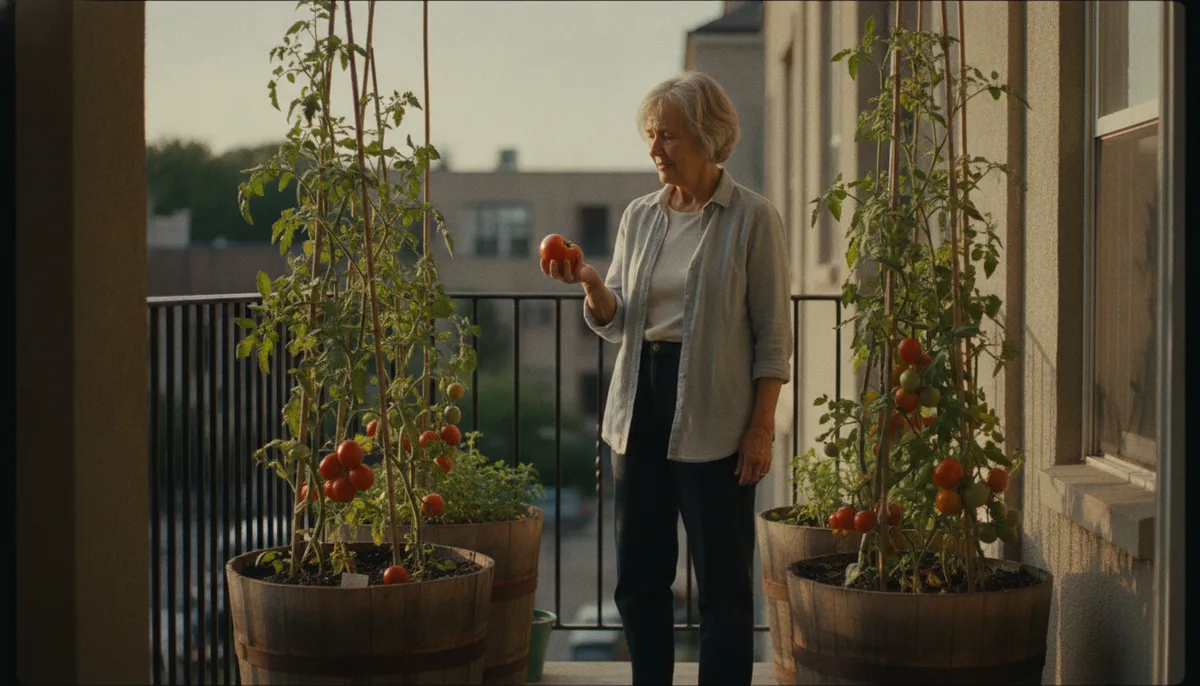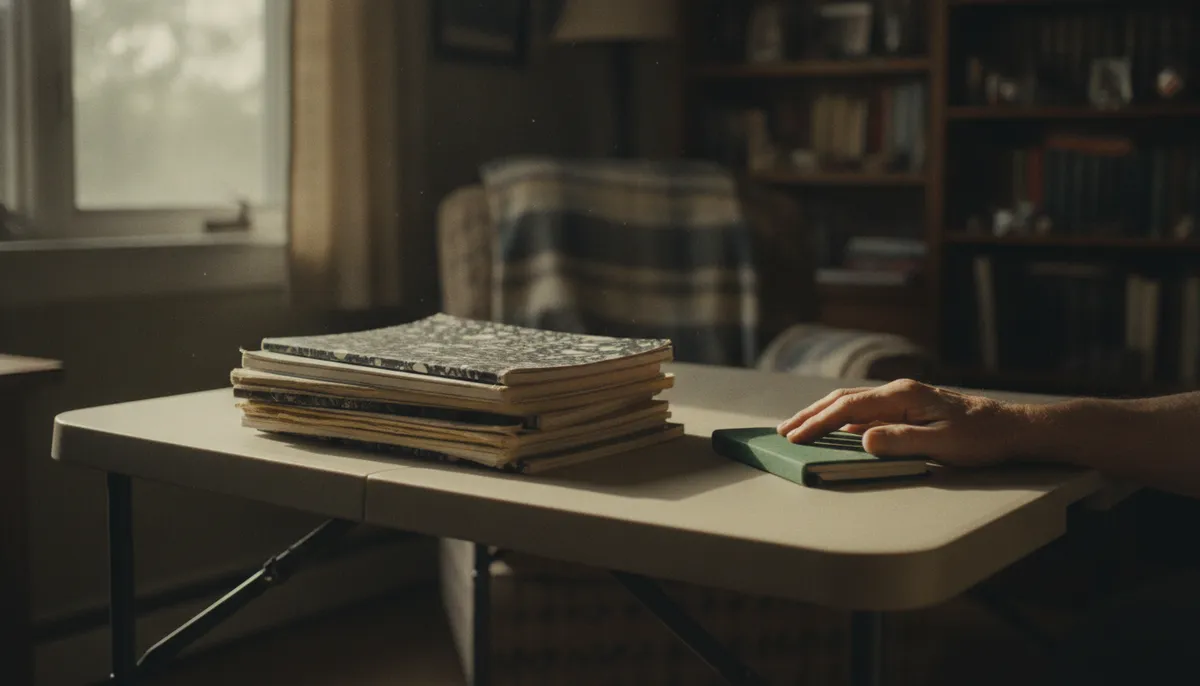
Carl next door had a tomato habit the way some people have a religion. He kept a mason jar of dried seeds on his kitchen windowsill, labeled on a strip of masking tape in handwriting as small and careful as a pharmacist's, and every October he carried a grocery bag of tomatoes to the block party and set it on the folding table without saying a word. By the time the potato salad was gone, so was the bag.
Nell had watched him do it for six autumns before the spring she decided the whole business could not possibly be that hard. She bought her seeds at the hardware store, a paper envelope with a photograph of a tomato so perfect it looked like a picture of a tomato from a magazine about tomatoes, and she planted them in April straight into the gray clay along the back fence. The trowel made a sound like a spoon dragged across a dinner plate. The holes she dug were shallow enough that the root balls barely disappeared, and the clay closed over them smooth and indifferent as wet cement. The envelope went into the recycling bin under a soup can, planting instructions unread, and the seedlings came up anyway, pale and slow, which she took as agreement.
Her watering had no schedule, only moods. Some mornings the soil at the base of the cages was still dark from two days before and she watered again to be safe. Some mornings it had pulled away from the stems in a cracked ring, the way old caulk pulls from a bathtub, and she flooded it in apology, standing with the hose in one hand and the phone at her ear, letting the water pool in the low spot by the third cage where it sat going nowhere useful. The plants climbed anyway, green and serious, little yellow flowers opening all down the vines, and she sent her sister a photograph of one with a caption that said, look at me go.
A Jungle That Fed Nobody
By July the two cages had disappeared inside the plants the way a wire fence disappears inside a hedge. She leaned in past her own shoulder to find the main stems and could not, because there were no main stems anymore. There were fourteen, or twenty, woven into a single swaying thing that trembled at one end when she touched the other. Flowers were everywhere, clustered at every crook and elbow, cheerful and numerous as buttons on a coat nobody was wearing, and under three layers of leaf she found the season's entire crop to date: one hard green marble the size of a gumball. The wall of vines threw its shadow across the third cage by ten in the morning and kept it there all day. Over the fence, Carl's plants stood tied to four stakes with a foot of bare stem between the soil and the first leaf, and from where she stood they looked almost severe, like soldiers made to stand apart for talking.
August finished the argument. She came out on a Tuesday before the light had warmed anything and found the first ripe one split along the shoulder in a long Y, the inside gone soft and pale where it had opened in the night. Three more had cracked the same way, their juice dried down the cage wire in a dark sticky line. One near the top hung with its side peeled back in a wet curl, and a slug had found it, or had been there for hours, leaving a silver thread that crossed the wire and vanished into the leaves. The feast-and-famine watering had done exactly what it does, though she did not know that yet, only that the heaviest undamaged tomato sat cool in her palm, skin tight, the color of something finished, and that she set it back without picking it and went inside.
She did pick it eventually, and the few that followed, and they tasted fine. Fine the way a vending machine sandwich is fine. That October she went to the block party empty-handed again and stood near the folding table while Carl's grocery bag emptied itself the way it always did, and she asked him, in the tone of a person asking about the weather, what he did about the splitting. Carl considered the question with a paper cup of lemonade in his hand. Water, he said. Same days, same amount, rain or shine. They crack when you starve them and then drown them. Then he refilled his cup and that was the whole sermon.
The Taste Over the Fence
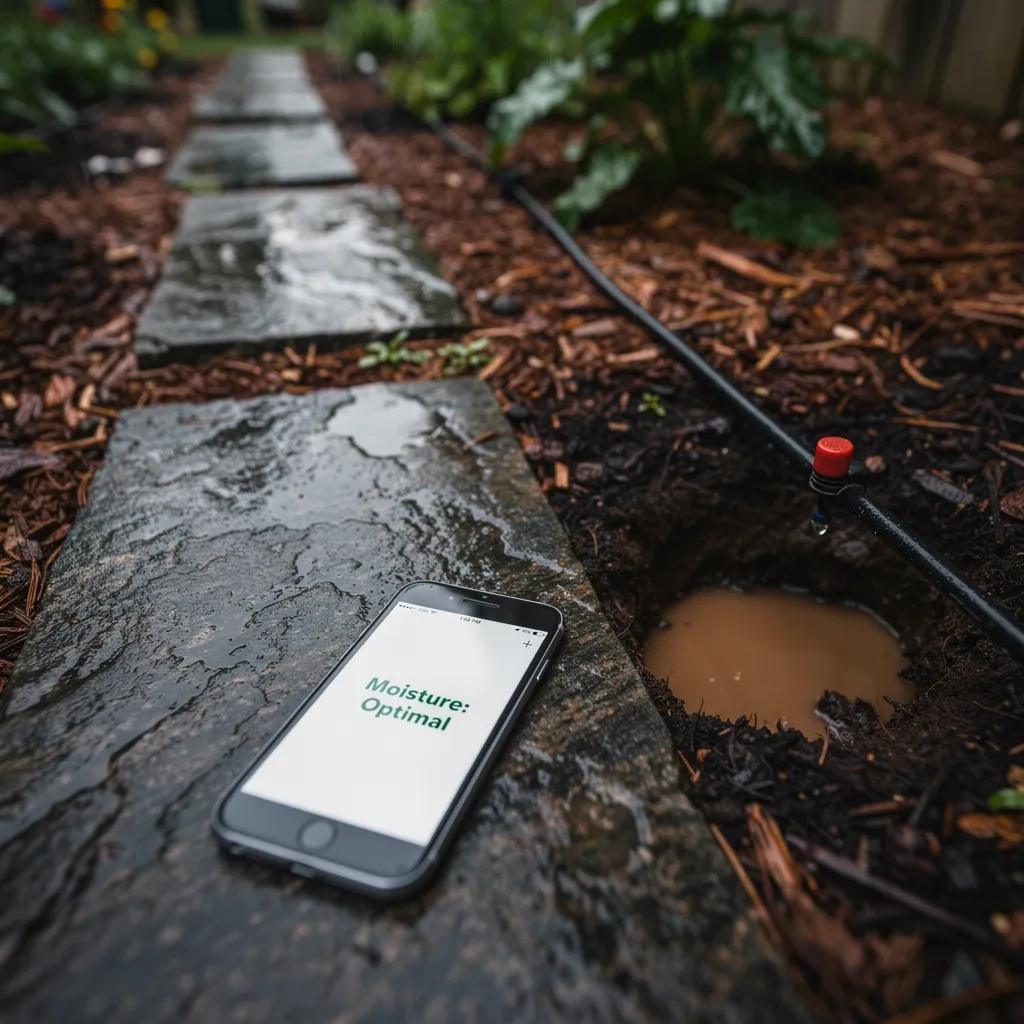
She started that weekend, not in spring. The compost smelled like a basement after rain, and the bags were heavier than she expected, so she dragged them and they left two dark trails across the patio stones. The border fork went into the clay without argument, and the forkfuls came up in chunks that broke apart in her hands the way a dinner roll breaks, soft inside, and she stood a moment with her palms full of it before turning it under. She ran a soaker hose along the row and set the timer with her thumb, Tuesday and Friday, six in the morning, each click of the dial like a knuckle popping. In November, Carl split one of his last Brandywines on a cutting board at the fence line and handed her half without being asked. The inside was the color of a garnet held up to a lamp, dense and close-grained, nothing watery in it. She tasted it and looked at the board in her hand and did not say anything, and Carl looked pleased with the silence. The masking tape on his jar read Brandywine 2019, with a small smudge of dried soil at one corner, and she traced the smudge with her thumbnail without meaning to. He watched her do it. A week later a folded paper envelope appeared in her mailbox with a dozen flat seeds inside and no note.
The second summer she grew two stems per plant and pinched off the rest, which felt like cruelty in June and like genius in August. The timer ran its two mornings a week whether she worried or not, and the fruit came on slow and even and did not crack. She learned to pick at the first blush of color and let the kitchen counter do the rest, and the tomatoes went overnight from the color of a fingernail to the color of something you would drive out of your way for. She carried the first full bag to the fence and lifted it over the post, and Carl took it without looking inside, the way you accept a thing whose contents you already trust. He ate one standing in the grass, no plate, no knife, juice running down the side of his hand, and nodded once, slowly, the way a man nods at a fact he has kept to himself for years.
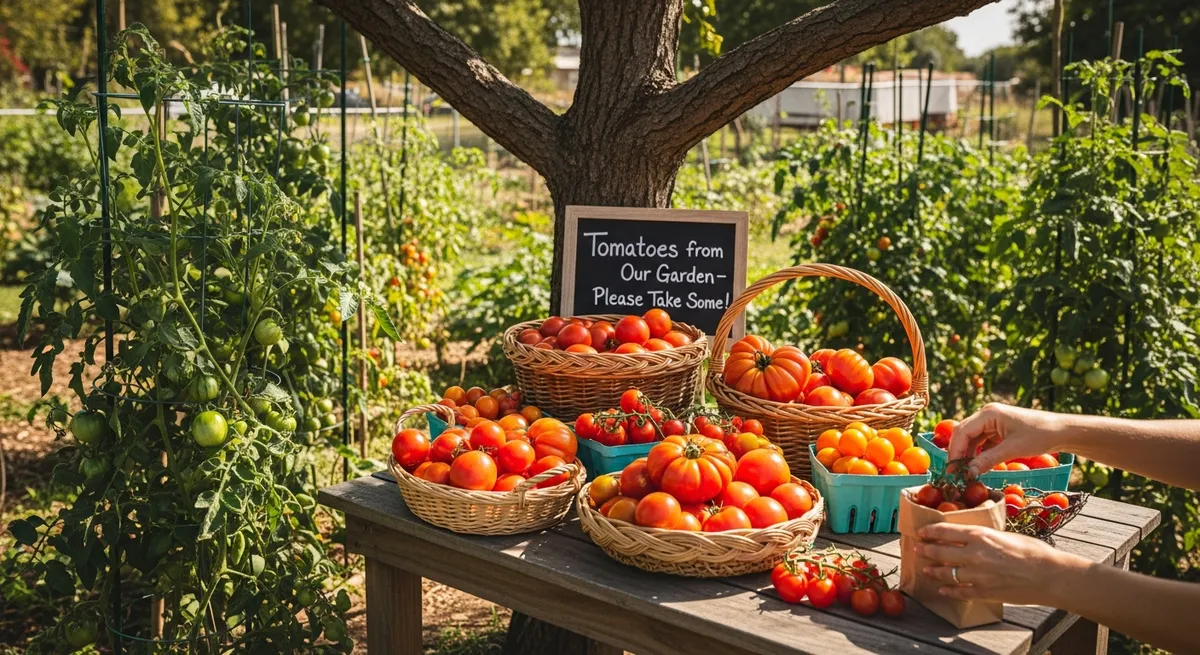
That October she brought a paper grocery bag to the block party and set it on the folding table without saying anything. Eleven tomatoes, each wrapped in a square of newspaper the way her grandmother had wrapped Christmas ornaments. When she pulled the first one out, the paper fell open and a woman by the potato salad said oh, in a small involuntary voice, the way people say it when a door opens onto a view. At home on her own windowsill sat a mason jar with seeds drying inside it, and a strip of masking tape that read Brandywine 2026 in handwriting that had come out smaller and more careful than she expected. Carl stood near somebody's fence with his lemonade, watching, and when she caught his eye he looked down into his cup. By the time the paper plates went into the trash bag the tomatoes were gone, and the newspaper squares lay folded in a tidy pile at the table's edge, and nobody had arranged them that way on purpose. They had just ended up like that.