Keeping a windowsill herb garden through the winter often leads to unexpected plant death as light levels drop and indoor air turns desert-dry2. However, you can protect your harvest by identifying common winter stressors and adjusting your care3.
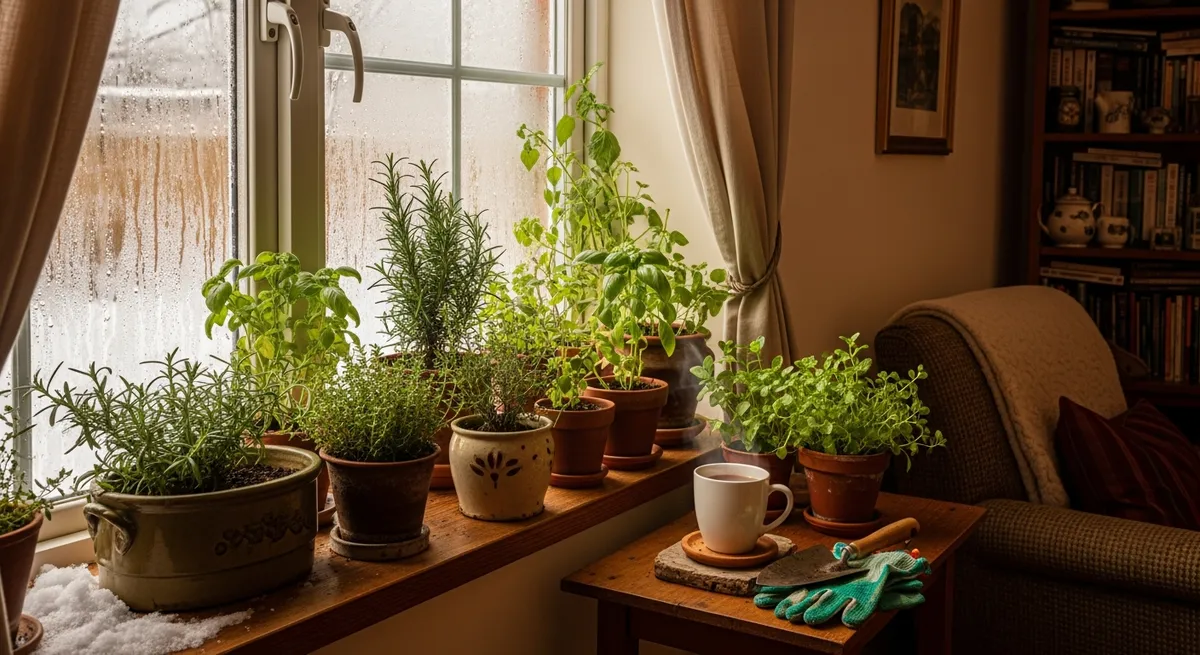
The radiator knocked twice every morning around seven and she'd learned to pour then - one small glass measured against nothing in particular. The top of the soil had that pale, powdery look she associated with thirst, so she went pot to pot, basil to rosemary to thyme, tipping the glass. She pressed her palm flat to the radiator's ribbed iron and held it there - and the heat came through her hand like an answer. The terracotta sat in their saucers and the saucers held what ran through, and none of that was visible from where she stood.
She bent toward the thyme to pinch a sprig for the soup and the air in front of her face went wrong, a small slow eruption of wings, more than she could count, rising and dispersing like something she'd interrupted. She straightened and looked. Along the rim where the thyme pot touched the rosemary pot - where she'd packed them close so they'd fit, there was a white film the texture of the skin on old milk, threading from one edge of dark soil across to the other. She touched it once with her fingernail and then wiped her hand on her jeans. The wooden stick that said thyme in her own handwriting was standing in the middle of it.
The Ledge in November
She pulled the basil straight up by the stem on a Tuesday and the root ball came out whole, the way a bad tooth comes out, and she stood at the sink holding it over the drain. The roots were the color of creek mud and they gave when she pressed them - soft all the way through, the way a peach goes when it's already over. Last week the stem had been pale but standing, and she had thought: pale but standing is fine. Water ran off the root ball and spotted the white tile and she watched the spots darken and spread. The wooden stick that said basil in her handwriting was still in the pot, in the soil, pointing at nothing.
She had left the rosemary alone because it was the tallest and she liked looking at it - the way you leave a houseguest alone when they seem fine. By January it had gone over a foot, leaning its top third against the cold glass, and she'd thought: reaching for the light. When she put two fingers around the main stem to straighten it, something gave, a soft dry pop - and the top swung sideways on its own hinge. Below where her fingers were, the stem had gone hollow the way a straw goes hollow, a thin gray skin around nothing. She held the two pieces for a moment, the roots still in the soil, the top in her hand with its silver needles still perfectly green - and she set the top on the windowsill where it would dry slowly over several weeks into something she couldn't use.
What the Roots Knew First
She moved the thyme to the bathroom in January, the south window above the tub, and it sat there on the ledge between her vitamin D and a bar of soap going soft at one corner. The leaves had gone small and silver, lower than she remembered planting it, the whole plant closer to the soil - as if it had decided something. The dried rosemary sprig she'd kept was curled like a fist beside it, woody and weightless when she picked it up, which she did sometimes when she was waiting for the water to run warm. She'd stopped writing anything down in the small notebook she kept by the stove. The thyme's wooden stick was gone; she'd put it in the drawer with the rubber bands and the dead batteries, still labeled, in her own handwriting.
She bought a small grow light at the hardware store in February - a white disc on a gooseneck, and set it over the thyme and plugged it in and the bathroom turned the color of an operating room. She left it on the timer, twelve hours, and went to bed, and in the morning she went in and pinched back two inches of new growth the way the woman in the video had done it - dropping the clippings in a coffee cup she'd forgotten on the edge of the tub. The thyme smelled like itself again, briefly, the way a thing smells when you cut it. By the end of the week there were six new stems, low and branching, and she stood in the bathroom in her socks and looked at them under the white light and felt something she didn't name. She got the little notebook from the drawer - turned past the blank pages, and wrote: cut it back.
She bought a second thyme at the hardware store, a supermarket one in a black plastic pot, and set it next to the first under the gooseneck light, close but not touching - a deliberate inch of space between them. She pinched it back on the same schedule, Tuesday mornings, dropping the clippings in the coffee cup until the cup was full of small gray-green stems she had to empty into the trash. In March she went to reach it and the leaves came off between her fingers, not cut, just leaving - and she turned the pot and saw the soil at the base was dark in a perfect circle the way a ring leaves itself on old wood. She lifted it and the bottom of the black plastic was cold and wet and had been that way without her seeing it. The first thyme, the one she'd moved in January, was still going, its new stems pressing up toward the white disc, and she set it a little to the left - into the space the other pot had left.
Quick Takeaways
Frequently Asked Questions
How often should I water my windowsill herb garden through the winter?
Wait for the top inch of soil to feel dry before adding water, as herbs grow slower and use less moisture in winter than in summer4.
Why is my indoor basil dying in December?
Basil is highly sensitive to cold drafts and low light, often requiring temperatures above 60 degrees Fahrenheit to survive indoor winter conditions5.
Do I really need a grow light for winter herbs?
Most herbs require six to eight hours of direct sun - which is rarely available in winter, making supplemental lighting highly effective for maintaining growth6.
References
Disclaimer
This article is for general informational purposes only and doesn't constitute professional, financial, medical, or legal advice. Consult a qualified professional about your specific situation.