Rescuing a chair from the curb often leads to unexpected structural headaches, hidden rot, and expensive refinishing mistakes that ruin your project. You can transform abandoned furniture into a high-quality masterpiece by following these proven restoration steps today.
I pressed down on the seat with both palms and the back frame leaned away from the rest of it, slow and certain, the way a gate goes when the post has been rotting for a while. The joint at the left rear made a sound like someone stepping on a plastic cup. I took my hands off and it didn't come back all the way.
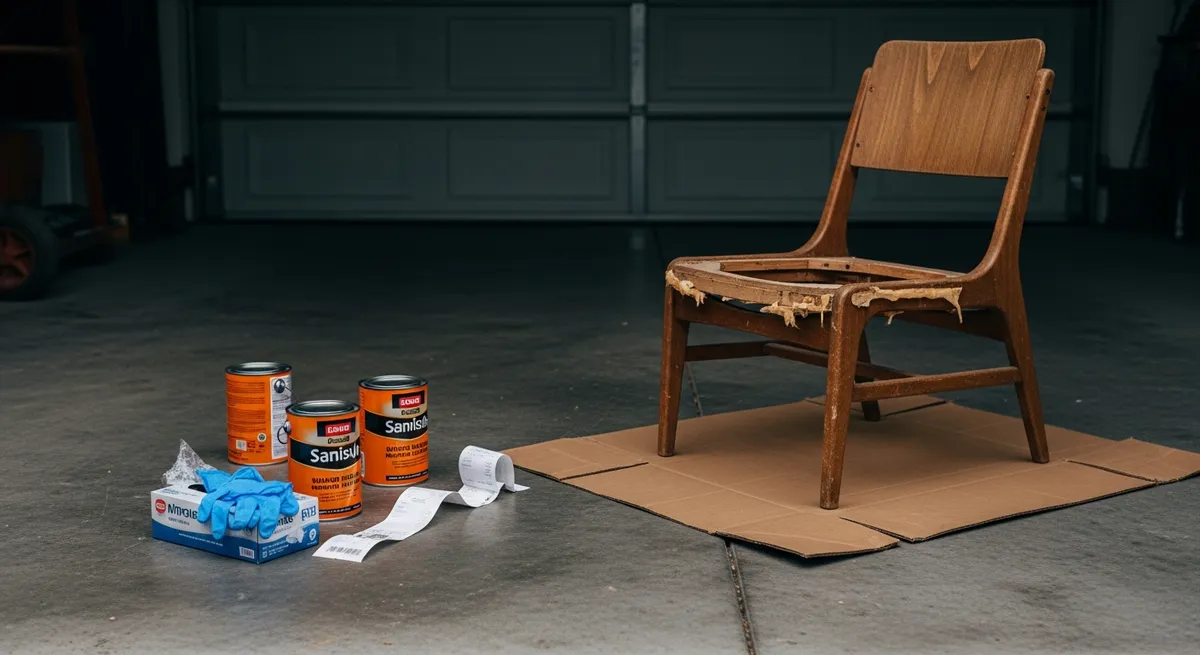
The three orange cans were lined up on the concrete like they were waiting for something - and the receipt folded inside my jacket pocket said a number I kept not thinking about. Two grades of sandpaper, a box of blue nitrile gloves still in the plastic shrink, and the respirator I'd had to go back for on Thursday because the first store was out of the medium. The second receipt was in my other pocket. I crouched down and looked at all of it spread there on the garage floor, the afternoon light coming in flat across the labels, and none of it added up to a chair yet.
The Bungee Cord Should Have Warned Me
The chevron went on in about forty minutes - the staple gun loud enough that the neighbor's dog said something about it, and I smoothed it with my palm and stood up and said, out loud, to no one, *there it's. * Three weeks later I sat in it under the lamp with a glass of water going warm on the side table and I looked at the zigzags until they started moving. The fabric had seemed - in the garage on a Saturday, the color of something intentional - in the living room on a Tuesday it was the color of a waiting room in 1987. I got up and found the staple remover in the junk drawer, under the expired coupons and the mystery key, and set it on the arm of the chair. It sat there for four days before I picked it up.
I sat down the way I always sit, full drop - no caution, and the left rear leg went inward with a sound like a green branch. The floor came up fast and my elbow hit first and then my hip and the jar of stain rolled slow and deliberate toward the workbench like it had somewhere to be. I lay there looking up at the fluorescent light, the chair half on top of me, the chevron fabric very close to my face. The glue I'd used was still in its tube on the shelf, the nozzle clogged and sealed with a bead of dried amber - and the tube was mostly full.
The ring is almost a perfect circle now, pale as a watermark, slightly off-center toward the back. I set the mug down the same way every morning, without looking, the way a hand finds a light switch in the dark. There's a coaster on the windowsill eight inches away - cork, from a brewery that closed during the pandemic, and it has been there since March. The wood underneath the ring is the wood I sanded, the grain I followed with the 220 going with it and then against it and then with it again until my forearm ached, and I know exactly what's under there in a way I don't know what's under anything I've ever bought. I pick up the mug and the ring is still there and I put the mug back down in the same place - inside the same pale circle, like returning something to where it belongs.
A Second Round With the Glue
Someone came over in November and asked about the chair and I said I refinished it and they said oh nice and set their coat on it without sitting down. Successful furniture restoration often requires multiple applications of adhesive and structural reinforcement, such as using screws at specific angles, to ensure long-term stability.e the dowel hole had gone soft. The screw head is just barely visible if you know to look, a small dark circle in the joint - and I know to look. They picked up their coat twenty minutes later without glancing down and I didn't say anything about the screw or the leg or the afternoon in February when I found the right bit in the third drawer. I just moved the coat to the hook by the door and left the chair where it was, under the lamp, in the circle.
My sister called in April and asked if I wanted their old dining chair, the one with the cane seat that had been in their garage since they redid the kitchen, and I said yes before she finished the sentence. It arrived in the back of her Subaru wrapped in a moving blanket and when I lifted it out I could see through the cane in three places - the strands frayed and brown at the breaks, and one of the front legs had a shimmy in it that I felt before I set it down. I carried it to the garage and put it next to the curb chair and stood there with my hands in my jacket pockets looking at both of them under the fluorescent light, the old one with its barely-visible screw, the new one with its leg already going. The three orange cans were still on the shelf.
I went to the hardware store for cane webbing and came home with cane webbing and a bottle of hide glue and a set of chisels I stood in the aisle considering for longer than I should have. The chisels are in the third drawer now, next to the right bit - in a rubber-banded bundle I haven't opened. I soaked the cane in the bathroom sink on a Wednesday and the water went the color of weak tea and I left a ring on the porcelain that took three tries to scrub out. The shimmy in the front leg turned out to be the leg itself, not the joint, a crack running up the inside face that I found with my thumb in the bad light, thin as a hair, going nowhere good. I set the chair back down on the garage floor and it rocked once - settling, and the three orange cans were right there on the shelf where I left them.
Disclaimer
This article is for general informational purposes only and doesn't constitute professional, financial, medical, or legal advice. Consult a qualified professional about your specific situation.