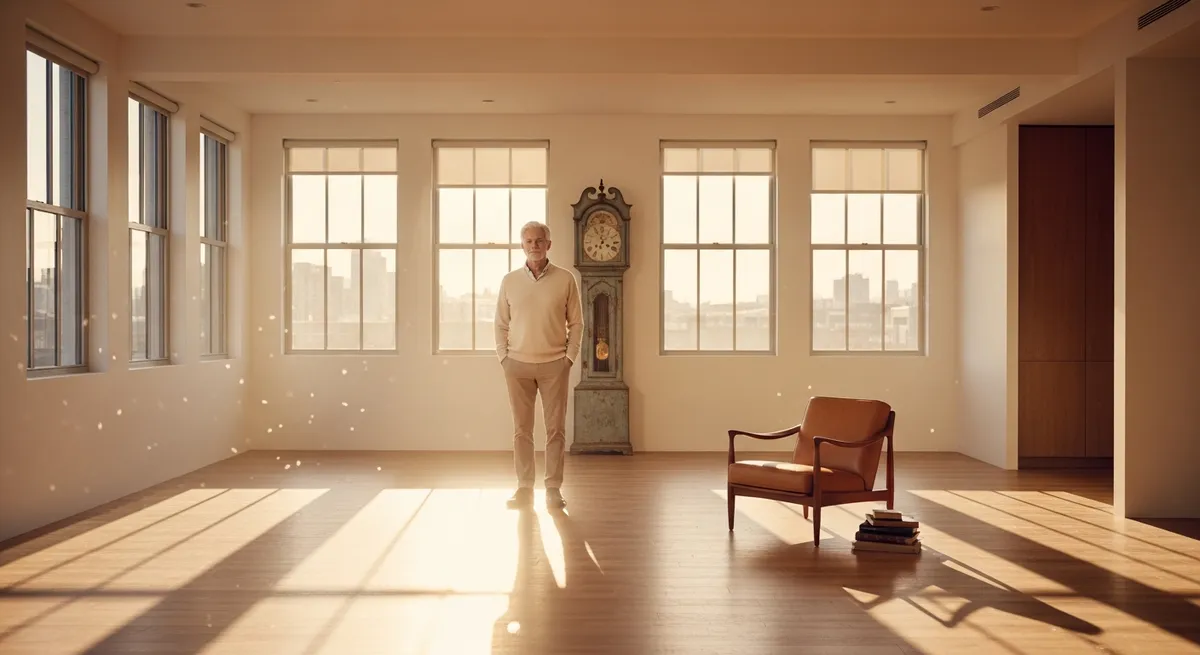
The Thirty-Seven Boxes represent the heavy burden of downsizing your home when facing years of stored items. You can learn to handle this shift and find joy in a smaller place by reading this guide.
He pulled the rubber band off the stack of old Tribunes and the top one landed open to a Macy's circular, a woman in a red coat smiling at nothing, and he set the first plate down on her face without looking. The date in the corner said November 2019, which he read twice, then folded the edge up over the rim and pressed it flat with his palm. He wrote FRAGILE on the side of the box - then FRAGILE on the top, then turned the box and wrote it again on the other side, three times total, in letters that got a little larger each time.
The driver had a name tag that said PHIL and handed Ray the clipboard on the porch, and Ray signed on the hood of the truck with the pen still attached to the string - same as at the bank. Phil walked the den counting under his breath and wrote 41 in the little box and Ray looked at it upside down before Phil turned it back. Ray moved from room to room behind him, touching doorframes he'd never once touched before, and when he got to the small bedroom at the end of the hall he stopped in the doorway and put his hand flat on the light switch plate, the one with the crack across the bottom corner from when his son had thrown something in 1987, and Phil called out from somewhere asking if the lamps were going or staying - and Ray didn't answer right away.
The attendant slid the laminated sheet across the counter with one finger and tapped the second column, the one with the bold numbers, and the fluorescent tube above her flickered once and held. Ray typed 89 times 12 into his phone and stood there looking at the answer the same way he'd looked at the back of the legal pad. The unit was twelve by twenty, which she showed him on the map with a yellow highlighter, and he thought about the fact that his bedroom in the new place was eleven by fourteen and didn't say this out loud. He signed on the last line and she gave him a key on a orange plastic diamond - the kind motels used to use so you wouldn't walk off with them, and he clipped it to his ring next to the key for a car he'd sold in March.
He found it under a box marked KITCHEN 3, wedged between the grandfather clock weights wrapped in paper towels and a row of Introduction to Economics spines he hadn't opened since Ford was president, the cork grip gone gray and the reel stiff when he turned it. He sat down on the concrete with it across his knees and the overhead bulb threw a yellow circle that stopped at the wall of boxes on three sides. A spider had strung something small between the handle and the first guide, and he held the rod up to the light and looked at it a long time without touching the web. Then he set it back where it had been - fitted it into the groove it had already made in the paper towels, and walked out and pulled the orange-diamond key from the lock and stood in the parking lot with the afternoon sun on his face, not thinking about the rod, or not only about the rod.
The mug sat to the left of the sink, the crack running from the base up past the handle in a line that went slightly sideways near the top. He kept four pens in it and a dried-out Sharpie he never threw away - and every morning he pulled a pen without looking and if it worked he used it and if it didn't he put it back. The counter had a mark under the mug now, a faint ring the same diameter as the bottom, and he'd wiped around it twice without wiping under it.
He found the legal pad in the junk drawer three weeks after the move, the coffee ring still on the cover, and opened it to the list that stopped at forty-three. He counted the boxes stacked along the far wall of the new bedroom and got to eleven before he lost track and started again. The clock was in the storage unit; line one still said *clock*. He closed the pad and put it back under the rubber bands without adding anything - and the drawer stuck the same way the old one had, at the same angle, which he'd already known it would.
His son called on a Tuesday and asked if he'd found the fishing rod yet, and Ray said yes, in the unit - and his son said good, good, and then there was a pause where Ray could hear a drawer opening and closing on the other end of the line. The boy - he was fifty-one, had been fifty-one for eight months - said he'd been thinking about the rod since the move, said he remembered the morning at Glover Lake - the bait bucket tipping, Ray's laugh. Ray held the phone against his ear and looked at the faint ring the mug had left on the counter, which he still hadn't wiped, and said yes, he remembered that too - and the drawer on the other end opened and closed one more time, and neither of them said anything else about the rod.
He found a photograph in the pocket of the winter coat he'd hung on the back of the closet door, a rectangle with a white border and a date stamped in orange along the bottom edge, July 1994, and stood holding it under the overhead light with his thumb over the faces before he'd even looked at them. He turned it face-down on the counter next to the mug - then face-up again, then opened the junk drawer and put it under the legal pad, and the drawer stuck at the same angle as always. That night he wrote *photograph* on a Post-it and pressed it to the inside of the cabinet above the sink, where he kept the ibuprofen and the extra batteries, and smoothed it flat with one finger - and in the morning the corner had already lifted and curled down, the way Post-its did when there was nothing on the other side to press back against.