The road songs that belong only to long drives will fail you if you try to listen in a quiet kitchen. This article shows you how to protect your emotional connection to music by choosing the right environment for every track.
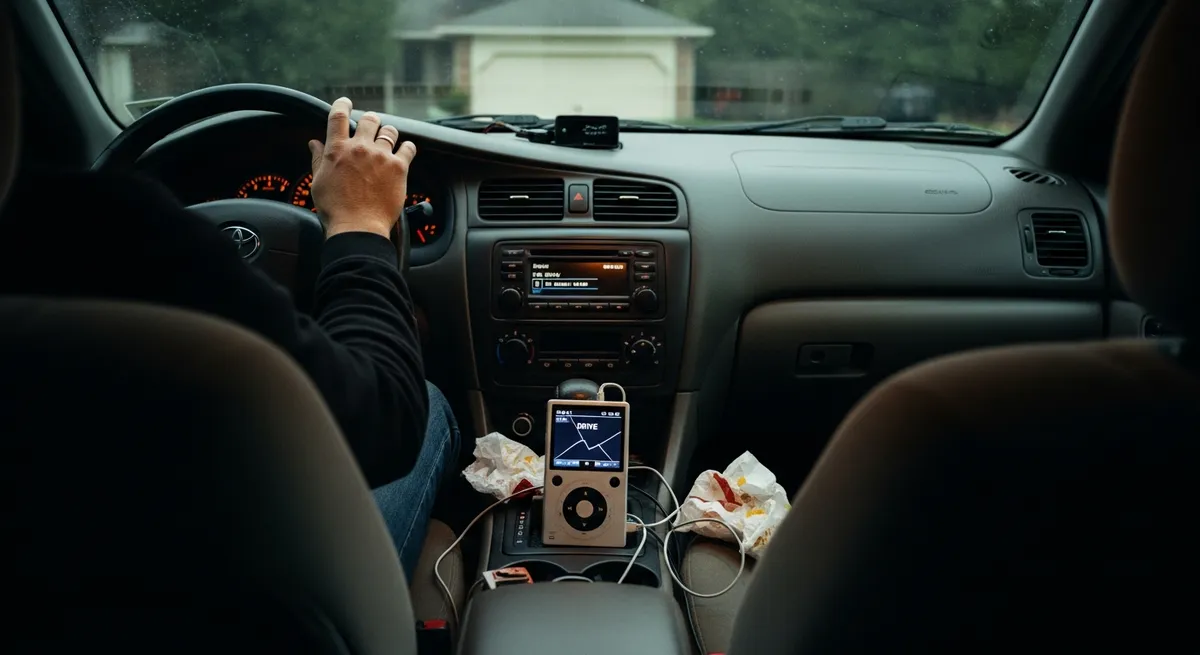
The music player was heavier than I remembered, that solid brick weight - and the crack across the screen ran diagonally like something had tried to split it in half. The playlist called DRIVE sat at the top of the list in all caps, above eleven others with names like mix 1 and untitled 3 and one that just said ???. I'd made DRIVE in a single sitting two years before, maybe three, sometime after midnight when I couldn't sleep, and I had never once played it. The engine was running. The driveway was still dark and the porch light threw a yellow oval over the hood and I sat there with my thumb on the wheel like I was waiting for permission. You know that feeling when the interior of a car becomes the only world that exists.
The last notch brought the song down to something I could feel more than hear - a low hum against the door panel, and then nothing. His breath fogged a small oval on the glass and cleared and fogged again. The road signs came and went in the headlights - a town I'd never stop in, another, a rest area with a single yellow light. My hands stayed at ten and two the way our father had taught us, and I didn't move them. As you drive through the dark - your brain processes sound differently than it does in the bright light of a house.2
He made a small sound, half-cough, the noise a person makes coming back from somewhere, and then I heard him fishing around in the dark footwell for the cord. The song that came through the speakers was a familiar folk track, the strings first - then the singer's voice sitting right in the center of the car like a third person. I watched the white lines come at the windshield and kept my hands where they were. He'd had that song somewhere inside him this whole time, all the years of truck-stop country and the radio set to AM, and I hadn't known it was there. You often find that your travel companions carry secret soundtracks you never expected to hear.
The Aux Cord My Brother Never Asked For
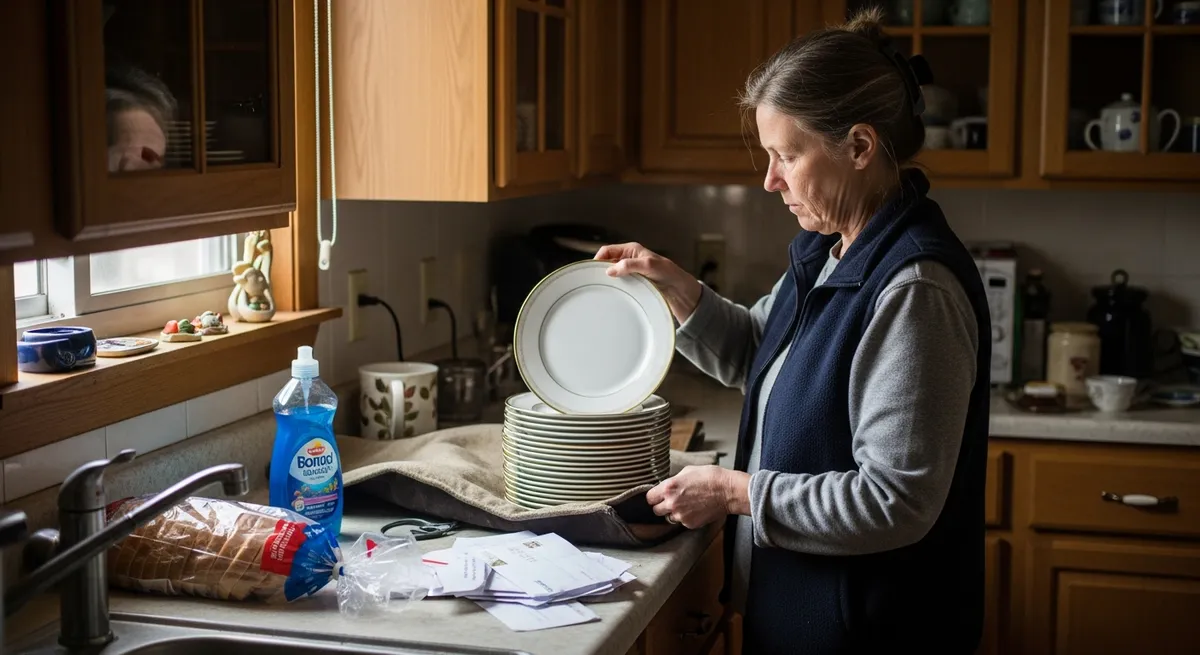
The jar of pasta sauce was cold from the bag and I stood there with my hand around it while the singer's voice came out of the laptop speaker on the counter, small and a little tinny, like a recording of a recording. The strings were still there but they seemed to be happening in another room. I set the jar down on the wrong burner by accident. Outside the window the neighbor's sprinkler ticked back and forth across the same strip of grass. I turned the volume up two notches and that made it worse somehow - so I turned it off and finished putting the groceries away in the quiet. You can't force a highway memory into a domestic space without losing the frequency response that made it feel real.3
The sky over Missouri went the color of a bruise going yellow at the edges, and that was when shuffle landed on the song I had been saving for three years, the one I'd put on DRIVE at midnight without being able to say why. I took the exit for the rest stop without deciding to, the gravel crunching under the tires, and I put it in park and left the engine running and kept my hands on the wheel at ten and two. A semi pulled in on the far end and sat there with its lights on - and a man got out and stretched his arms up and walked into the low concrete building and came back out, and the whole time the song was still going, the guitar doing the thing it does in the third minute, and I didn't move. The sky finished changing while I sat there - the yellow eaten up by something flat and gray - and when the song ended it ended, and then the next track started and I turned it off. I pulled back onto the highway in the quiet and the rest stop was already gone behind me - and I understood without wanting to that I had used the song up on Missouri, on the bruise-colored sky, on my own hands, and there was nowhere left to put it.
What the Rest Stop Receipt Knows
The receipt was the thin thermal kind that fades if you leave it in a hot car, and I knew that when I clipped it up there with the binder clip I found in the center console under two pennies and a dried-out highlighter. The clip was orange. Every time I opened the door the receipt swung once on its little hinge and settled - and the timestamp read 7:43 PM and below that $0.00 and below that THANK YOU FOR VISITING. I never took it down. You keep these markers of time because your 2024 travel logs are more about the feeling of the mile than the cost of the gas.
The gas station outside Amarillo had a radio bolted to the wall above the register, and the song coming out of it was one I'd put on DRIVE without thinking, third or fourth from the top, and I stood there holding a bottle of water and a bag of peanuts while the cashier waited and the song moved through its bridge and I couldn't make my hand open to put the money down. The cashier said something. I paid and got back in the car and sat in the parking lot until the song on the radio had time to end, which it couldn't - because I was in the car and the radio was inside and I knew it was still going in there, above the register, for someone else. The peanuts sat unopened in the passenger seat for two hundred miles, and every time I reached for them I didn't, and I'm not sure I could have explained it to anyone - even if I'd tried, even if someone had been there to ask. Auditory fatigue often hits you when you least expect it, making even your favorite tracks feel like a burden.4
The motel in Tucumcari had a clock radio on the nightstand, the kind with the red numbers that bleed a little at the edges, and I turned it on because the room was too quiet and then turned it off again when the song came through - not one of mine, just a song, but the guitar in the opening bar was close enough that my chest did the thing it had learned to do somewhere outside Amarillo. I lay on top of the covers in my clothes and looked at the textured ceiling and somewhere in the parking lot a car started and idled and pulled away, and the red numbers moved from 11:58 to 11:59 to 12:00 without making any sound. The music player was on the nightstand next to the clock and I turned it face-down. In the morning I found a Sharpie in the bottom of my bag and I uncapped it and held the tip over the screen of the device for a moment, and then I didn't write anything - just put the cap back on and set it on the pillow like that meant something, like I was deciding something, and then I checked out at the front desk and the woman there asked if I'd slept well and I said yes.
💡
Pro TipWhen you're building your own collection of the road songs that belong only to long drives - try listening to them on high-quality over-ear headphones first to simulate the enclosed environment of a car. This helps your brain anchor the memory to the audio fidelity before you ever hit the highway.
Frequently Asked Questions
Why do some songs sound better in the car than at home?
Mostly, it's about acoustics. The enclosed, small space of a vehicle provides a unique pressure environment and direct sound paths that your kitchen or living room simply can't replicate with standard speakers.
Can road songs actually help with driving fatigue?
Yes, significantly. Research published in 2021 by the National Center for Biotechnology Information (NCBI) suggests that music with a consistent tempo can maintain arousal and reduce cognitive drift during long-duration driving.
How should I organize my travel playlists?
Group your tracks by