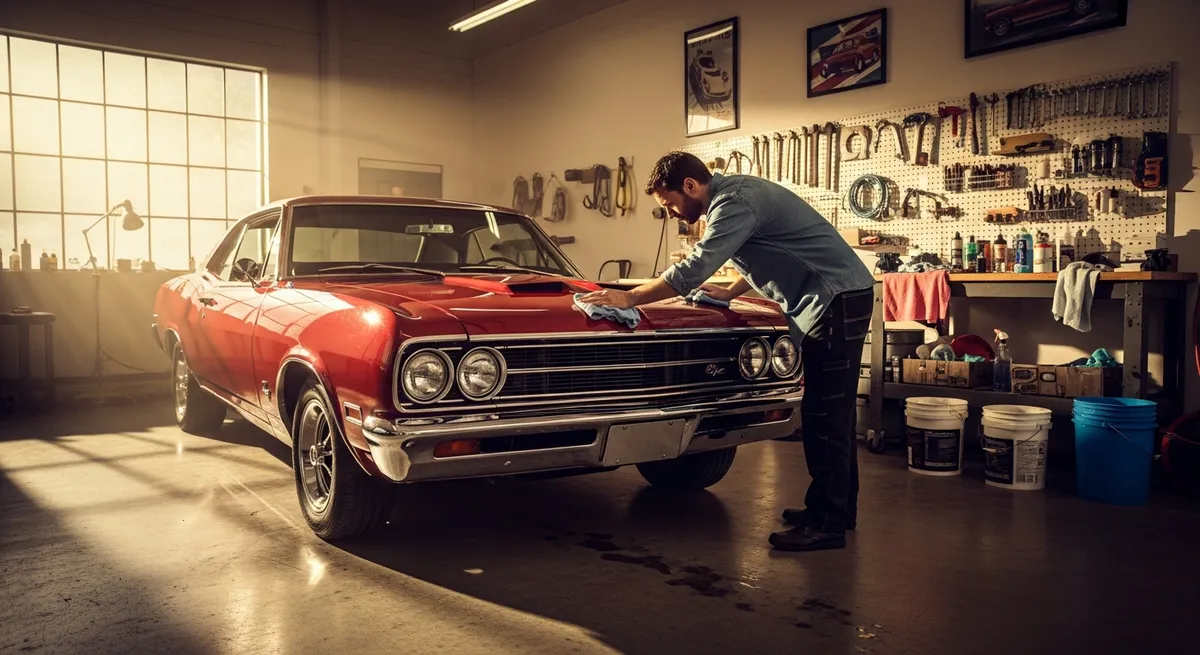
The Last Clean Car becomes a fleeting memory when road grime and oxidation start to dull the finish on your daily driver. Fortunately, you can protect your vehicle's value by using professional detailing methods that preserve the clear coat.
The water came out cold and then colder, and he held his hands under it until they went pink. He worked the soap into the sponge with both palms the way a baker works dough, squeezing until the lather piled up and didn't fall. He reached the center of the roof on his toes - the sponge leaving dark trails that closed behind it like a field being combed. A robin landed on the fence post and watched him the way things watch a person who is in no hurry.
The Ritual of Physical Preservation
He crouched at the rear quarter panel and ran his thumb across the raised spot the way a person reads a word in the dark. The paint there was the color of a good match, almost, a half-shade warmer than the rest of the panel, and he'd mixed it himself from two bottles on the shelf above the workbench, the ones with the dried drips down the sides. He pressed the chamois flat against it and held it there a moment before moving on.
The Accord idled and then didn't. Ray's son left the window down and the radio on - something with horns. Ray picked up the chamois from where he'd set it on the side mirror, shook it once, and draped it over the folded paper on the roof, smoothing the near edge down with two fingers the way you'd tuck in a corner. His son said the mileage, said the word transmission - and Ray moved to the windshield and started on the lower left, working the chamois in the same slow ovals, the glass going clear behind him in the October light.
Measuring the Value of Attention
The water hit the grass in a thin rope and spread dark in a ring around the clover. He wrung the chamois twice, three times, until it gave up almost nothing - then folded it over the fence rail while he crouched. The toothbrush was the blue one from the coffee can by the hose bib, its bristles bent the way a brush bends when it has been used for a long time on things that aren't teeth. He worked it along the chrome in short strokes, packed grime rolling ahead of it like the edge of a wave, and the strip came back silver in the seam the way things come back when someone hasn't stopped paying attention.
He draped the chamois over the mirror, left corner lower than the right - the way it had dried on that same mirror since before his son knew how to tie his shoes. The LeSabre took the afternoon along its flank in one long gold seam, the waxed hood holding the oak tree and the fence and the thin rope of cloud above the garage in a surface so still it looked like something you shouldn't touch. Ray stood with his hands at his sides. A door opened somewhere down the street, and he didn't turn.
Managing the Signs of Wear
He went to the garage for the tire brush and came back with it and a can of the black dressing, the one with the red lid that had been there so long the label had gone the color of old newspaper. He worked it into each tire in short strokes, the rubber drinking it in and going dark and even - the way a face goes when it stops holding something. The can made a hollow knock when he set it on the driveway. He stepped back and looked at all four, going down the row the way a person checks on sleeping children.
He worked the chamois into the cup of the side mirror, the one held on now by two screws where there had been three, and turned it by hand to find the angle that caught the light. The chrome ring around it was the only piece he'd ever had replated, at a shop in Utica that had closed not long after - and he could still see where the man's buffing wheel had left a faint swirl near the bottom, a half-moon no wider than a thumbnail. He touched it the way you touch a scar you've stopped being angry about. Then he dried the mirror face with the corner of the chamois and tilted it back to where it had always been.
Consistency and Long-Term Maintenance
He worked the registration back into the envelope the way it had always gone, tab first, and slid it behind the proof of insurance from 2019, the one the agent had told him to replace and that he hadn't replaced. The glove box latch caught on the second try - the way it had caught on the second try for eleven years, and he pressed his thumb against the button until he heard the click he knew was coming. He sat for a moment with both hands in his lap, the vinyl warm from the sun through the glass. Then he got out and went to get the wax.
He found the wax behind the paint bottles, a tin of Turtle Wax so old the lid had fused to the rim and he had to work a flathead under it the way you work a lid off something that hasn't been opened since a different life. The wax inside had gone the color of old cream and pulled away from the edges, but the center was still good - and he pressed two fingers in and brought them out trailing a thin white curl. He worked it into the hood in the same slow ovals, smaller now, the size of a dinner plate, overlapping each pass by half. The cloth he used was a diaper, one of the last three folded on the shelf above the workbench - kept there since his son had grown out of them and Ray hadn't thrown them out.
He found a bird dropping on the trunk lid, white and already dried to a crust at the edges, and he went to the hose and wet a corner of the diaper and came back and held it flat against the spot until the crust softened, the way you hold a warm cloth against something that has closed over. He worked it off in circles no wider than a quarter, checking the paint beneath with his thumb - and when the trunk came back clean he stood there a moment looking at his own reflection bent long in the curve of the metal. The reflection had his father's posture. He smoothed the diaper over the trunk lid once more anyway, one slow oval, the cloth whispering against a surface that was already dry.
💡
Pro TipWhen applying wax - work in the shade to prevent the product from drying too quickly, which can make it difficult to buff and may leave streaks on your vehicle's finish.
Frequently Asked Questions
How often should you detail your car?
Experts generally recommend a thorough detailing every four to six months. According to industry data, regular professional car cleaning can significantly slow the depreciation process of your vehicle over time2.
Does waxing help prevent rust?
Yes, wax creates a physical barrier. By sealing the paint, wax prevents moisture and corrosive elements like road salt from reaching the metal - which is the primary cause of oxidation and rust.
Can old car paint be restored?
Mostly, yes. While severe clear coat failure requires a repaint, many faded surfaces can be revitalized using specialized cutting compounds and polish that remove the top layer of oxidized paint.
Is hand washing better than automatic car washes?
Generally, hand washing is safer for the finish. Many automatic washes use stiff brushes that can create micro-scratches, or "swirl marks -" whereas a careful hand wash allows you to monitor the pressure and tools used.
What's the best way to clean chrome trim?
Use a dedicated chrome polish and a soft-bristled brush. Avoid abrasive cleaners that can scratch the plated surface, and always dry the chrome immediately to prevent water spots.
Disclaimer: This article provides general information regarding vehicle maintenance and is for illustrative purposes only. Always follow the manufacturer's specific care instructions for your vehicle.