Creating a dedicated space for relaxation at home sounds straightforward, but most people either overcomplicate it or miss the elements that actually drive a physiological response. The science is more specific than "add some candles." Getting it right means understanding what the body responds to and why.
What Home Wellness Spaces That Encourage Relaxation Actually Are
A home wellness space isn't a spa room or an expensive renovation. It's any defined area - a corner, a room - a section of a bedroom - that has been deliberately designed to reduce physiological arousal and support parasympathetic nervous system activity. The term covers everything from a simple reading chair with controlled lighting to a full dedicated meditation room.
The reason this matters is straightforward. According to the Harvard T.H. Chan School of Public Health's Healthy Buildings program, the typical American spends about 65% of their life inside their home1. That fraction of time isn't neutral. The physical environment - light, sound, air quality, temperature - continuously signals the nervous system. A space designed for arousal reduction works in the same direction as behavioral interventions like meditation and mindfulness - rather than against them.
Clinically, the goal is to lower cortisol, reduce sympathetic nervous system tone, and support recovery from daily stressors. These are measurable outcomes, not abstract ones.
The Physiological Mechanism Behind Environmental Relaxation
The body interprets sensory input as threat signals or safety signals. Loud - unpredictable sound raises cortisol. Bright, blue-spectrum light suppresses melatonin and elevates alertness. Clutter triggers low-grade attentional demands that maintain a mild stress state. A well-designed space removes these inputs systematically.
Research from the University of Kentucky's Human Resources health resources indicates that even a short break of under seven minutes of listening to nature sounds can reduce muscle tension, pulse rate, and stress.2 That's a brief, low-cost intervention with a measurable physiological signal. The same source notes that calming spaces at work can reduce stress by about 60% after just 15 minutes of exposure2. Translate that to a home setting: a person returning from a demanding workday who spends 15 minutes in a properly designed rest space is using a dose-response relationship that's supported by the existing literature.
Air quality is a less obvious but equally important variable. The Healthy Buildings program at Harvard notes that a third of all the air a person breathes in their life will be the air in one room - their bedroom.1 Particulate matter - CO2 accumulation, and volatile organic compounds all have documented effects on cognition, sleep, and mood. These aren't separate from relaxation; they're part of the same physiological system.
The Key Variables That Determine Whether a Space Works
Four environmental factors carry the most clinical weight: light, sound - air quality, and visual complexity.
Light wavelength and intensity directly regulate circadian rhythm and arousal. Warm, dim light in the 2700K range signals the suprachiasmatic nucleus differently than overhead fluorescent at 5000K. For a relaxation space, this means controllable, warm-spectrum lighting - not decorative - but functional.
Sound masking matters because the auditory system doesn't fully habituate to intermittent, unpredictable noise. A consistent low-level sound - water, soft broadband noise, or nature recordings - reduces the threat-detection response to background sounds. The seven-minute nature sound finding above is one data point in a larger body of work showing that natural acoustic environments reduce physiological stress markers.
Air quality is where most home wellness designs fail silently. The Healthy Buildings program reports that particle levels while cooking with an unvented stove can reach 10 times higher than the health-based limits for outdoor air pollution.1 An adjacent kitchen with poor ventilation can undermine the air quality of a relaxation space entirely. Radon is another documented home air hazard; according to the same source, radon causes lung cancer and can seep into a house through the basement.1 A wellness space in a basement without radon mitigation is working against its purpose at a foundational level.
Visual complexity - clutter - asymmetric disorder, unfinished tasks in view - maintains low-level attentional engagement. Reducing it's not an aesthetic preference; it's a load-reduction strategy for the prefrontal cortex.
The Real Tradeoffs: Cost, Effort, and Realistic Expectations
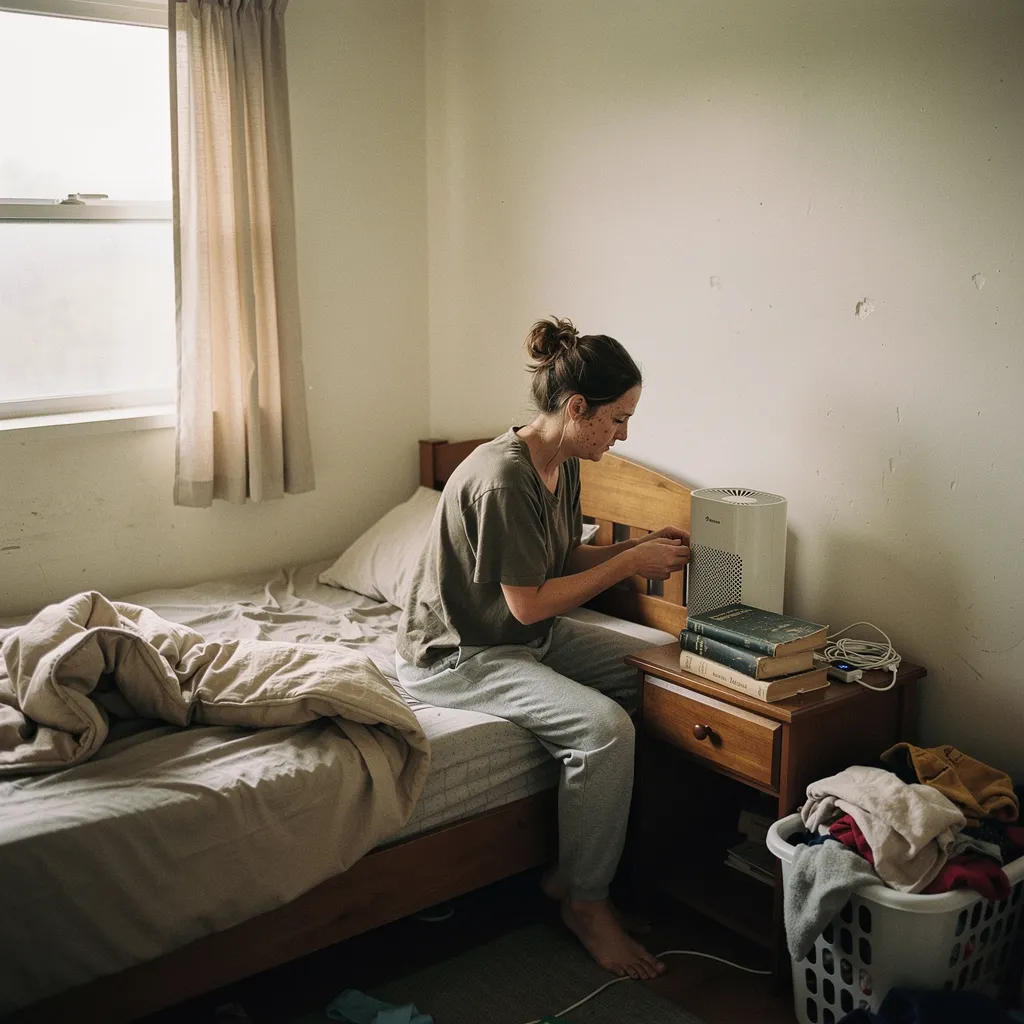
This is where honest framing matters. A basic, effective wellness corner requires almost no financial investment - a chair with good lumbar support - a warm-spectrum bulb, a small HEPA air purifier, and a way to mask sound. Contrast that with a fully outfitted dedicated room: acoustic panels, biophilic design elements, air quality monitoring - and circadian lighting systems can run several thousand dollars. The functional difference between these two versions is smaller than the cost difference suggests.
A worked example: a single warm-spectrum smart bulb costs roughly $10 to $15. A basic portable air purifier rated for a small room runs around $50 to $80. A white noise machine costs about $30 to $50. Total investment for the core physiological variables - light, air, sound - is approximately $90 to $145. A fully designed dedicated meditation room with professional acoustic treatment, biophilic wall panels, and a circadian lighting system can easily reach $2 -000 to $5,000 or more depending on room size and materials. The low-cost version addresses the same three sensory systems. The expensive version adds aesthetic coherence and may improve adherence over time, but it doesn't produce a proportionally larger physiological response per session.
Regarding behavioral practices in these spaces: the National Center for Complementary and Integrative Health (NCCIH) reports that the percentage of U.S. adults who practiced meditation more than doubled between 2002 and 2022, from 7.5 to 17.3 percent.3 Meditation was the most popular of seven complementary health approaches tracked in 2022, ahead of yoga - which was practiced by about 15.8 percent of adults.3 Designing a space that supports meditation practice is clinically reasonable. However, a 2020 review examined 83 studies involving a total of 6,703 participants and found that 55 of those studies reported negative experiences related to meditation practices, according to the NCCIH3. Adverse effects are real, particularly for individuals with trauma histories or active psychiatric conditions. A wellness space supports relaxation; it doesn't replace clinical care.
What Undermines a Relaxation Space in Practice
The most common structural failure is location. A space adjacent to high-traffic - high-noise household areas - near a kitchen, a main hallway, or a room with a television - is fighting acoustic contamination it can't win without significant sound isolation. Distance from noise sources is more effective than any sound-masking tool.
The second structural failure is multi-use conflict. A space that's also used for work, for watching stimulating content, or for argument-heavy conversations acquires contextual associations that undermine the relaxation response. The nervous system learns context rapidly. A space that signals safety only works if it consistently signals safety.
Screen presence is the third common failure. Screens in a relaxation space introduce blue-spectrum light - unpredictable auditory stimulation, and attentional demands. Removing them from the space - not just turning them off - is more effective than using them in "relaxation mode."
Maintenance of air quality is the fourth. A closed, unventilated room with soft furnishings accumulates particulate matter and VOCs. This doesn't feel like a problem but acts as one physiologically. Regular ventilation with outdoor air and use of a HEPA purifier addresses this; ignoring it undermines the rest of the design.
Where People Slip Up
The first common mistake is equating aesthetics with function. A room that looks calming in a photograph - neutral tones, minimal furniture, a single plant - may not perform as a relaxation space if the lighting is wrong - the sound environment isn't managed, or the air quality is poor. The visual appearance of a space and its actual physiological effect are related but not identical.
The second mistake is treating a wellness space as a substitute for behavioral or clinical intervention. A well-designed room supports relaxation practices; it doesn't treat anxiety disorders, depression, or chronic pain on its own. A 2019 review, cited by the University of Kentucky's health resources - found that mindfulness-based approaches didn't reduce the frequency, length, or pain intensity of headaches.2 Environmental design has real effects; it also has real limits. Patients with diagnosed conditions should discuss complementary approaches with their clinician.
The third mistake is underestimating air quality. Most home wellness design advice focuses on soft furnishings, color, and lighting. The Healthy Buildings program at Harvard makes clear that indoor air quality has direct effects on cognition and wellbeing - and that common household activities - cooking with an unvented range, for example - produce acute particulate exposures well above outdoor safety thresholds.1 Designing for relaxation without attending to air is designing for roughly half the system.
The fourth mistake is inconsistency of use. The physiological benefits of a relaxation space are dose-dependent and habituated over time. Using the space only in crisis - when stress is already acute - misses the larger benefit of regular, low-arousal maintenance. Short, consistent daily use is more effective than infrequent long sessions. The seven-minute nature sound finding is a useful reference point: even brief, regular exposure to the designed environment accumulates benefit over time.
If this design framework is new - the practical next step is to assess the three core variables in whatever space is currently available - light spectrum and controllability, background sound level, and ventilation - before adding any new furnishings or design elements. Address those three first. Everything else is secondary.
Disclaimer: This article is for general informational purposes and doesn't constitute medical advice. Readers with diagnosed health conditions should consult a qualified clinician before making changes to their health management approach. All figures cited are approximate and subject to change.
References
Disclaimer
This article is for general informational purposes only and isn't medical or health advice, nor a substitute for professional care. For your own health, talk to your doctor or a qualified provider.