Independence in later life has a plain definition: handling your own days, the bathing and dressing and cooking and bill-paying and getting out the door, without needing another person to make them happen. Nearly everyone says they want that for as long as possible. The habits that actually protect it are well documented, and the honest surprise is how ordinary they are. The numbers behind them are worth looking at squarely, because a few of them are startling.
The Activity Number That Anchors Everything
Start with the one figure that appears in essentially every serious discussion of healthy aging. The World Health Organization's guidance sets the bar at a minimum of 150 minutes of moderate-intensity physical activity per week for adults. Spread across a week, that's a bit over twenty minutes a day of brisk walking, swimming, cycling, or anything else that raises the heart rate and can be kept up in conversation.
Now the sobering companion figure: by WHO's estimate, 31 percent of adults worldwide don't meet recommended activity levels, a number that has been moving in the wrong direction. So roughly one adult in three is missing the single cheapest intervention on record for staying functional.
What does meeting the bar buy? WHO's summary of the evidence for adults and older adults lists reduced risk of death from all causes, reduced cardiovascular mortality, and lower rates of hypertension, several cancers, and type 2 diabetes, along with improved mental health. One more item on that list deserves special attention from anyone past sixty: reduced risk of falls.
Falls Are Where Independence Usually Breaks
The chain from a small stumble to a lost way of life is short and well mapped. The National Institute on Aging states it directly: the risk of falling increases with age, and falls can lead to fractures, hospitalization, and disability. A hip fracture at 74 is rarely just a hip fracture. It's weeks of immobility, muscle loss on top of the injury, and for many people the moment the conversation about assisted living begins.
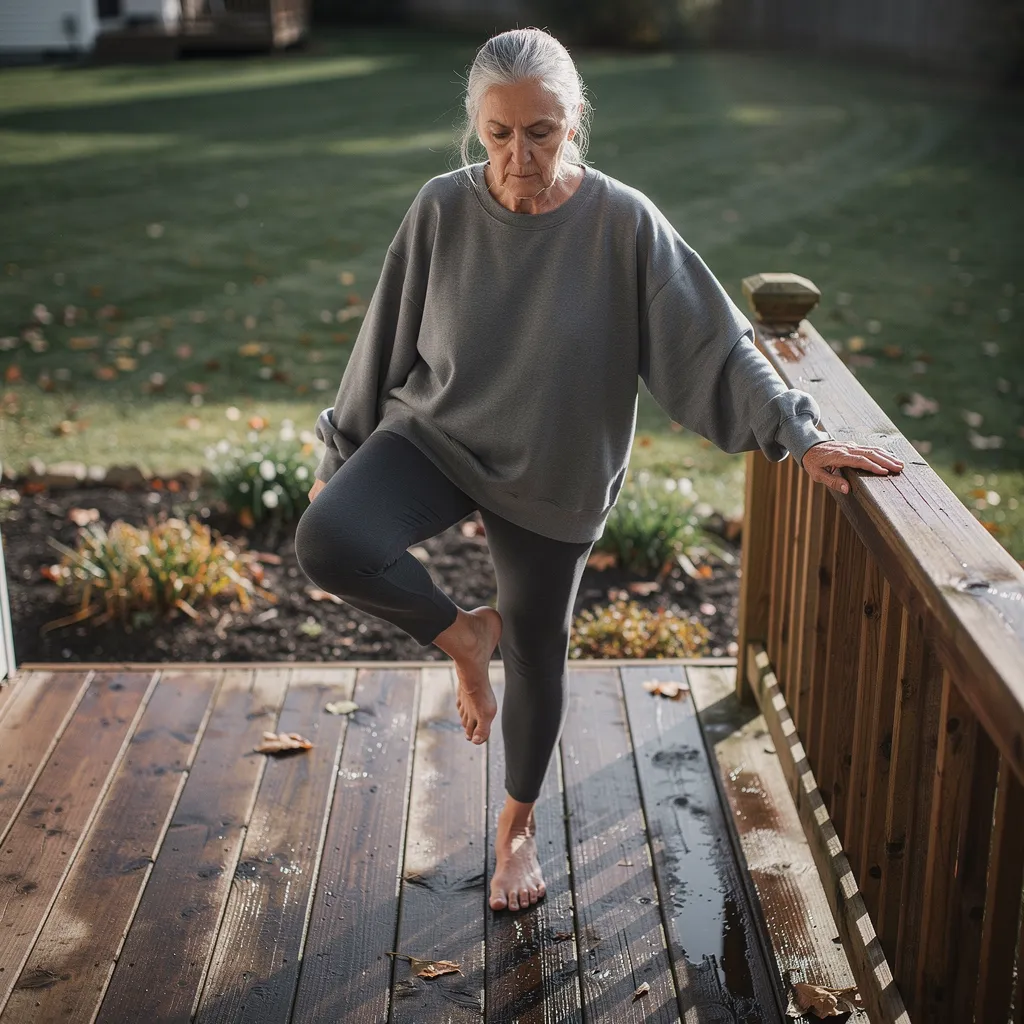
The encouraging part is that fall risk responds to deliberate practice. Balance is trainable, the same way strength is. NIA's exercise materials for older adults give balance work a place of its own, and its falls-prevention guidance walks through the causes of balance problems and ways to address them. Tai chi classes, heel-to-toe walking drills, standing on one foot while the coffee brews: none of it looks like medicine, and the evidence treats it as exactly that.
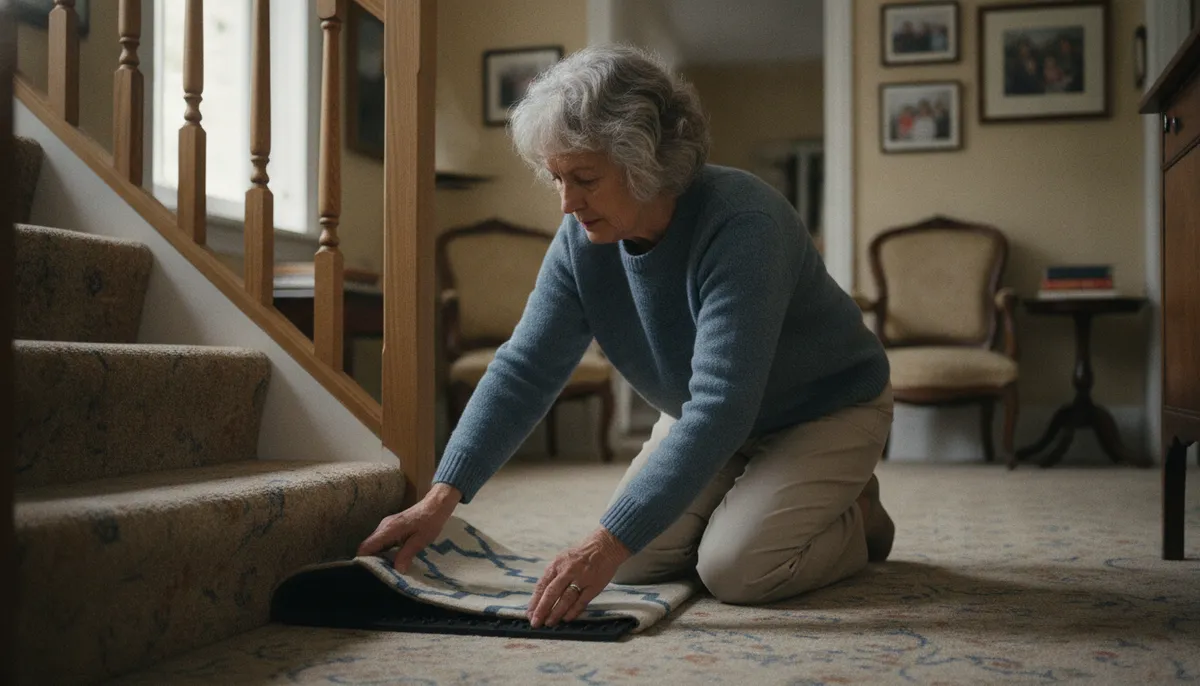
The other half of fall prevention is the house itself. NIA publishes room-by-room home safety guidance for preventing falls, and the pattern in it holds for most homes: the dangers are mundane and fixable. Loose rugs, dark stairways, bathtubs without grab bars, extension cords crossing walking paths. An afternoon spent on these is one of the highest-yield afternoons available to anyone planning to stay in their own home.
The Free Checkup That Sets the Baseline
Habits work best with a starting measurement, and for Americans turning 65 there's one built into the system. Medicare Part B covers a one-time "Welcome to Medicare" preventive visit during the first 12 months after Part B coverage begins. Per Medicare's own coverage page, you pay nothing for the visit itself if your provider accepts assignment, and the Part B deductible doesn't apply, though additional tests or services ordered during the visit can carry their own costs.
The visit is a review rather than a full physical: medical and family history, current prescriptions, and a plan going forward, with referrals to specialists if something warrants one. Its value is the baseline. Blood pressure trends, medication interactions, early signs of the conditions that erode function all become visible sooner when someone has looked at the whole picture once. The catch is the deadline. The window is the first year of Part B, and a benefit with a twelve-month fuse is easy to lose to the general chaos of a retirement transition. Anyone in that first year should book it; anyone past the window should ask about Medicare's regular wellness visits instead.
What a Protective Week Actually Looks Like
- Movement most days. Enough moderate activity across the week to reach that 150-minute mark, with a rhythm you can keep in January as well as June. Walking counts fully.
- Regular strength work. Muscle strengthening benefits everyone, in WHO's plain phrasing, and muscle is the reserve you draw on to get out of chairs, carry groceries, and recover from illness. Resistance bands and body weight are enough to start.
- Balance practice woven in. A few minutes daily beats a long session monthly. This is the habit aimed directly at the fracture-and-hospitalization chain.
- Breaks in the sitting. Long unbroken stretches in the chair are their own exposure, separate from whether you exercised that morning. Stand and move a little every hour.
- Social contact on the calendar. Retirement removes the structure that used to generate movement and company automatically. Standing commitments, a class, a volunteer shift, a weekly walk with a friend, rebuild both at once.
- One annual conversation with a doctor that looks at the whole picture: medications, balance, vision, mood, and anything newly harder than it used to be.
The Money Side, Stated Carefully
Long-term care is expensive enough that most households feel it as one of the largest financial risks of later life, and every year of preserved independence is a year that cost stays off the ledger. Precise dollar figures vary so much by region, care level, and year that any single national number deserves suspicion; what doesn't vary is the direction of the arithmetic. Habits that cost little and delay dependency, even modestly, protect savings in amounts that dwarf their price.
Honesty requires the other half of the statement. Good habits shift probabilities without guaranteeing outcomes. Genetics, accidents, and diseases that arrive regardless of behavior are all real, which is why the habits belong alongside financial planning for care scenarios rather than in place of it. A retiree who exercises daily and also understands what Medicare does and doesn't cover for long-term custodial care, and has talked through the gap with a financial planner, is planning. One who assumes the walking will make the question moot is hoping.
None of this is a program to start heroically on a Monday. It's a handful of small mechanisms, most of them pleasant, that compound quietly for decades. Anyone with existing health conditions, a history of falls, or a long stretch of inactivity behind them should shape the specifics with their physician first, and a physical therapist can turn "do balance exercises" into a plan matched to an actual body. The numbers say the effort pays. The days say it's worth having anyway.
References
- https://www.who.int/news-room/fact-sheets/detail/physical-activity
- https://www.nia.nih.gov/health/falls-and-falls-prevention
- https://www.nia.nih.gov/health/exercise-and-physical-activity
- https://www.medicare.gov/coverage/welcome-to-medicare-preventive-visit
Disclaimer
This article is for general informational purposes only and isn't medical or financial advice. Health needs vary by individual. Consult your physician before changing your activity routine, and a qualified financial professional for planning decisions.