You do not need a contractor, a permit, or a home equity loan to make a house dramatically safer to age in. Most of the changes that prevent falls are small: a second handrail, a grab bar set into studs, a brighter bulb, a rug that finally goes to the curb. A determined person with a free Saturday and a modest budget can work through an entire house in a weekend, and the National Institute on Aging publishes a room by room guide to preventing falls at home that reads like it was written by someone who has actually stood in a dim hallway holding a laundry basket. What follows is that same walk through your own house, with honest talk about what each fix tends to cost and when it is worth paying a professional to look things over.
One principle before you start: walk the house the way you actually live in it. Carry the laundry. Come in with groceries in both arms. Get up at 2 a.m. and go to the bathroom without turning on the overhead light, because that is what you really do. The hazards will introduce themselves.
The entry: where the outside world meets your floor
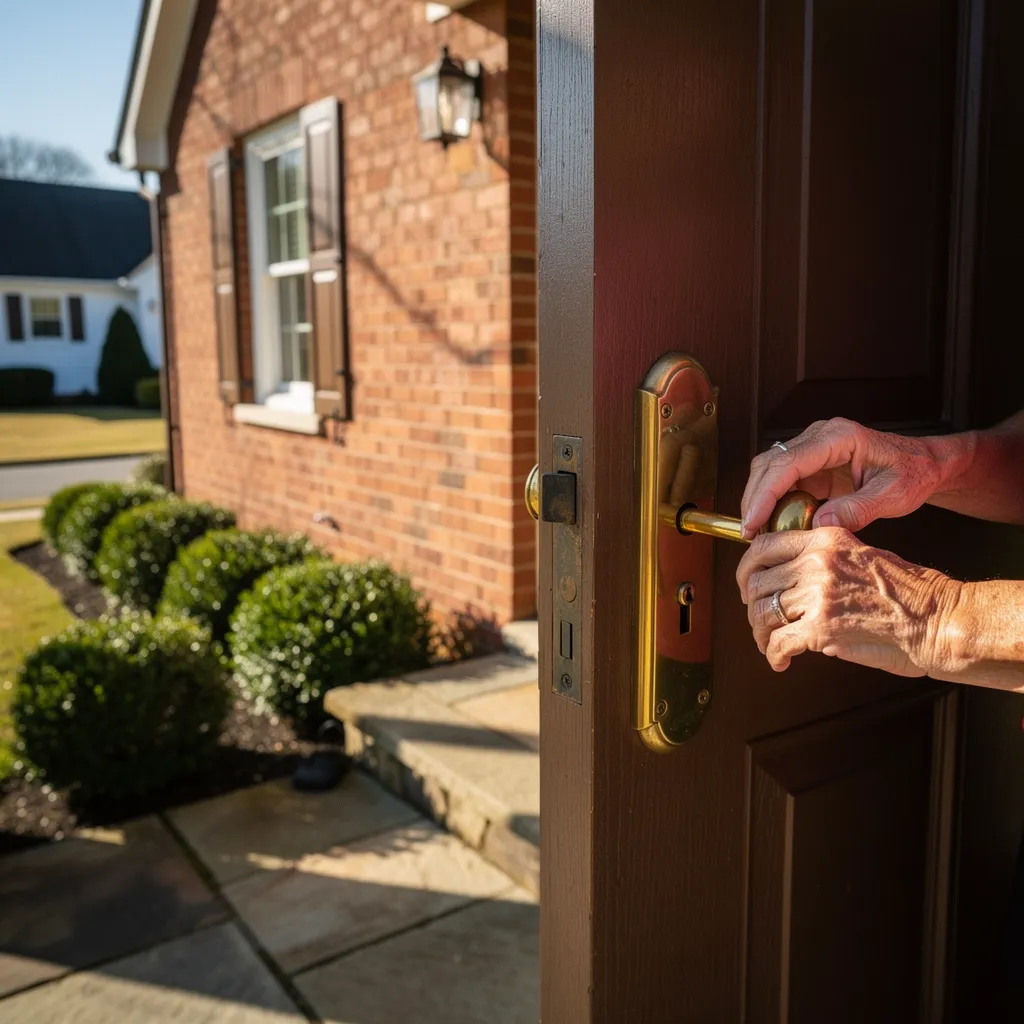
Falls love transitions, and the front door is the biggest one in the house. Wet shoes meet smooth flooring, arms are full, and the light is often behind you instead of ahead of you.
- Light the approach. A motion sensor light over the door or along the walk means you never fumble for a switch with your hands full. Battery powered models start around fifteen to twenty dollars; a hardwired fixture with installation might run a hundred or more if you hire an electrician.
- Tame the threshold. A raised door threshold catches toes. A small beveled transition ramp costs roughly twenty to fifty dollars and takes minutes to place.
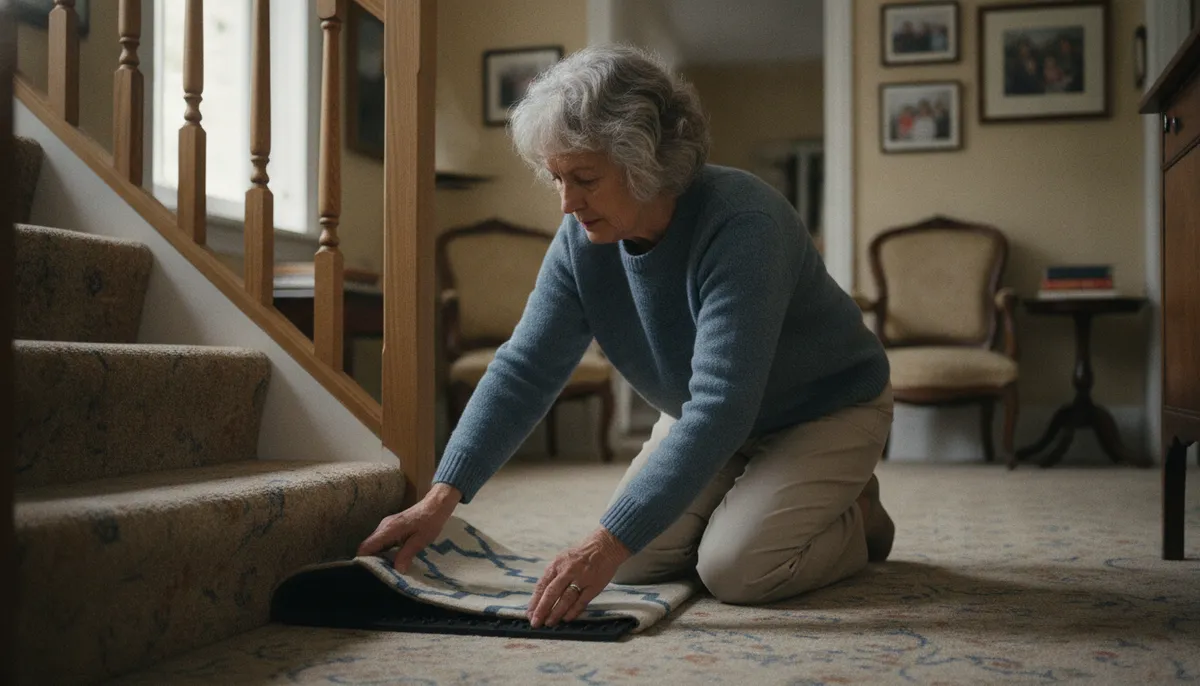
- Rethink the mat. A curling mat is a trip hazard wearing a welcome sign. A low profile mat with a rubber backing runs twenty to forty dollars. If the old one slides or curls, replace it rather than flattening it one more time.
- Add a place to set things down. A small bench or shelf by the door lets you put the bags down before you deal with keys and locks. You can often repurpose furniture you already own.
The stairs: the one place to be a perfectionist
If you fix only one area, fix this one. Stairs combine height, momentum, and hard edges, and the fixes are unglamorous and effective.
- Two handrails, not one. NIA's guidance is plain about handrails on stairways, and a second rail on the open side is the single upgrade stair users feel immediately. A basic wooden rail with brackets costs forty to a hundred dollars in parts; a handyman install typically adds one to three hundred depending on your market and the length of the run.
- Tighten what exists. A rail that wiggles is a promise the house cannot keep. Tightening brackets into studs costs nothing but an hour.
- Light both ends. Switches at the top and bottom, and a light that actually reaches the treads. If rewiring is out of the question, plug in night lights at each landing for a few dollars apiece.
- Mark the edges. High visibility tread strips, twenty to forty dollars for a staircase, make each step read clearly. Loose carpet on treads gets repaired or removed, no exceptions.
The bathroom: small room, hard surfaces, wet floor
Everything in a bathroom is slippery or unforgiving, usually both. The good news is that this room rewards small money more than any other.
- Grab bars where you actually reach. One inside the tub or shower, one beside the toilet. The bars themselves run twenty to sixty dollars each; professional installation into studs or with proper anchors commonly adds one to two hundred per bar. A towel bar is not a grab bar and will not hold a falling adult, so buy the real thing.
- Non slip surfaces underfoot. Adhesive strips or a quality suction mat in the tub, ten to thirty dollars. Bath mats outside the tub need rubber backing or they join the rug pile at the curb.
- A place to sit. A shower chair or transfer bench, forty to a hundred and twenty dollars, turns the most dangerous minute of the day into an ordinary one. Pair it with a handheld shower head, twenty five to seventy five dollars, and most people install that themselves with a wrench and some plumber's tape.
- Height where it helps. A raised toilet seat, twenty five to sixty dollars, spares knees and reduces the deep squat that throws balance off.
The kitchen: the reaching room
Kitchen falls tend to start above shoulder height. Someone wants the good platter, the step stool is in the garage, and a chair with wheels volunteers for a job it should never have.
- Move the everyday things down. Plates, glasses, and the pots you use weekly belong between hip and shoulder height. This costs nothing except an afternoon and a few decisions about what you actually use.
- Buy one good step stool. A steady stool with a tall handle to hold runs thirty to seventy dollars. Then give yourself permission to use it every time.
- Deal with spills and glare. Keep a towel within reach of the stove and sink, and add under cabinet lighting if your counters live in shadow. Battery or plug in strips start around twenty dollars.
- Skip the floor wax. A gleaming kitchen floor photographs well and walks badly.
The bedroom: designed for the middle of the night
Judge this room at 2 a.m., because that is when it matters. The route from bed to bathroom should be walkable half asleep in the dark.
- Light the path, not the room. Night lights with dusk to dawn sensors, ten to twenty five dollars for a set, along the route to the bathroom. A lamp or switch you can reach without getting up, so the choice is never between darkness and a stretch.
- Clear the runway. No cords across the path, no shoes at the bedside, no throw rug between bed and door. NIA's checklist singles out throw rugs for a reason; they cause exactly the slow slide that ends in a broken wrist.
- Keep the phone within reach of the bed. Whether it is a cell phone charging on the nightstand or a cordless handset, the point is that help never requires crossing a dark room.
- Mind the bed height. You should be able to sit on the edge with both feet flat on the floor. Risers or a different frame fix a bed that is too low, usually for under fifty dollars.
When a professional assessment earns its fee
A weekend pass catches the obvious hazards. Some situations deserve trained eyes. If someone in the house has already fallen, uses a walker or wheelchair, has Parkinson's, neuropathy, or serious vision loss, or is coming home after a hospital stay, ask about a home safety evaluation. An occupational therapist can walk the house with you and match changes to how a specific body actually moves; NIA's fall prevention materials point in this direction, and your doctor can often make the referral. Costs vary widely and some evaluations are covered as part of home health care after a hospitalization, so ask your insurer before paying out of pocket. Your local Area Agency on Aging, reachable through the federal Eldercare Locator, can tell you what home modification help exists in your county, and NIA notes on its aging in place page that state housing agencies, social services departments, and community programs sometimes help pay for repairs and safety updates. It costs a phone call to find out.
What a weekend of fixes cannot do
Honesty requires saying this clearly: hardware addresses the house, and the house is only half the story. Falls also come from medication side effects, blood pressure that drops on standing, weakening legs, and eyeglass prescriptions two years out of date. A perfectly lit stairway does not fix dizziness. If falls or near misses keep happening in a house you have already made safe, that pattern belongs in front of a doctor, who can review medications and check the medical side of balance. The grab bars are still worth installing this weekend. Just do not let the finished checklist convince you the whole job is done.
Start at the front door with a notepad, walk the route you walk every day, and write down everything that catches a toe, hides in shadow, or slides underfoot. Most lists come out to a dozen items, and most of those cost less than dinner out to fix. The house you already love can keep you a long time yet. It just needs you to walk through it once with clear eyes.