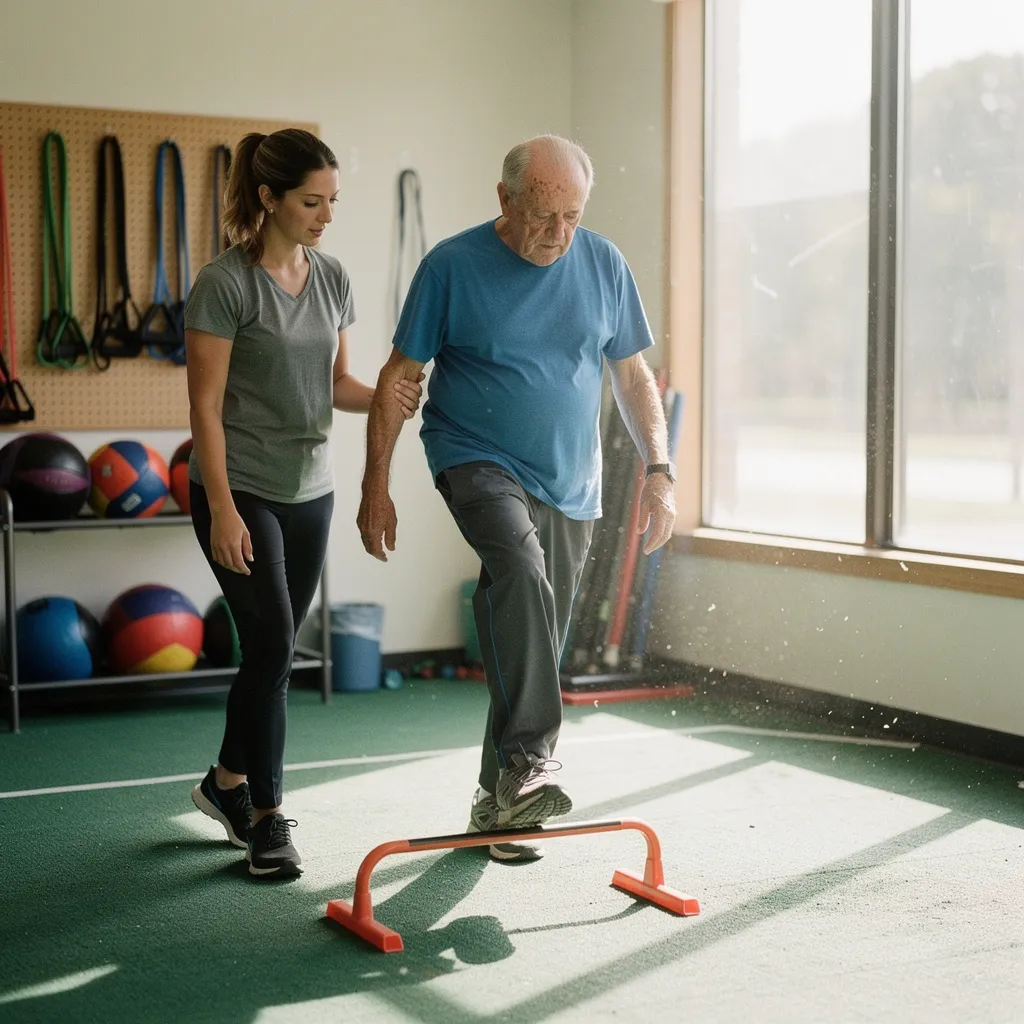
After a fall, most families arrive at the same quiet agreement: slow down, hold the railing, go out less. It feels like prudence, and everyone involved means it kindly. Physiologically, it works more like surrender. Strength, reaction time, and the body's sense of its own position all fade fastest in people who move least, so the cautious response steadily manufactures the next fall. The evidence on this point is unusually consistent, and it points the opposite direction: balance in older adults is trainable, and training it is one of the few interventions reliably shown to reduce falls.
The scale of the thing
Falls are not a niche concern. The National Council on Aging, summarizing CDC data, reports that about 14 million Americans age 65 and older fall each year, roughly one in four, and that falls are the leading cause of both fatal and nonfatal injuries in this age group. Most hip fractures in older adults are the result of a fall, and a hip fracture is frequently the event that ends independent living. Set against that, the investment side of the ledger is small: a standard 12-week group balance class meeting twice a week comes to about 24 contact hours. Few things in medicine offer a better ratio of hours spent to disaster avoided.
Why "just be careful" keeps winning anyway
The passive approach persists for understandable reasons. Fear is the first. A fall is frightening for the person and for their children, and restriction feels like the loving response. The second reason is clinical habit: a brief "watch your step" is faster than arranging a referral to a structured program, so many older adults never hear that such programs exist. The third is a confusion between general exercise and balance training. An older adult who walks every day reasonably feels covered. Walking is genuinely good for the heart and worth keeping, but it rarely challenges the systems that actually prevent falls, the coordinated work of inner ear, vision, and the pressure sensors in feet and joints. Those systems only improve when they are specifically and progressively challenged, which daily walking on familiar ground does not do.
So the practical question is what does challenge them, at what dose, and for how long.
The programs with real evidence behind them
Four kinds of program dominate the research, and they share a spine: direct balance challenge, lower-body strengthening, and difficulty that increases over time.
Tai chi has the deepest trial record. A recent meta-analysis of randomized trials found tai chi improves balance performance in healthy older adults, and fall-prevention trials have repeatedly shown reductions in fall rates and in fear of falling. Its mechanism is a useful two-for-one: slow, controlled weight shifting trains the body, while the sustained attention the form demands trains the mind-body coordination that tends to fail when an older person is distracted mid-step.
Otago-style home programs, developed and validated in New Zealand, use a structured set of 17 leg-strengthening and balance exercises, typically prescribed by a physiotherapist and done at home a few times a week. The appeal is obvious for anyone without transport or without a suitable class nearby.
Group multimodal classes, the kind run by senior centers, YMCAs, and hospital wellness programs, combine balance drills, strength work, and flexibility under an instructor who can correct form in real time.
Aquatic exercise suits people whose arthritis or pain makes land-based work miserable at first. The water lowers the consequence of a wobble, which lets a fearful person practice wobbling. It works best as a bridge; at some point balance has to be practiced on the surface people actually fall on.
The honest trade-off in choosing sits between the supervised and home formats. Both reduce falls in trials. Group classes deliver feedback, correction, and the accountability of a schedule and other people, and adherence runs meaningfully higher. Home programs remove every logistical barrier but depend entirely on self-discipline, and quiet dropout is their major failure mode. Neither is superior in the abstract. A sociable person with a car probably belongs in a class; a self-directed person with a printed program and a phone check-in from a physiotherapist can do just as well at the kitchen counter.
Dose, progression, and the plateau problem
Three variables decide whether any of these programs actually deliver, and all three are routinely underestimated.
The first is frequency. Reviews of clinical guidelines for older adults, including a scoping review of nine guidelines on physical activity and falls, converge on balance and strength work at least three days a week, and programs meeting once a week consistently underperform those meeting two or three times. Frequency is part of the mechanism, and a once-weekly class treated as sufficient is a common quiet failure.
The second is progression. A program that stays at the same difficulty stops producing gains within weeks, because the nervous system adapts and then coasts. Progress has a recognizable ladder: two feet to one foot, eyes open to eyes closed, firm floor to foam pad, and finally doing balance work while counting backward or carrying on a conversation, since real-world falls tend to happen when attention is split. A class or home program that never gets harder is maintenance at best.
The third is duration. Balance gains build over months and reverse quickly when practice stops. The typical arc is improvement across the first eight to twelve weeks, then regression after the formal program ends, unless something ongoing replaces it. The realistic framing for a new participant is not a 12-week course with a finish line but a 12-week on-ramp to a smaller permanent habit. The same guideline reviews also warn against sudden jumps in intensity; an eager start that doubles the prescribed dose mostly produces soreness and early dropout.
What exercise alone will not fix
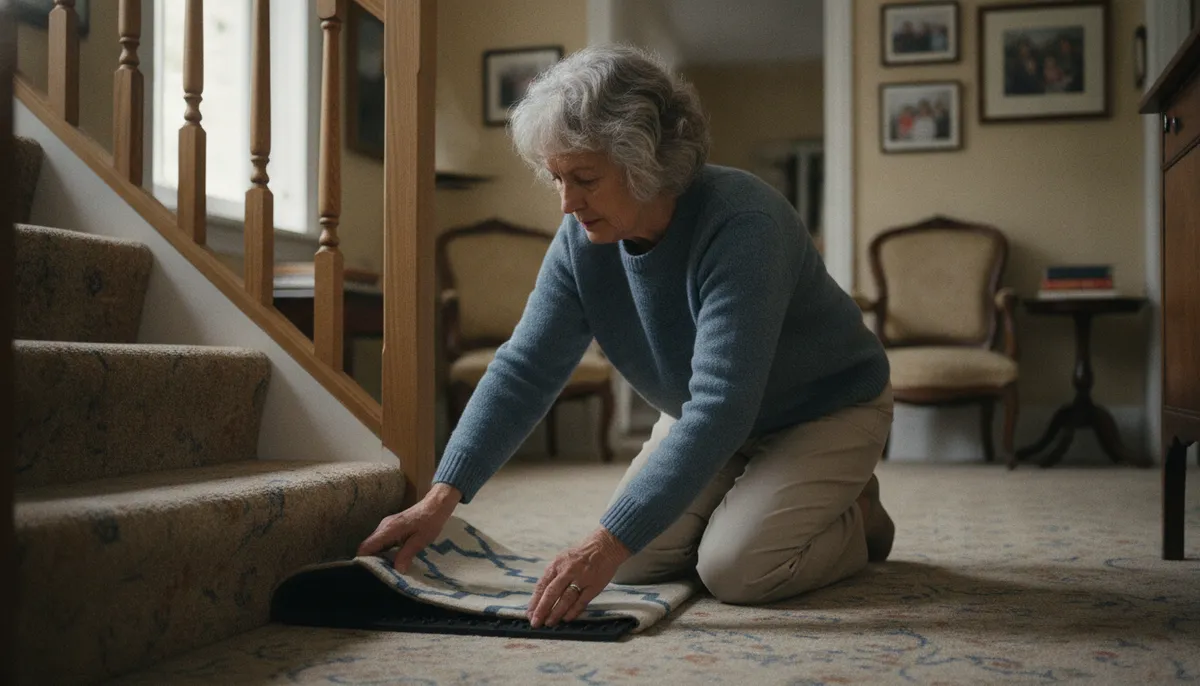
Balance problems are not always a training deficit, and a program is not a diagnosis. Dizziness from medications is the clearest example: sedatives, some blood pressure drugs, and anticholinergics each independently raise fall risk, and no amount of tai chi offsets a medication that drops blood pressure every time a person stands up. A medication review with the prescribing doctor belongs alongside enrollment, not after the next fall. Vision, footwear, and home hazards such as loose rugs and dark stairways round out the list; the National Institute on Aging's overview of fall causes and prevention is a solid family checklist for everything beyond exercise.
Screening matters at the front end, too. Someone with a recent fracture, marked cognitive impairment, unstable heart disease, or a neurological condition needs an individual assessment from a physiotherapist or physician before joining a community class, both for safety and because underlying causes such as inner-ear disorders or neuropathy call for specific treatment, and the right starting point differs by baseline. For an adult already falling repeatedly, the appropriate first stop is a clinician, and the class comes second. None of this is a reason to wait for someone who is merely feeling less steady than last year; it is a reason to mention the plan to a doctor and then start.
The core correction to the popular instinct stands either way. Unsteadiness in later life is a modifiable condition with a well-mapped treatment, and the treatment is practice, made progressively harder, done at least a few times a week, and never fully retired. Caution has its place, on ladders and ice. As a strategy for keeping an older adult on their feet, it is the thing most people get wrong.