For most households past fifty, the house is the largest single asset on the balance sheet, and it is the only one that loses value quietly when nobody is looking. Markets move on their own schedule; maintenance is the part of home value an owner actually controls. Buyers, inspectors, appraisers, and insurers all read deferred maintenance the same way, as evidence of hidden risk, and they price it accordingly. The habits that prevent that discount are neither expensive nor complicated. They are mostly a matter of knowing which failures are silent and checking for them on a schedule.
Water first, always
Water causes the most expensive quiet damage in a house, and it rarely announces itself. A weeping supply line behind a vanity, a toilet flapper that no longer seals, a gutter that dumps roof runoff against the foundation: each can run for months before anything is visible. By the time a stain appears on drywall, the water has usually been at work on the framing and insulation behind it for a while.
The good news is that water leaves a paper trail. The EPA's WaterSense program publishes a home maintenance guide with a usable benchmark: for a home with no outdoor water use in winter, a family of four likely has a serious leak somewhere if winter consumption exceeds 12,000 gallons a month. Pull a January or February utility bill and compare. The same guide describes the one-minute test most owners never run: put a few drops of food coloring or a dye tablet in the toilet tank, wait ten minutes, and if color shows up in the bowl without flushing, the flapper is leaking. Flappers wear out; the EPA recommends replacing them at least once every five years. The part costs about $8 to $12. A toilet leaking silently for a year, by contrast, can add roughly $500 to $900 in water costs depending on local rates, and puts real strain on a septic system.
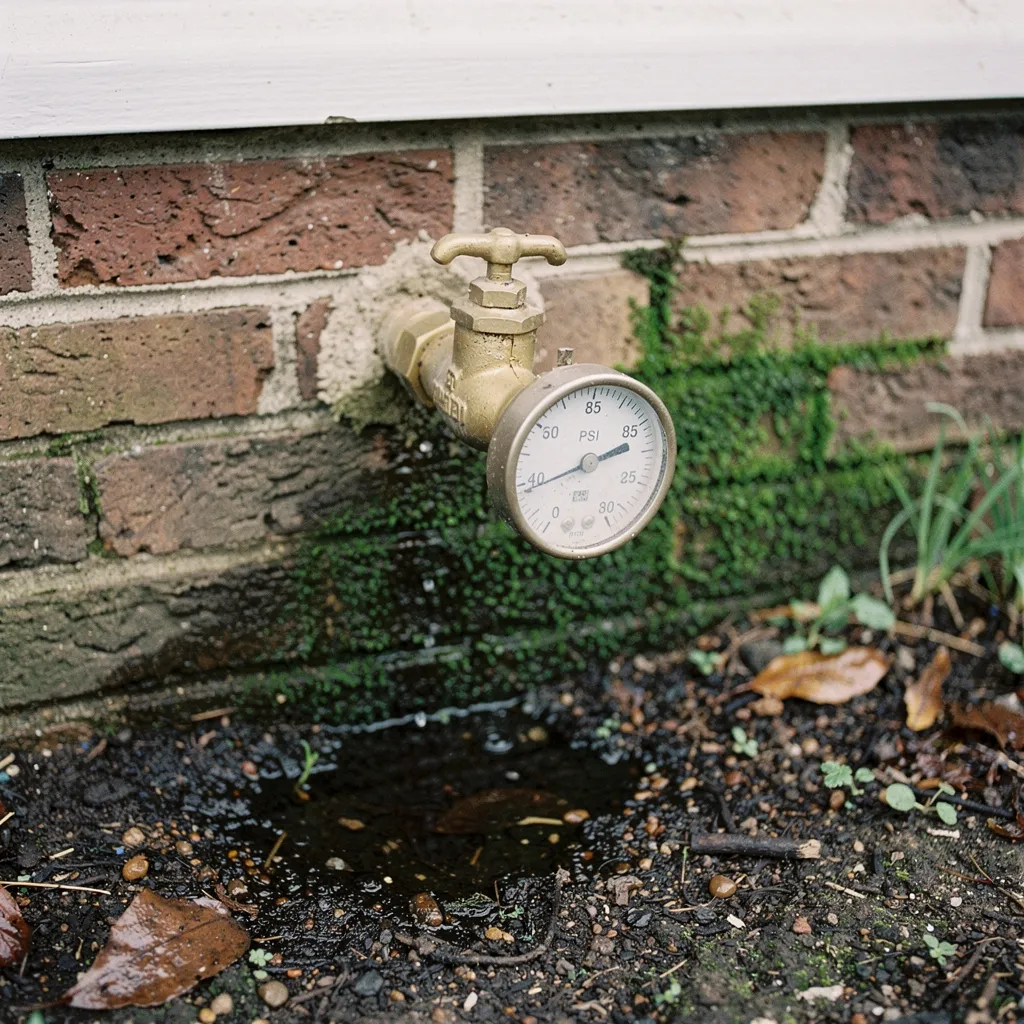
Water pressure belongs on the same checklist because almost nobody thinks about it until something bursts. The EPA guidance puts the ideal incoming service pressure between about 45 and 60 psi for fixtures to operate properly. Sustained pressure well above that range, the kind that creeps past 80 psi in some neighborhoods, quietly shortens the life of supply lines, valves, and appliance connections. A gauge that threads onto a hose bib costs under $15 and takes two minutes to read. If the number is high, a pressure-reducing valve costs a few hundred dollars installed and protects thousands of dollars of plumbing and appliances downstream.
The envelope and the machinery
After water, the priorities are the shell of the house and the equipment inside it. The National Association of Realtors' maintenance checklist for avoiding costly repairs concentrates on the same short list any inspector would: roof condition, gutters, foundation, and HVAC. Clogged gutters are a foundation problem wearing a disguise; when water spills over the sides, it can lead to foundation damage, mold, and basement flooding. Clearing them twice a year, and checking the attic after a heavy rain, costs almost nothing and catches the two cheapest stages of a roof problem: before it starts, and just after.
Heating and cooling equipment rewards the same discipline. Dirty filters are among the most common causes of system breakdowns, and a system that runs starved for airflow works harder and dies younger. Contractors commonly describe 15 to 20 years as a reasonable lifespan for a well-maintained central system, while a neglected one may fail at 10 to 12. Against a replacement bill that can run around $5,000, an annual service visit and a monthly glance at the filter is some of the cheapest insurance a homeowner can buy. For owners heading into retirement, there is a scheduling angle too: it is far better to replace a furnace on your own timeline, with quotes in hand, than during the first cold week of January under emergency pricing.
Safety systems, insurance, and the appraisal file
Some maintenance items matter less for the structure than for your standing with insurers and inspectors. Smoke alarms lead the list. The National Fire Protection Association's smoke alarm guidance calls for alarms in every bedroom, outside each sleeping area, and on every level of the home, tested at least once a month and replaced entirely every ten years. Inspectors flag missing, mislocated, or expired detectors routinely, and in a sale these findings are trivially cheap to fix in advance and needlessly alarming to a buyer when discovered late. Carbon monoxide detectors and ground-fault outlets in kitchens, bathrooms, garages, and exterior locations fall in the same category: a modest electrician's visit now, or a red flag on a buyer's report later.
The insurance connection is the part that surprises longtime owners. A roof past the age an insurer will accept can make a policy unrenewable, and an uninsurable house is an unfinanceable house for any buyer who needs a mortgage. That problem tends to surface at the worst possible moment, mid-transaction, when the options have narrowed to replacing the roof under pressure or watching the deal collapse. Knowing your roof's age and your insurer's thresholds years ahead turns a crisis into a line item.
Why small neglect gets expensive
Deferred maintenance does not accumulate linearly. A slow leak left for eighteen months does not cause eighteen months of small damage; once water reaches subfloor, framing, or drywall, it creates conditions for mold, and remediation is a different cost category entirely. A plausible sequence: $800 in wasted water, $2,400 in drywall and flooring repair, $1,200 in mold remediation, roughly $4,400 in total, all downstream of a supply line that would have cost about $40 to replace. Figures like these vary by region and severity, but the shape of the math does not change. The multiplier between the cheap fix and the cascading failure is the entire argument for a maintenance habit.
The second cost is negotiating position. A buyer's inspection report listing a dozen open items is a request for credits waiting to happen, and every item lends credibility to the next. A clean report does the opposite: it shortens the negotiation and supports the asking price. Owners who have lived in a house for decades tend to stop seeing its small defects. The inspector hired by a buyer sees nothing else.
A calendar that actually gets followed
- Monthly: glance at the HVAC filter, and test smoke and CO alarms.
- Twice a year: clear the gutters, look over the roof from the ground for missing or damaged shingles, and check the attic after a hard rain.
- Annually: run the toilet dye test, compare a winter water bill against the 12,000-gallon benchmark, read the water pressure at a hose bib, and have the HVAC serviced.
- Every five years: replace toilet flappers, and recaulk where tubs, showers, and exterior penetrations have opened up.
- Every decade: replace smoke alarms outright, and budget realistically for roof and water heater age.
One more habit turns all of this into money: write it down. Keep a folder, paper or digital, with dated receipts, service records, and inspection reports. Appraisers and buyers respond to documentation because it converts a seller's claims into evidence, and a documented maintenance history is one of the few sale-day assets you can build for the cost of a manila folder. For owners who plan to age in place rather than sell, the same folder earns its keep differently, as the file that lets an adult child or a hired manager take over the house's care without starting from zero.
A note on limits: this is general guidance, and houses are particular. A licensed home inspector can evaluate systems on a schedule, not just at purchase, and plumbing, roofing, and electrical work beyond basic upkeep belongs with licensed trades. Questions about insurability thresholds or appraisal treatment are best put directly to an insurance professional or a certified appraiser. None of the habits above require special skills. The last one is simply recognizing the moment a job stops being maintenance and becomes work for a professional.