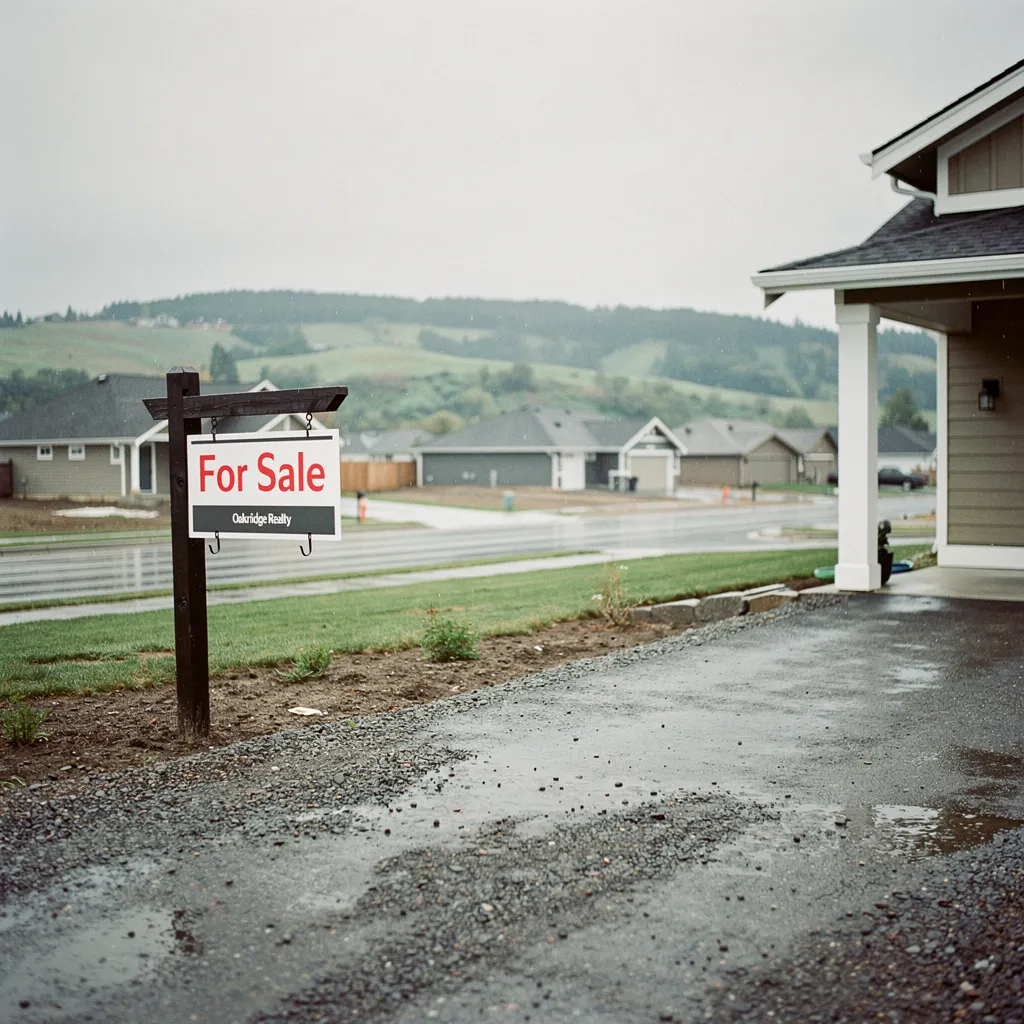
Anyone shopping for a house right now is working inside a market that behaves differently from the one their parents bought into, and differently even from the one that existed ten years ago. The headline numbers tell part of it. The National Association of Realtors reported that existing-home sales fell 2.4 percent in June 2026, while the median sale price reached an all-time high. Those two facts together, fewer sales at record prices, describe the whole puzzle: demand is bumping against a supply of homes that never recovered from the shock of the early 2020s.
The Shift That Started in 2020 and Never Fully Unwound
The U.S. Census Bureau, working with Zillow research data, documented what happened. In 2020 there were fewer houses for sale than in 2019, which created what the Census Bureau's own write-up called hyper-competitive conditions for buyers. At the same moment, remote work redrew the map of where people could live. Zillow found that nearly two million renters who couldn't afford homes in their own metro areas could afford to buy farther out once commuting stopped being a daily requirement. A Zillow survey from May 2020 found that 75 percent of people working from home wanted to keep teleworking at least half the time after workplaces reopened.
That preference stuck, and its effect on housing is still visible. Demand that used to concentrate in big metros spread into smaller cities, exurbs, and towns that had historically competed on affordability. Many of those places stopped being cheap. Meanwhile, homeowners who locked in low mortgage rates during that era have been understandably reluctant to sell and give those rates up, which keeps resale inventory thin. NAR's chief economist has warned that without consistent gains in inventory, home prices can accelerate, and that bringing more supply to market is critical to widening the opportunity for homeownership.
There is one genuinely encouraging note in the recent data. Per NAR's June 2026 release, affordability is modestly better than a year ago, because wage growth has been outpacing home price growth. That's slow repair, the kind measured in years, and it doesn't change the daily experience of touring three houses and losing two bidding contests. But the direction matters.
What Today's Rates Do to a Real Budget
Freddie Mac's Primary Mortgage Market Survey, released weekly, put the average 30-year fixed rate at 6.69 percent and the 15-year at 6.01 percent as of August 6, 2026. Plain arithmetic shows what that means for a monthly budget.
Take a $450,000 house with 20 percent down, leaving a $360,000 loan. At 6.69 percent over 30 years, principal and interest come to roughly $2,321 a month. If that same loan existed at the 4 percent rates many current owners are still sitting on, the payment would be about $1,719. That gap, around $600 a month or roughly $7,200 a year, is the invisible wall between today's buyers and yesterday's owners, and it explains both why buyers feel squeezed and why so few owners list their homes.
The 15-year option deserves more attention than it usually gets, especially from older buyers. The same $360,000 at 6.01 percent over 15 years runs about $3,040 a month. The payment is heavier, though the loan is gone in half the time, which is a meaningful difference for someone who is 55 and would rather not carry a mortgage at 85.
Buying in Your Fifties and Sixties Is a Different Game
A large share of today's buyers aren't first-timers. They're people downsizing after the kids leave, relocating to be near grandchildren, or trading a high-cost metro for somewhere quieter. This group holds real advantages in the current market and faces a few traps particular to it.
The advantage is equity. A buyer selling a home owned for fifteen or twenty years often arrives with a large down payment or the ability to buy outright, and in a market where sellers prize certainty, a cash or near-cash offer carries weight no escalation clause can match. The trap is the timing squeeze: selling and buying in the same tight market means competing as a buyer under the same conditions you just benefited from as a seller. Bridge arrangements, rent-back agreements, and honest conversations with a lender about carrying two properties briefly are all worth exploring before listing anything.
Location choices deserve extra scrutiny at this stage too. A house forty minutes from the nearest hospital reads differently at 62 than at 35, and a bargain in a town whose economy rests on remote workers staying put carries a risk the price tag doesn't show. Anyone moving toward a smaller market should also think about resale liquidity: fewer buyers exist for any given home there, which cuts both ways.
Moves That Hold Up in This Market
- Get fully pre-approved, not just pre-qualified. A pre-qualification is an estimate based on what you tell a lender. A full pre-approval, with income, assets, and credit verified, is a document listing agents actually respect when offers are compared.
- Check local price trends against real data. The Federal Housing Finance Agency publishes its House Price Index as a free public dataset measuring single-family home values, built from records covering all 50 states and over 400 cities. It's a far better guide to what a specific area has been doing than national headlines.
- Watch rates weekly, not daily. Freddie Mac's survey comes out every Thursday. Rate moves of a quarter point change your payment by real money, and a buyer who knows the current average can spot when a lender's quote is out of line.
- Price the concessions before you offer them. Waiving an inspection saves nothing at signing and can cost enormously after. If competition forces tradeoffs, know what each one exposes you to before the deadline pressure hits.
- Confirm remote work in writing before buying around it. The exurban shift rests on telework continuing. An informal arrangement with a manager is a weaker foundation for a 30-year commitment than a written company policy.
Where Buyers Get Hurt
The most common self-inflicted wound is waiting for a crash. In a supply-constrained market, prices resist sharp corrections because sellers who dislike the offers they receive simply withdraw and stay put. A buyer who postpones for two years of falling-price predictions that never arrive has paid two years of rent for the privilege.
The second is treating list price as market value. In hot pockets, homes sell over list; in soft ones, under it. Recent comparable sales in the specific neighborhood, which any agent can pull, are the only honest benchmark. The third is assuming the national story applies to every ZIP code. Some segments, including condos in certain urban cores, have genuine buyer leverage right now, and buyers who test for it sometimes find room to negotiate that the headlines say shouldn't exist.
A home purchase at today's prices is likely the largest financial decision most households will make this decade. The numbers here describe national conditions as published by their sources in mid-2026; local conditions vary block by block, and rates change weekly. A licensed agent who knows the specific submarket, and a lender or fee-only financial adviser who can run the numbers against your actual retirement timeline, are worth engaging before any offer gets written.
References
- https://www.nar.realtor/research-and-statistics/housing-statistics/existing-home-sales
- https://www.census.gov/library/stories/2021/10/zillow-and-census-bureau-data-show-pandemics-impact-on-housing-market.html
- https://www.freddiemac.com/pmms
- https://www.fhfa.gov/data/hpi
Disclaimer
This article is for general informational purposes only and isn't real estate, financial, or legal advice. Market figures reflect their sources' published data as of the dates noted and change over time. For decisions about buying or selling a home, consult qualified licensed professionals.