The strange line Medicare draws through your house
Here is a fact that surprises almost everyone the first time a hospital discharge planner explains it. Medicare will pay 80 percent of the cost of a walker. It will pay 80 percent of the cost of a commode chair. It will not pay one cent toward the $24 grab bar that would keep you from needing either one.
That is not an oversight, and it is not a mistake by your doctor or your supplier. It is the direct result of how Medicare defines durable medical equipment, and once you understand the definition, you can stop wasting phone calls fighting it and start planning around it. I have verified every coverage claim below against Medicare's own pages at medicare.gov, and I quote them so you can check my work.
The rule that decides everything
Medicare Part B covers equipment, not houses. The official page on durable medical equipment coverage lays out the test. To qualify, an item must be "durable (can withstand repeated use)," "used for a medical reason," "typically only useful to someone who is sick or injured," "used in your home," and "expected to last at least 3 years."
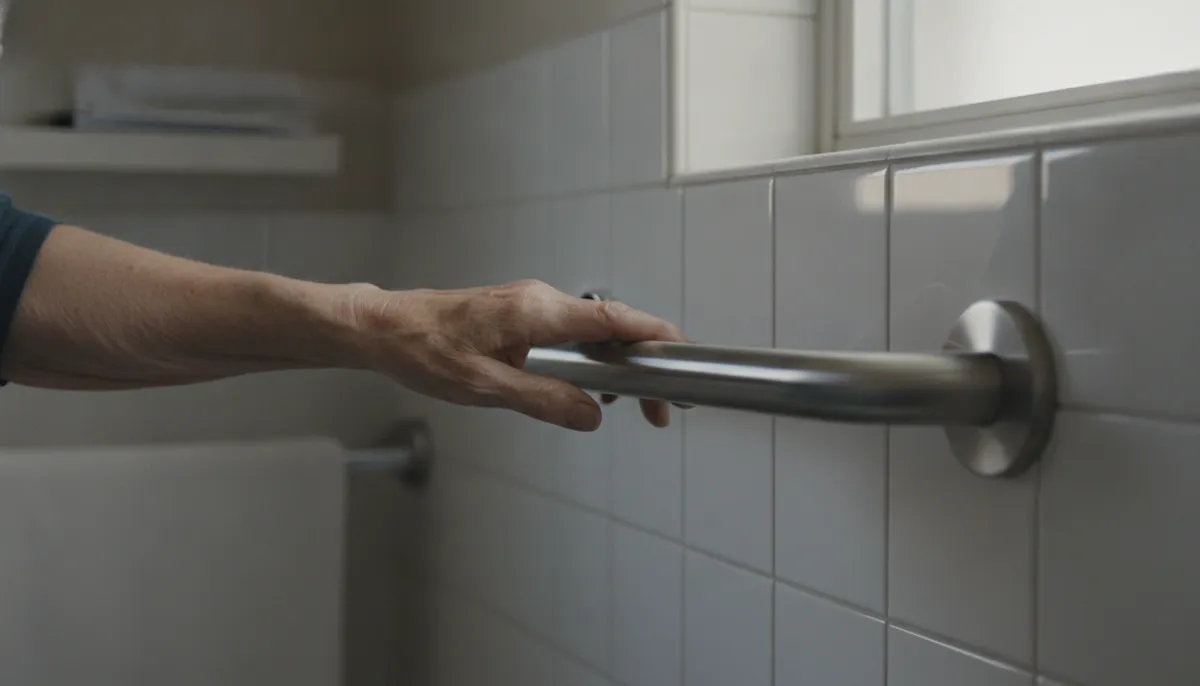
Read that third condition again, because it is the one that decides your bathroom. A walker is only useful to someone who has trouble walking. A grab bar bolted beside the tub is useful to anyone who ever showers, which is everyone. By Medicare's logic, a grab bar is not medical equipment. It is a home improvement. The same reasoning sinks ramps, widened doorways, stairlifts, walk in tubs, and handheld shower heads. None of them appears on medicare.gov's list of covered equipment, and if you search the site's coverage tool for grab bars or ramps, you will find no coverage page at all. The silence is the answer.
Medicare's own page on what is not covered puts the general principle plainly: "Original Medicare doesn't cover everything. If you need items or services Part A (Hospital Insurance) or Part B (Medical Insurance) don't cover, you'll have to pay for them yourself." Long-term care leads that list. Home modification lives in the same unfunded territory.
What Part B genuinely pays for
The good news is real, so let us give it its due. The walker coverage page says: "Medicare Part B (Medical Insurance) covers walkers, including rollators if you're eligible," and "Part B covers medically necessary DME if your provider prescribes it for use in your home." Your cost, in Medicare's words: "After you meet the Part B deductible, you pay 20% of the Medicare-approved amount (if your supplier accepts assignment)."
Canes are covered on the same terms, with one odd exception quoted directly from the page: "Medicare doesn't cover white canes for the blind." So are commode chairs, hospital beds, and wheelchairs, all under the same prescription and cost rules.
Two details in that fine print earn your attention. First, the prescription. Part B pays only when your provider prescribes the item for use in your home, so the path runs through your doctor's office, not the pharmacy aisle. Second, the supplier. Medicare warns: "Make sure your doctors and DME suppliers are enrolled in Medicare. It's also important to ask your suppliers if they participate in Medicare or will accept assignment of your claims before you get DME." A participating supplier "can charge you only the coinsurance and Part B deductible for the Medicare-approved amount." A non-participating one can charge you more, and you will not find out until the bill arrives. Ask before you accept delivery, not after.
If you have a Medicare Advantage plan, check your own booklet
Everything above describes Original Medicare. Medicare Advantage plans must cover at least what Part B covers, and medicare.gov notes that these plans "may cover some extra benefits that Original Medicare doesn't cover." In recent years some plans have added allowances for bathroom safety devices or home safety items. Some means some. The only document that answers the question for you is your plan's Evidence of Coverage, and the benefit often comes with a catalog, a dollar cap, and a specific ordering process. Call the number on your card and ask the narrow question: does my plan include a home safety or bathroom safety benefit this year, and what exactly does it buy?
What paying out of pocket actually costs
Now the part that should lower your blood pressure. The equipment Medicare refuses to buy is, mostly, cheap. I pulled these prices from live retailer and manufacturer pages the week I wrote this, and prices do move, so treat them as a snapshot.
A Carex textured steel wall grab bar is listed at $23.55 on the manufacturer's own site, and even the premium stainless models from the big faucet brands stay in the same modest neighborhood. If you hire a handyman to mount two bars into blocking or studs, the labor will likely cost more than the hardware, and it is still one of the cheapest pieces of insurance you will ever buy. My room by room fall-proofing guide covers where bars belong and where they are wasted.
Ramps split into two different purchases. A portable aluminum ramp for one to three steps, the kind that folds like luggage, is a few hundred dollars. The EZ-ACCESS SUITCASE Singlefold ramp is listed at $170 on the manufacturer's site and carries an 800 pound capacity and a lifetime warranty. A permanent built ramp with footings, rails, and the gentle 1:12 slope a wheelchair actually needs is a construction project, and contractors commonly quote from around a thousand dollars for a short modular run to several thousand for a long wooden one. Get two quotes; this is a category where they vary wildly.
Walkers show the flip side. A Drive Medical aluminum rollator with a seat and fold up back support was priced at $111.75, marked down from $159.80, at a national medical supply retailer when I checked. Since Medicare covers walkers, run the arithmetic both ways. Twenty percent coinsurance on a Medicare-approved rollator may cost you little, but if you have not met your Part B deductible, buying outright at a sale price can be the cheaper and faster path, with no prescription and no supplier paperwork.
Where else the money hides
Before you write the check yourself, three doors are worth knocking on. Your Area Agency on Aging can tell you whether your county runs a minor home repair or modification program for older residents; many do, quietly. Veterans should ask the VA about home improvement grants, which operate under entirely different rules than Medicare. And if the person who needs the ramp has limited income and assets, ask your state Medicaid office whether its home and community based services waiver helps with modifications, because in many states it can, on its own timetable and terms.
If coordinating all of that sounds like a second job, it sometimes is. That is exactly the kind of legwork a geriatric care manager earns a fee doing.
The summary fits on an index card. Equipment that moves with the patient, Medicare helps buy. Anything screwed to the house, you buy. Plan for the second category with the same seriousness you plan for premiums, because the grab bar you pay for yourself is still far cheaper than the fall it prevents.