The Rodriguez Ruling and the Used Car Warranty Pitfall
Most people assume that if a used car still has its original factory warranty, they have the same lemon law protections as the first owner. They don't. In October 2024, the California Supreme Court ruled in the Rodriguez case that used car owners are no longer protected by the Song-Beverly Act's refund-or-replace remedy, even if the vehicle still carries a remaining manufacturer's warranty.
The court held that the state's primary lemon law applies only to "new motor vehicles" sold at retail. If you bought your car used - from a dealer or a private party - you may still have warranty coverage for parts and labor, but you likely cannot force a buyback. That means a manufacturer can keep your car in the shop for months, fail to fix it, and never refund your purchase price. You are stuck in a repair loop with no legal exit.
This matters most for anyone who bought "Certified Pre-Owned" expecting the same safety net as a new vehicle purchase. You still have rights under federal law - specifically the Magnuson-Moss Warranty Act - but that process is generally slower and less likely to result in a full refund of taxes and registration fees. The distinction between "new" and "used" has never carried a higher financial cost.
The 2026 Filing Surge and the Crowded Courtroom
California lemon law filings reached 30,190 in 2024, nearly double the number from two years prior, and 2026 filings are on pace to surpass 38,000 total cases - a 68 percent climb in just two years. Cars are getting more complex, and manufacturers are becoming more aggressive in fighting claims.
That volume pushed the state to implement new rules under Assembly Bill 1755, effective 2026. They were framed as "streamlined," but the practical effect is a mandatory pre-suit notification period. You can no longer hire a lawyer and sue immediately. You must first complete a specific written notice process before a court will accept your filing. The system now favors whoever is more patient and better documented.
Manufacturers are using this congestion deliberately. Every month a case sits unresolved is another month a frustrated owner is likely to give up and trade the car in at a loss. Costs associated with contested buyback claims have increased 103 percent over the last three years, and the average resolution time has grown alongside that backlog.
The Thirty-Day Rule and the 2025 Deadlines
Under California Assembly Bill 1755, manufacturers must respond to a formal written consumer complaint within 30 days. Miss that window and they lose certain procedural advantages in court.
There is a critical catch most consumers miss. Rosemary Shahan, President of Consumers for Auto Reliability and Safety (CARS), notes that the new "opt-in" procedures allow manufacturers to disregard warranty repair requests if the consumer doesn't follow a specific written notice requirement. Telling a service advisor your car is a lemon does not count. You must send written notice to a specific manufacturer address using specific language - and you need proof of delivery.
The process is now a race against mileage limits and expiration deadlines. Without a paper trail showing you gave the manufacturer the required 30 days to fix the problem or offer a buyback, your case can be dismissed before it starts. Verbal agreements at the dealership have no legal weight.
Calculating the Usage Fee and the 120,000-Mile Formula
Even a successful buyback doesn't mean a full refund. California Civil Code Section 1793.2 lets the manufacturer subtract a "usage fee" calculated as follows: multiply the purchase price by the mileage recorded at the time of your first repair attempt, then divide by 120,000.
On a $55,000-$65,000 SUV first brought in at 12,000 miles, the manufacturer keeps roughly $5,000-$7,000 of your refund. Wait until 30,000 miles to report the same problem and that offset climbs to $13,000-$17,000. The first repair order establishes the mileage that anchors this calculation for the entire case. The lower that number, the more money you recover if you win.
Dealers frequently try to discourage repair visits - "it's normal for this model" or "we couldn't find anything today." Every visit you leave without a repair order listing your specific complaint potentially raises your mileage offset. Push for a written repair order every time, regardless of whether the dealer can replicate the fault that day.
The Wide Gap Between Manufacturers
According to data from the Consumers for Auto Reliability and Safety (CARS) report, one major domestic manufacturer had one lemon law lawsuit for every 78 cars sold in California between 2018 and 2021. A leading Japanese automaker had one lawsuit for every 2,029 cars sold in the same period. That is roughly a 26-times greater likelihood of ending up in a legal dispute depending solely on which brand you chose.
The difference goes beyond build quality - it reflects how aggressively a corporation contests owner complaints. If you are driving a brand with a 1-in-78 lawsuit ratio, expect a fight at every stage. Be twice as diligent with documentation from your very first visit. A company with that record will not volunteer a resolution.
The Six-Year Legal Cliff and Long Warranties
Active warranty coverage does not mean you can sue at any time. California limits lemon law lawsuits to one year after the warranty expires or six years from the date of delivery, whichever comes first. The legal window can close well before most owners realize it.
This catches electric vehicle owners off guard most often. EV battery and software components typically carry eight- or ten-year warranties, so owners assume they are protected for the long term. But if a battery fails in year eight and the dealer cannot source a replacement for three months, you may be entitled to a repair - eventually - while your right to demand a buyback has already expired.
How to Force a Manufacturer Buyback
- Document the first failure at the lowest mileage possible. Take the car to an authorized dealer at the first sign of trouble. Make sure the repair order describes your exact complaint - this locks in the mileage figure used to calculate your usage fee offset.
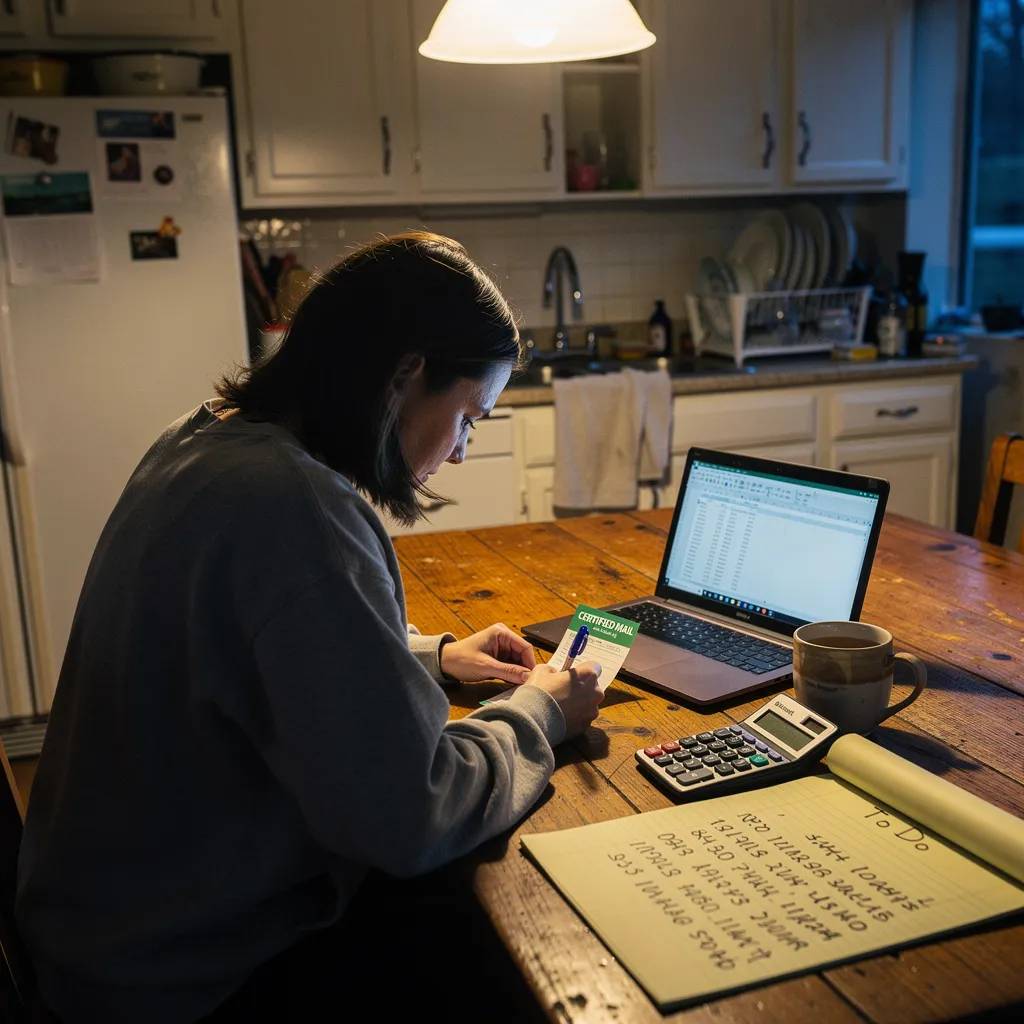
- Send the formal 30-day written notice. Under AB 1755, you must notify the manufacturer in writing and give them 30 days to resolve the issue. Send it via certified mail and keep the receipt as proof of the delivery date.
- Log every out-of-service day. Keep a written record of every day the vehicle spends in the service department. In California, 30 cumulative days out of service - even across multiple separate repairs - can qualify a vehicle as a lemon.
- Request the internal technician notes, not just the invoice summary. Dealers sometimes use vague language on customer-facing paperwork to obscure failed repair attempts. The internal service notes contain the technical detail that supports a legal claim. Ask for them each time you pick up the vehicle.
Act Before the Clock Runs Out
The legal landscape has shifted toward a notification-heavy system that rewards careful record-keeping. A manufacturer worth billions is counting on you to miss a deadline, accept vague excuses, or simply give up. The difference between a full buyback and a loss of $15,000 or more often comes down to the mileage on your first repair receipt and the postmark on your certified notice.
Send the 30-day notice now. Stop letting a service advisor talk you out of opening a repair order. As Rosemary Shahan has noted, the new procedures allow manufacturers to ignore owners who don't follow the specific written rules - meaning your warranty can remain technically active while your right to enforce it has quietly expired.
FAQ
Does lemon law cover used cars bought from private sellers?
Generally, no. In most states, including California after the Rodriguez ruling, buyback protection applies only to vehicles sold at retail by a licensed dealer. A private-party purchase may support a fraud claim if the seller concealed a known defect, but it does not give you the right to force a manufacturer buyback under standard lemon law.
What if the dealer says they "could not replicate" the problem?
Even when the dealer is dismissive, insist that the service writer document your exact complaint on the repair order. For safety-related issues - engine stalls, brake failures - record the malfunction on video. That footage directly contradicts a "could not replicate" entry and can preserve your claim.
How long does a manufacturer have to respond to a formal demand?
California's AB 1755 regulations require a formal response within 30 days of receiving your written notice. If the manufacturer misses that deadline, they lose specific procedural rights - including, in some cases, the option to attempt a final repair before you proceed to litigation.
References
- A 2025 analysis from Bowman and Brooke and the Daily Journal titled "California Lemon Law Filings Surge to Record Highs."
- The 2025 legislative update via California Assembly Bill 1755 and SB 26 regarding new statutory deadlines for manufacturer warranty responses.
- California Civil Code Section 1793.2, which codifies the Song-Beverly Consumer Warranty Act in 2025.
- Richard L. Stuhlbarg and Bowman and Brooke, "2025 Litigation Trends in Automotive Warranty Law," legal data report.
- Consumers for Auto Reliability and Safety (CARS), "Annual Report on Manufacturer Buyback Compliance," 2025.
- Consumers for Auto Reliability and Safety (CARS) Report (2022) on lemon law lawsuit ratios categorized by manufacturer.