Are you waking up at 3 a.m. and lying there for two hours, or falling asleep at the dinner table? Sleep changes as people age, but poor sleep isn't inevitable. Here is what actually helps, starting with the step that matters most.
What to Know Before Changing Healthy Sleep Habits for Older Adults
Sleep architecture shifts after about age 60. According to the National Institute on Aging, older adults tend to spend less time in deep, slow-wave sleep and more time in lighter sleep stages, which means more frequent waking during the night.[1] This is a biological change, not a personal failure. Knowing this matters before you start, because it means the realistic goal is enough continuous, restorative sleep for your body now rather than the sleep of a 30-year-old.
The National Sleep Foundation recommends that adults aged 65 and older aim for around seven to eight hours of sleep per night.[2] Some people in this age group do fine on six hours; others need nine. The number that matters is the one that leaves you alert and functional the next day.
Two things to confirm before starting any sleep program: First, check your current medications. According to the National Institute on Aging, several common drug classes, including certain antihistamines, blood pressure medications, and antidepressants, can disrupt sleep or cause daytime drowsiness.[1] Second, rule out an underlying sleep disorder. Obstructive sleep apnea, for example, affects a large portion of older adults and can't be fixed by habit change alone. If you snore loudly or wake gasping, get evaluated before adjusting habits.
Set a Fixed Wake Time First
The single most effective first step is choosing a wake time and holding to it every day, including weekends. What matters here is when you get up; bedtime comes later. A consistent wake time anchors the body's circadian rhythm, which is the roughly 24-hour internal clock that regulates sleep pressure and alertness. The American Academy of Sleep Medicine identifies a stable sleep-wake schedule as a core component of cognitive behavioral therapy for insomnia (CBT-I), the approach with the strongest evidence base for chronic sleep problems in older adults.[3]
Pick a wake time you can actually keep. If you set it at 6:30 a.m., get up at 6:30 a.m. on Sunday the same as Monday. The temptation to sleep in after a rough night is real, but sleeping in delays the next night's sleep onset and breaks the rhythm you're building. Hold the wake time for two weeks before judging whether anything has changed.
Build the Sleep Environment and Evening Routine in Order
Once the wake time is fixed, work backward through the evening. These steps work in sequence; skipping to the later ones without doing the earlier ones produces weaker results.
Step one: manage light exposure. Bright light in the morning advances the circadian clock; bright light in the evening delays it. Getting natural light exposure early in the day, even sitting near a window for 30 minutes, helps regulate the internal clock. In the evening, dimming overhead lights and avoiding bright screens in the hour before bed reduces the suppression of melatonin, the hormone that signals the body it's time to sleep.
Step two: set a consistent bedtime window. This follows from the wake time. If your wake time is 6:30 a.m. and you need about seven and a half hours of sleep, your target sleep onset is around 11:00 p.m. Don't go to bed earlier just because you're tired at 8:00 p.m. Lying in bed awake trains the brain to associate the bed with wakefulness, which is the opposite of what you want. The window for getting into bed should be no more than 30 minutes before the target sleep time.
Step three: address the bedroom environment. According to the Centers for Disease Control and Prevention, a cool, dark, and quiet room supports sleep onset and maintenance.[4] A room temperature of around 65 to 68 degrees Fahrenheit is commonly cited as the range that supports sleep in most adults. Blackout curtains or a sleep mask handle early-morning light, which is a common problem for older adults whose sleep tends to advance earlier with age.
Step four: limit alcohol and caffeine timing. Caffeine has a half-life of around five to six hours in most adults, meaning roughly half of a 3:00 p.m. coffee is still active at 8:00 p.m. Alcohol is sedating at first but fragments sleep in the second half of the night as it metabolizes. The CDC recommends avoiding caffeine late in the day and limiting alcohol for anyone with sleep concerns.[4]
Step five: add a wind-down routine. A 20-to-30-minute routine, reading, light stretching, or slow breathing, signals the nervous system that sleep is coming. This isn't complicated. The value comes from doing the same things in the same order each night.
Here is a worked example of how this plays out: a person who wakes at 6:30 a.m. and wants about seven and a half hours of sleep should aim for sleep onset around 11:00 p.m. That means getting into bed by 10:45 p.m., starting the wind-down around 10:15 p.m., turning down lights and screens by 10:00 p.m., and stopping caffeine by 2:00 or 3:00 p.m. Running that backward from one fixed anchor time makes the whole system coherent.
A plain side-by-side comparison: someone who holds a fixed 6:30 a.m. wake time and a consistent 11:00 p.m. bedtime gives the body a stable 7.5-hour window every night. Someone who sleeps until 8:30 a.m. on weekends shifts that anchor by two hours, which research on social jet lag shows can delay the next weeknight's sleep onset by a similar margin, effectively undoing the weekday routine twice a week.
Where This Process Stalls and What to Do
The most common place people get stuck is napping. Daytime napping isn't automatically harmful, but long or late naps reduce sleep pressure, the buildup of adenosine in the brain that makes you sleepy at night. If nighttime sleep is the problem, keep any nap short and early. A 90-minute afternoon nap before 3:00 p.m. can feel restorative but may subtract directly from that night's sleep depth.
The second common sticking point is melatonin. Many older adults reach for over-the-counter melatonin as a first solution. Melatonin works as a timing signal rather than a sedative. According to the National Center for Complementary and Integrative Health, a 2018 randomized controlled trial found that taking melatonin one hour before a set bedtime led to falling asleep an average of 34 minutes earlier for people with a circadian timing disorder called Delayed Sleep-Wake Phase Disorder.[5] That's a real effect, but it applies specifically to a circadian delay problem rather than to general insomnia or middle-of-the-night waking. Also according to the National Center for Complementary and Integrative Health, the American Academy of Sleep Medicine's 2015 recommendation on melatonin for that same condition was a weak recommendation, with uncertainty about benefits versus harms acknowledged in the guidance.[5] Using melatonin without knowing which problem it's meant to solve is the gap most people fall into.
The third sticking point is anxiety about sleep itself. Lying in bed watching the minutes pass and calculating how little sleep is left is a recognized mechanism for making insomnia worse. If this is happening, get out of bed after about 20 minutes of wakefulness, do something calm in low light, and return when sleepy. This is called stimulus control and it's a formal component of CBT-I as recognized by the American Academy of Sleep Medicine.[3]
What This Doesn't Cover
This guide covers behavioral and environmental habits supported by mainstream sleep medicine guidance. It doesn't cover diagnosed sleep disorders, including obstructive sleep apnea, restless legs syndrome, REM sleep behavior disorder, or insomnia disorder meeting clinical criteria, all of which require evaluation by a qualified clinician. It doesn't address prescription sleep medications, their interactions with other drugs common in older adults, or decisions about stopping existing medication. If sleep problems persist after four to six weeks of consistent habit changes, or if daytime functioning is seriously impaired, see a physician or ask for a referral to a behavioral sleep medicine specialist. Nothing here substitutes for advice tailored to individual health history.
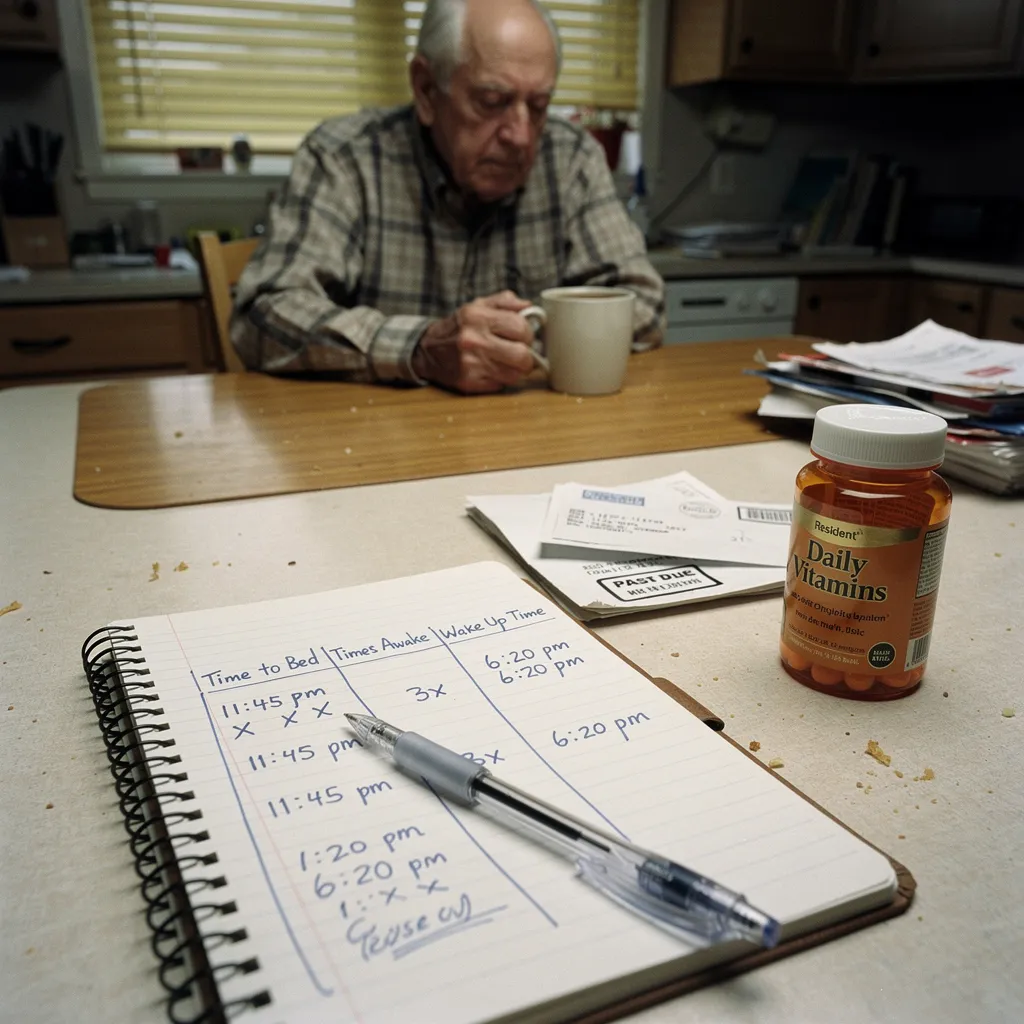
The plain next step: pick a wake time tonight. Write it down. Set an alarm and keep it for seven days straight before changing anything else. Everything else in this guide builds from that one anchor.
References
- National Institute on Aging (NIA), nia.nih.gov, Sleep and Older Adults resource. Figures are approximate and subject to change; consult current NIA publications.
- National Sleep Foundation, thensf.org, Sleep Duration Recommendations by Age. Figures are approximate ranges.
- American Academy of Sleep Medicine (AASM), aasm.org, Clinical Practice Guidelines, CBT-I and stimulus control guidance.
- Centers for Disease Control and Prevention (CDC), Sleep and Sleep Disorders resource. Figures are approximate and vary by individual.
- National Center for Complementary and Integrative Health (NCCIH), Melatonin: What You Need to Know. Figures from cited trials are approximate; consult current NCCIH publications.
This article is general wellness information only. It's not medical advice. Consult a qualified healthcare provider for guidance specific to your health situation.
Disclaimer
This article is for general informational purposes only and doesn't constitute professional, financial, medical, or legal advice. Consult a qualified professional about your specific situation.