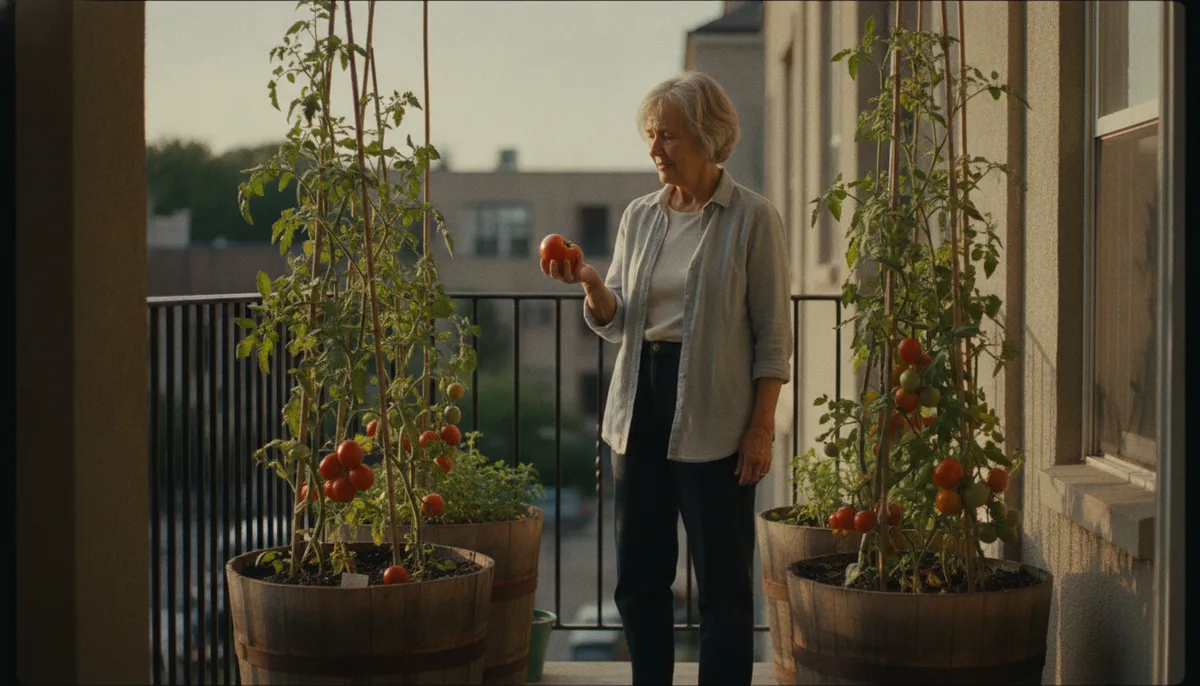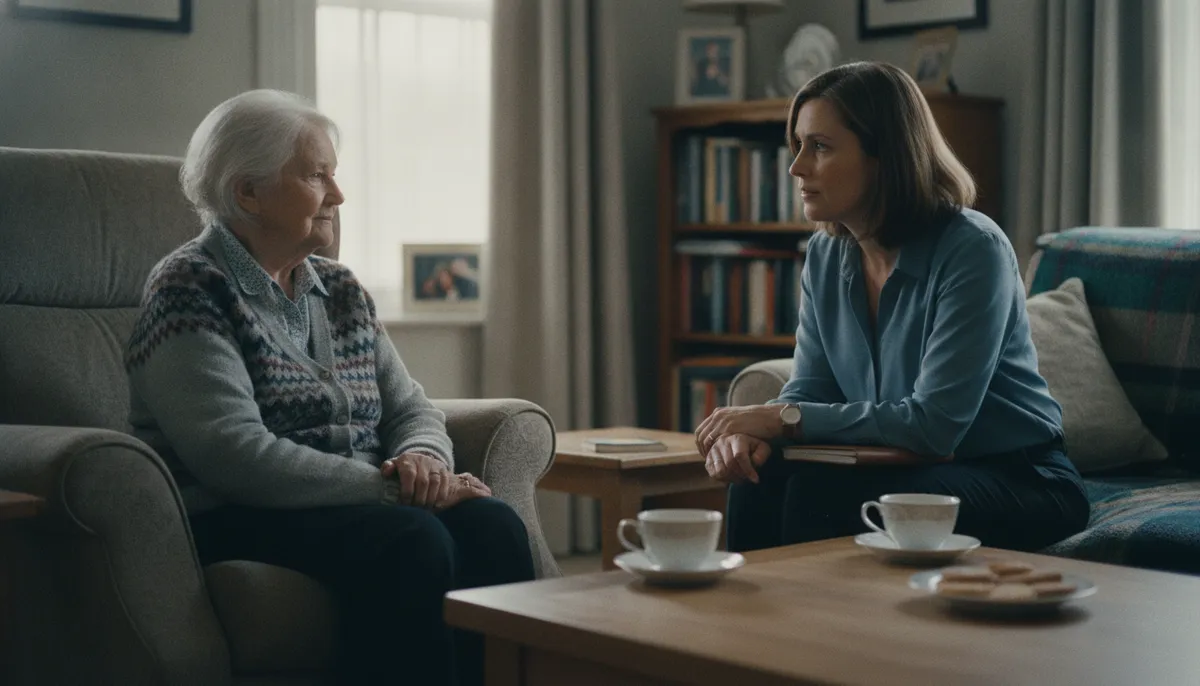
Norma had a dozen ways of not saying it. We'll see. Let me check the calendar. If nobody else can. I suppose, if it's just the once. Each one worked like a door left on the latch, and everyone she loved had learned, over forty years, exactly how to lean on that door until it swung.
The calendar came from the hardware store every December, a fat red rooster on the cover like the one her mother used to hang beside the stove. She filled it in with the blue pen from the junk drawer before the new year even started. Tuesdays, the church thrift shop, pricing coats at the wool table. Thursdays, Bev's errands, the eye doctor and the fabric store and the long way home past the cemetery because Bev liked to see whether the mums had held. Third Sundays, the bake table. The squares filled themselves the way snow fills a walk you just shoveled, and Norma had stopped noticing that her own handwriting was the weather.
In November her daughter called while Norma was still at the shop, the price-tag gun warm from the last volunteer's hand. The boys had swimming now, and there was a work thing, and could she take Saturdays through Christmas. Then, softer, the little hinge at the end: and Saturday too, if that's okay.
Norma looked at the gun in her hand, turned it over, read the brand name on the back the way you read something when you already know what you are going to say. What she said was that she would check the calendar. Her daughter said great, said love you, said the boys can't wait, and was gone before Norma had gotten the coat she was pricing back onto its hanger.
She drove home in the early dark. The church marquee said ADVENT BEGINS SUNDAY in black plastic letters with one A missing, and she read it twice without meaning to. In the driveway she sat a while with her hands in her lap, palms up, the way they fell when she was finally done carrying something. The heater ticked. The Hendersons' porch light came on next door. She was seventy-four years old and she could not remember the last Saturday that had belonged to her.
Inside, she poured the cold morning coffee down the sink and rinsed the mug and set it upside down on the dish towel. The calendar lay open on the counter. Saturday's square was white and slightly creased at the corner from a page she'd folded back years ago to hold her place. She stood over it with the blue pen. She stood there long enough for the stove clock to change twice.
Then she closed the rooster's cover on the empty square and put the pen back in the drawer, and the kitchen went dark behind her the way a room does when no one is left to need it.
The phone rang after lunch the next day. She was at the sink and she let the machine take it, and stood with the dish towel over her shoulder listening to her own recorded voice ask whoever it was to please leave a message. It was Bev, wondering about Saturday, because the craft fair in Millbrook was Saturday, and Norma drove, Norma always drove, Norma had driven to Millbrook so many times her hands knew the exits before the signs did.
The little red light blinked and stopped. Norma found the notepad in the junk drawer, the one with the magnet on the back and a cartoon chicken across the top, and wrote Bev's name on the first line. Under it she wrote nothing. The pad sat on the counter all afternoon, the chicken looking up at the light fixture, Bev's name in blue ink getting no larger. She walked past it four times and did not pick up the phone. It was not peace, exactly. It was more like the sore quiet after a tooth comes out, when your tongue keeps going back to check.
Wednesday she took the library book back, the fat one about the tulip trade that had been three weeks overdue and stuck on page forty since October. Nobody asked her to do it, which was the whole reason she went. She paid the fine in quarters and a dime and heard them land in the little bowl. Then, instead of leaving, she walked back into the large-print section and ran her fingers along the spines until she found a thin one she actually wanted, and carried it to the chair by the window that got the afternoon light, and read.
The woman in the next chair had a tote bag that said GRAND CANYON 2019 and a crossword folded into quarters. After a while she leaned over. Excuse me, she said. Seven letters, a word for obligation. Norma looked up from her thin book, thought about it honestly for a second, and said she didn't know. Then she looked back down. The light moved across the carpet the slow way it does in winter, and she turned one page and then another until the librarian clicked off the far lamps at four-thirty.
She called Bev that evening, before supper, while she still had the shape of the sentence. Bev, she said, I'm not driving Saturday. Not this one. There was a pause on the line, a refrigerator humming somewhere behind it. Bev said, well. Bev said, are you sick? No, Norma said. I'm just not coming. And Bev, who had been her friend for thirty years and had leaned on the latched door as often as anyone, said, all right, honey, I'll ask my nephew, and moved on to the business of Roberta's hip, and the world did not end. It didn't even slow down.
Her daughter took it less easily. Sunday, on the phone, she said Norma's name once, the full version, the one she'd used at twelve when she'd been caught at something. Mom. It's just Saturdays. Norma looked at the loose thread on the brown button of her coat, hanging by the door, and didn't pull it. I know what it is, she said. I love those boys. And no. She heard her daughter breathe. She heard the refrigerator. Then her daughter said okay, said she'd figure something out, and asked, in a smaller voice, whether Norma would still come for Sunday dinners, and Norma said yes, because yes was still a fine word when it was chosen.
Saturday came. The robe hung on the back of the door where it always had, and she put it on instead of getting dressed. She made one cup of coffee instead of two and stood at the window while the Hendersons' car backed out, exhaust hanging white over the driveway. The rooster calendar stayed in the drawer with the rubber bands. On the counter the chicken notepad still said Bev, and below the name, in blue ink, Norma finally added the only other word the page needed. Then she took her thin book to the chair by the front window, where her own house, it turned out, also got the afternoon light.