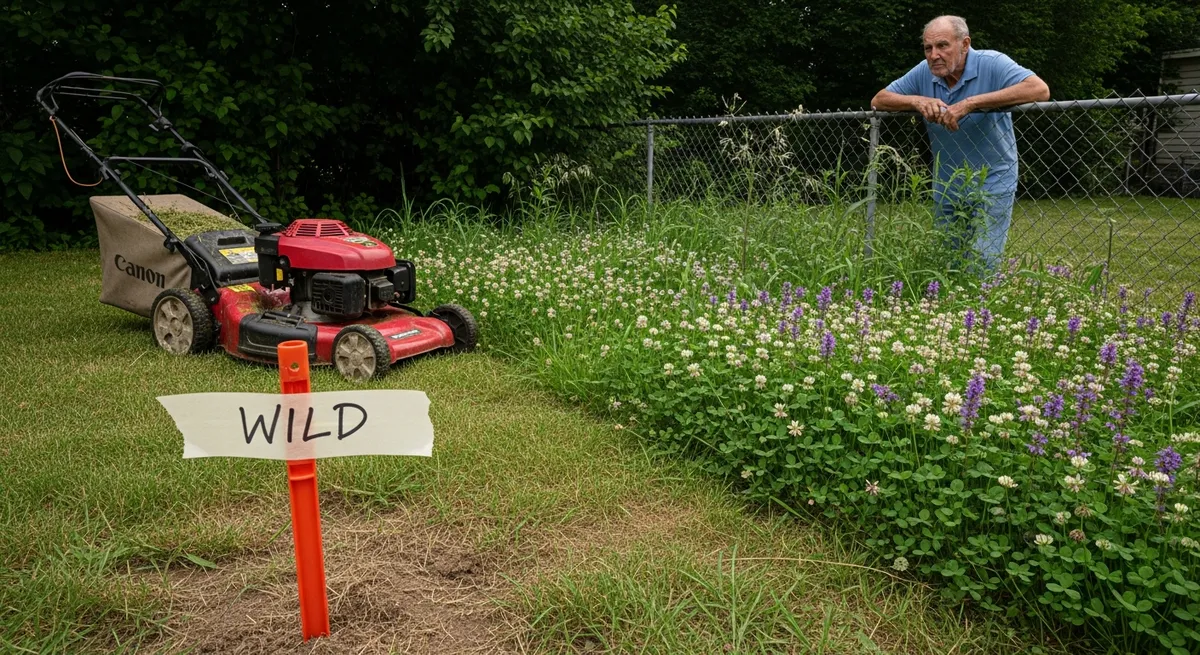
I pushed the orange flag stake into the corner of the yard and it went in crooked, so I pulled it out and pushed it in again. The clover there was already knee-high, the kind of tall that makes neighbors slow their cars. I left the mower where it stood, engine ticking in the heat, went inside, wrote WILD on a strip of masking tape, and pressed the tape onto the stake. The creeping charlie had run past the flag by a few inches, little purple flowers along the runners. I left those too.
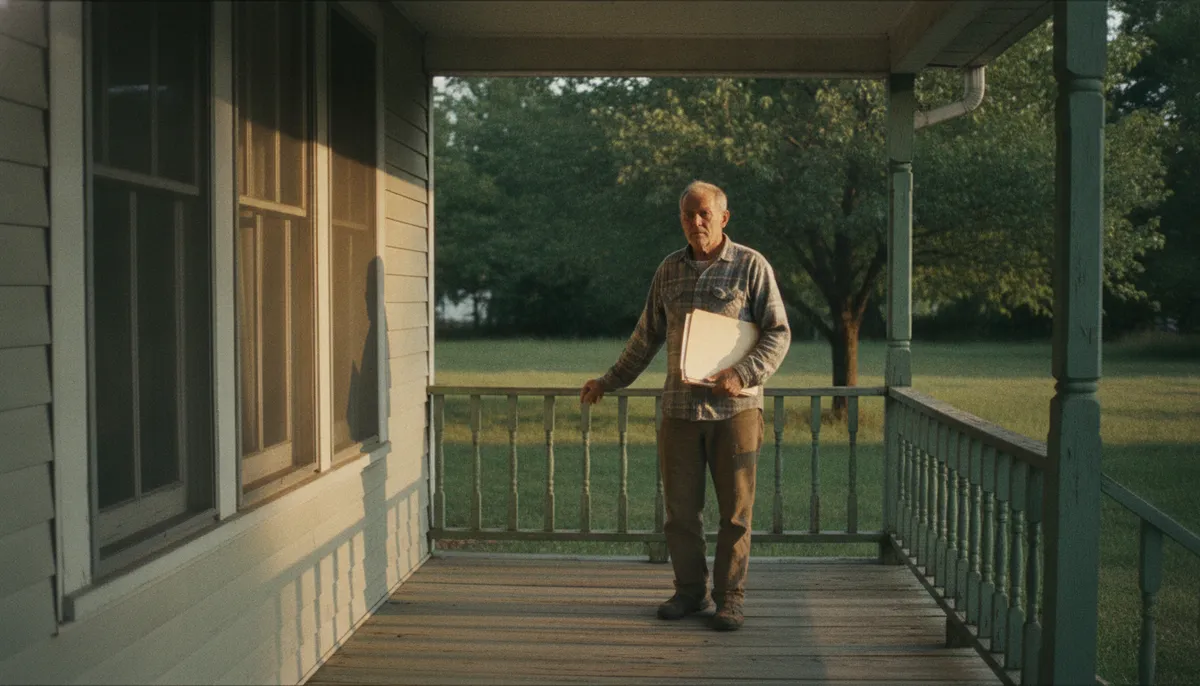
Three weeks later Roy came out with a folded newspaper and leaned both forearms on the chain-link. He pointed the spine of it at the patch. Done back there, he said. Yes, I said. He looked at the clover a while longer, then at me, then back at the clover, and walked to his garage without ever unfolding the paper.
Then one morning I came around the corner of the house and the edger was out on the step, orange cord coiled, dew still on it. The lawn service had come early. Two clean lines ran up the sidewalk side and the fence side of the patch, the clover along them shaved to pale stubble, and in the middle of the cut ground sat a small cone of loose dirt the size of a thimble, caved in, the tunnel behind it open to the air. Some bee had dug that, provisioned it, sealed it, and a spinning nylon line had opened it in half a second. I crouched and put my finger near it and didn't touch it. Then I went inside and called the service and took the corner off the map they mow by, and my voice was steadier than the rest of me.
June
By late June the whole mat had gone white, clover heads packed so close they moved like one animal when the wind came through. I stopped counting bees because there were too many to count. Honeybees mostly, and some small dark ones I had no name for, and on a still afternoon the sound of it carried all the way to the porch. I sat out there more than I had in years. The patch was twelve square feet I had defended against Roy's eyebrows and my own embarrassment, and for a month it paid me back daily.
August
In late August I crouched at the edge of it with a mason jar of iced coffee going warm in my hand, and looked for a long time. Every clover head had gone the color of a paper bag left out in the rain. The selfheal had shut itself up into brown sticks. Nothing was open, anywhere, in the whole twelve feet. Fifty feet away, on the Delacroix side, a row of ornamental alliums stood tall and purple and loud with wings, a sound like a small appliance left running. I had given the bees one good month and assumed I'd given them a season. They had simply walked next door.
That was the lesson the yard signs leave out. Wild is a calendar, and mine had one page in it.
In September I bought a seed packet at the farm co-op, the kind with a hand-drawn bee on the front, a regional mix, and stood over the bare middle of the patch turning my wrist like I was salting something. The seeds were all different sizes, some like splinters, some like the crumbs at the bottom of a coat pocket. They landed where they landed. I went inside.
The next July the goldenrod came up past my elbow, one stalk first and then four, and the yellow heads were loud before the clover below them had done much more than bud. One afternoon I counted three different shapes of bee on the same stalk at the same moment, one of them so small I had to put my glasses on to believe it was a bee at all. Down at the base, the clover was opening its first white heads, tentative, like a hand still deciding. The mason jar sat empty on the step and I left it there.
The Following Spring
In October of that second year I found a nest the size of a playing card tucked under the deck rail, gray as old newsprint, every cell open and empty and perfect. I had to tilt my head sideways to count the rings of it. Along the mud at the patch edge, something with many legs had walked a wide arc, each print clean, like a sentence somebody started and didn't finish. The asters were still going, pale purple in the cold, and a bumblebee the color of a bruised thumb worked across them slower than summer bees move, the way a person walks when they're not headed anywhere in particular. The orange stake had tipped over into the goldenrod, bent at the middle. The tape still said WILD if you already knew it did; the sun had bleached the letters down to a faint rectangle. I put the stake in my coat pocket and walked back to the house without looking at the patch, and I could still hear it.
The following April I was pulling a sweater over my head when I saw it through the bedroom window, a rectangle of violet and white so dense it looked painted on, spilling a good six feet past the old flag corner into lawn I had never officially surrendered. Roy's granddaughter was crouched at the edge of it in yellow boots, one knee in the dirt, holding as still as children hold when they've been told not to touch. A bee landed on her wrist, walked to her knuckle, and flew. She didn't move. In the kitchen my coffee finished and beeped three times, and I stayed at the window with the sweater half on.
Roy came over in May with a paper plate of something his wife had made, powdered-sugar squares, and stood at the edge of the patch for a while before he handed the plate across. What's all that, he said. Goldenrod, I said, and selfheal, and wild bergamot. He repeated the last one twice under his breath, the way you rehearse something for a test. One of the small dark bees came off the bergamot and circled his ear and he didn't flinch, just watched it go, and his face went quiet and working, the face of a man revising something. He pointed at the far edge, where the patch had crossed the chain-link into his yard by a few inches, and started to say something, and didn't. We stood there looking at those few inches, the clover heads in them already opening, white, and starting to hum.