Renata found the magazine page in the back of the utility drawer, under the spare fuses and a church key that opened nothing she still owned. It had been folded twice for so long that it was soft at the creases, the terraced vineyards gone yellow where the ink had bled. She knew without unfolding it what it was. She unfolded it anyway, standing at the counter in her coat, and looked at the Douro running green between the hills for a while, and then she did not put it back in the drawer.
The apartment held other evidence, if anyone had been building a case. A cork on the kitchen windowsill, behind the aloe plant, which over the years had grown one pale root out of its pot to touch the label. A Post-it inside the cover of a library book she had never returned, a hotel name written in the loopy handwriting she used before, back when her hand did not think about itself. She and Tomas had talked about Portugal the way some couples talk about repainting the hallway: seriously, warmly, and never this year. Then the years ran out on his side of the conversation, and the cork stayed on the sill, and the drawer stayed shut.
What changed was nothing dramatic. A Tuesday in March, a program on the radio about ferries, and she got out a legal pad. Within a week the pad had become a document on her computer with forty-one lines, then sixty-two, and a column labeled contingency, and below it a second column labeled contingency for the contingency. She recognized what she was doing. Planning had become a place to live, a small furnished country between deciding and going, and she had a visa to stay there indefinitely. She printed the page for a guesthouse in the Alfama and taped it to the cabinet above the coffee maker, next to an expired dry-cleaning coupon, and every morning she read the line about blue tiles in the courtyard while the pot finished.
The highlighter died on the ferry schedules. She had been marking departure times for Setubal, the yellow line going paler with each pass, and mid-stroke it simply gave out, leaving half a time bright and half a time plain paper. She rummaged in the drawer and found no second highlighter. So she sat there at the kitchen table with the dead pen in her hand and the schedule in her lap, and she stayed there longer than she would have admitted to anyone, because the highlighter was the one they had kept in the junk drawer for years, the one Tomas used to mark crossword clues he intended to come back to, and it had chosen this particular page to run out on. A pen has no sense of occasion. She knew that. She sat there anyway, and when she got up she did not throw it away. She stood it on the windowsill next to the cork, the two of them together now, retired from their original jobs.
She bought the ticket that night, at 11:47, with a half-eaten sleeve of crackers on the desk beside her. The fare was more than she had told herself she would pay and she paid it. She held the cursor over the button long enough for the screen to dim, and when she clicked, the confirmation came back as a string of letters and numbers no one could ever love or memorize, and she wrote it by hand on the guesthouse printout, in the margin under the blue tiles, in the handwriting she used now. Then she sat in the quiet and listened to her own pulse do something it had not done in a while.
Telling Dora made it real in a different register. She said the dates out loud on the phone, October ninth to the seventeenth, and there was a second of silence in which both sisters understood that a thing said in dates can no longer be a dream. Dora said it sounded beautiful. Renata said yes, and while they talked she smoothed the old atlas flat on the counter, her palm pressing the crease that had gone white from being opened to the same page for fifteen years. After they hung up she stood with her hand on the closed cover for a moment, the way you stand with your hand on a dog that has done nothing wrong.
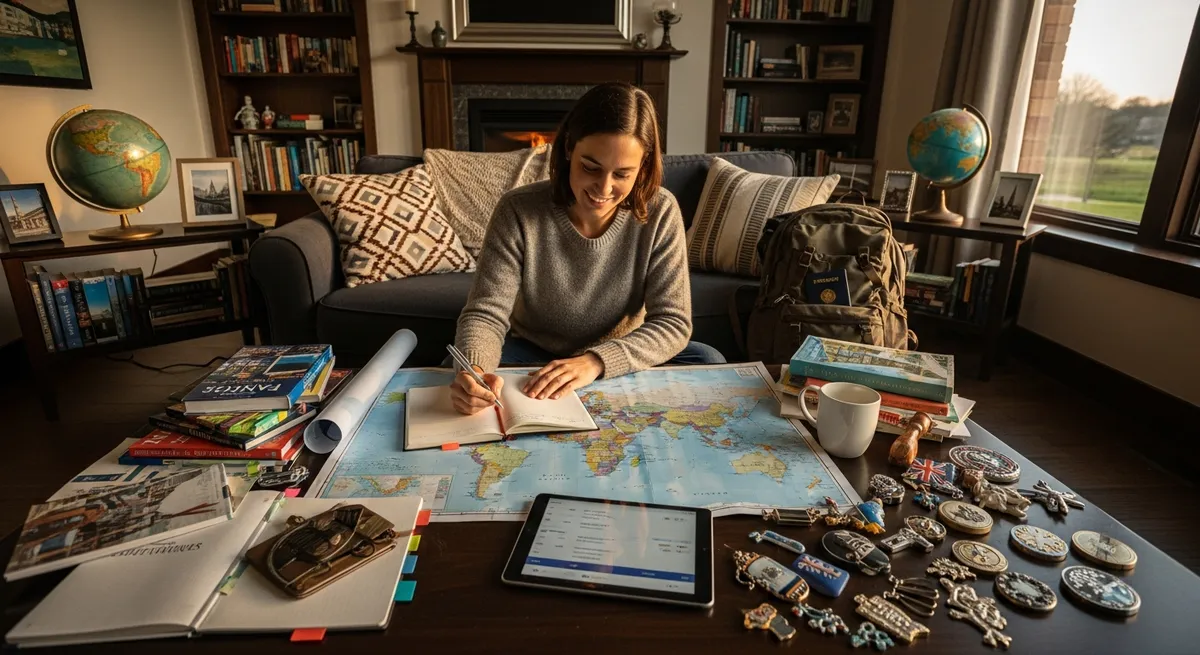
The trip assembled itself in objects after that, the way trips do. A magnet held the confirmation printout to the refrigerator, next to the softened magazine page, whose crease now split one vineyard cleanly down the middle. A green folder in the second drawer collected what mattered: the printout, then a phrasebook from the library sale, a dollar in the box with the water-damaged cookbooks. She read the phrasebook in the bath until the bottom corners of the pages went wavy with steam. She folded down the page for obrigada, and the page for faz favor, and the page for the verb ficar, which the glossary said meant to stay, or to remain, or to be left behind, depending. She read that entry three times. Portuguese, apparently, had spent centuries preparing a word for her exact situation.
She took the cork down once, near the end, and turned it over. One word on it in green ink faded to the color of old mint: the name of a quinta neither of them had ever seen, written there by Tomas in some restaurant two decades ago, a promise in a handwriting she was the last person alive to recognize. She looked up the quinta. It still existed. It gave tours on weekday afternoons. She copied the name onto the last line of the document, under contingency for the contingency, where it was not a contingency at all, and set the cork back on the sill in the ring it had pressed into the paint over the years.
Two weeks before departure she packed the green folder: printout, phrasebook, and finally the atlas itself, which made the folder too fat to close until she pressed it shut with both hands. On the shelf where the atlas had lived, there was a pale rectangle in the dust, the exact size of the thing that was no longer there. She looked at that rectangle a long moment. Then she left it. Some absences you dust over. Some you let stand, so that anyone who comes looking can see that what belonged there has finally gone where it was always supposed to go.
The dry highlighter stayed on the windowsill next to the aloe, pointing at nothing, holding its half-finished yellow line somewhere inside. She thought about tucking it into the folder and decided against it. It had done its work. It had stopped, mid-stroke, on a ferry schedule, and made her look at what stopping looked like, and she had bought a ticket the same night. Objects cannot mean anything on their own. People assign the meaning, she knew that, and she assigned it, gladly, and locked the door behind her in October with the watering of the aloe entrusted to the neighbor and the cork and the pen keeping each other company on the sill.