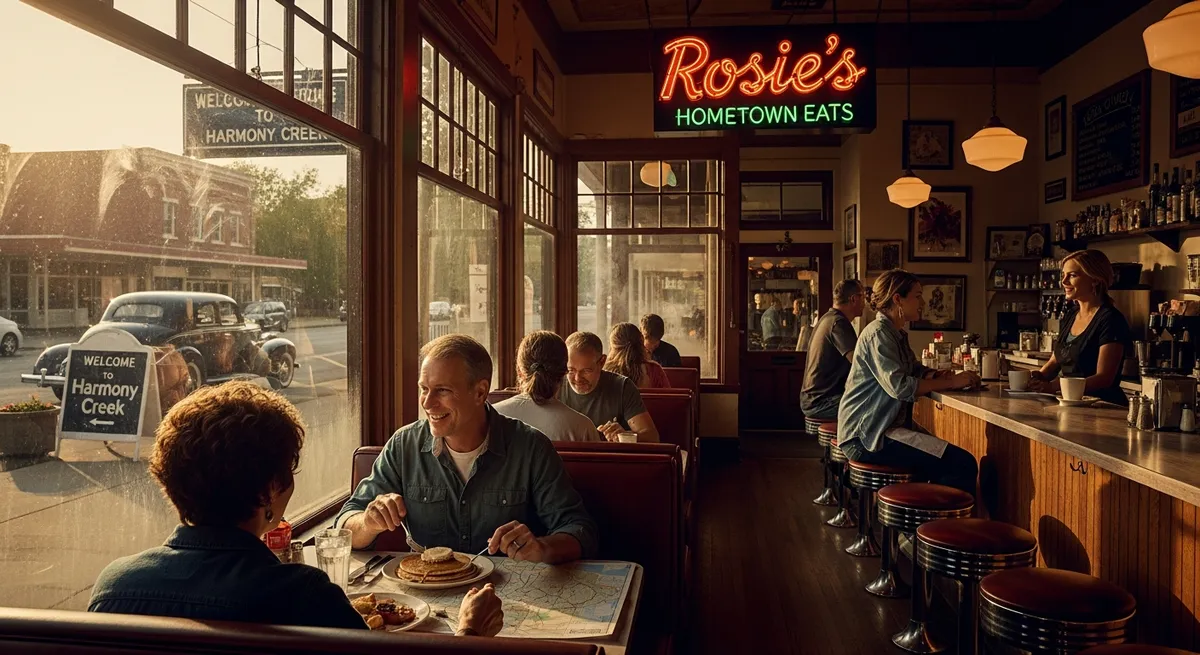
The first counter I ever sat at with Ray, the stool gave a quarter-turn when he lowered himself onto it, sticky at the base, and he let it. A woman set a mug in front of him without asking, ceramic so thick at the rim that your lip found the edge before you expected it. He wrapped both hands around it like something he didn't want to drop in a parking lot. The menu was a single laminated sheet, and the breakfast side had gone completely matte, rubbed down to bare paper around the eggs, the corners soft as cloth from however many thousand thumbs.
The cook leaned through the window, said, the usual, Dennis, and set a plate down two stools over before the man could answer. Two eggs over hard, a strip of bacon folded in half the way somebody must have asked for it once and then kept asking for the rest of his life. Ray watched all this the way other men watch a ball game. Then he tapped the dull spot on the laminate and told me to order the eggs.
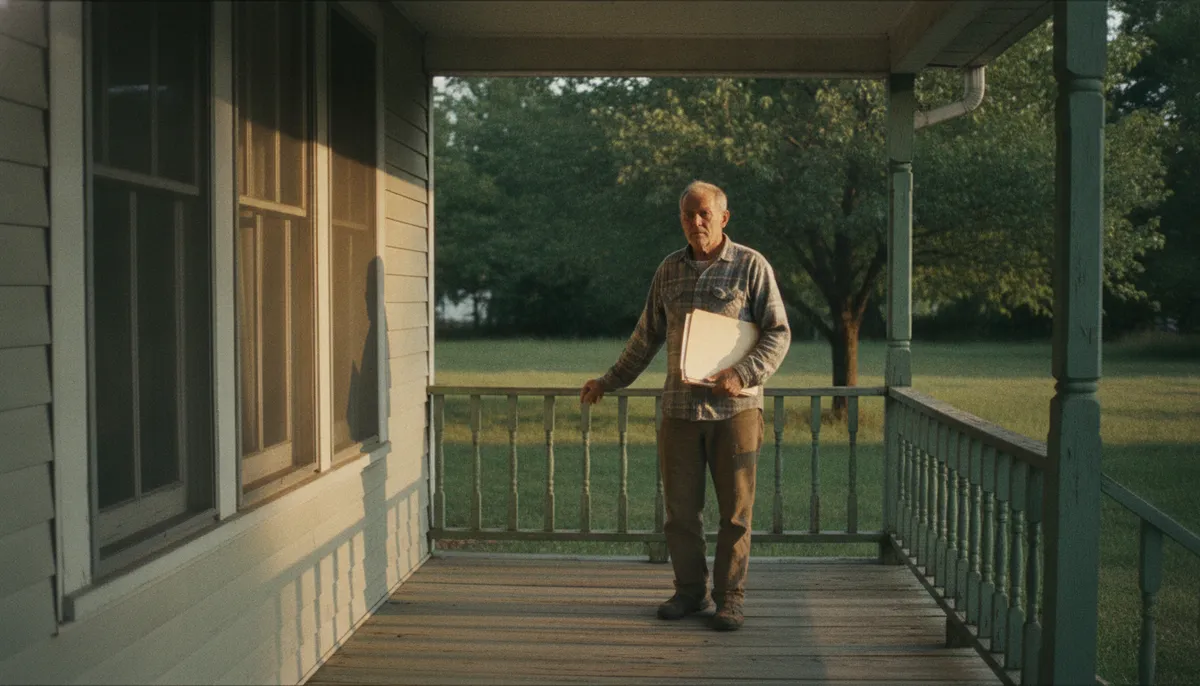
Ray is my wife's uncle. He and June sold their house the year he turned sixty-six, bought a truck with a camper shell, and started spending every spring and fall crossing the middle of the country for reasons neither of them has ever felt pressed to supply. They pass through towns with one blinking light and a grain elevator, and they eat breakfast in every one of them. I rode along for six days one October, Tulsa to western Kansas, because June wanted company in the back seat and Ray wanted somebody new to teach.
On the third day he let the phone do the picking, to show me what happens. The pie photograph filled the screen on its little rubber dash mount, lattice crust catching light the way a photograph knows how to do, and we drove twelve miles to a lot with fresh-painted lines and a registered trademark after the name on the sign. The mug was thin at the rim. The eggs arrived under a sprig of something green. The chalkboard said locally sourced in a font that took effort, and the hot sauce bottle wore a cartoon pepper in sunglasses. Ray turned the bottle over. The bottom was clean - no crust, no ring, nothing dried dark from a hundred pour-overs. The pie by the register sat in a case with no fog on it, the meringue identical to the photograph above it, which made him feel, he told me later, that nobody had ever eaten any. The woman refilling our coffee said there you go to the table rather than to us, and the tip was suggested by a machine that flipped around to face him. June ate her toast and said nothing, which is how June laughs.
What Ray taught, he taught in pieces, across gas stations and county lines, and it adds up to a short list I still run in my head anywhere there's a counter:
- Read the laminate before you read the menu. Order whatever the plastic has been rubbed matte over. A thousand thumbs are a review nobody was paid to write.
- Weigh the mug. A thick rim means the cups get used hard and replaced rarely, and that people sit long enough to need them.
- Turn the hot sauce over. A crusted bottom is a decade of breakfasts. A spotless one is a prop.
- Look for fog in the pie case, especially pooled in one corner. Fog means the pie went in warm, and warm means it was baked in the building.
- Watch how the regulars pay. Men who set exact change on the counter from their front pockets, already counted, have been eating there five mornings a week for years, and they have somewhere to be.
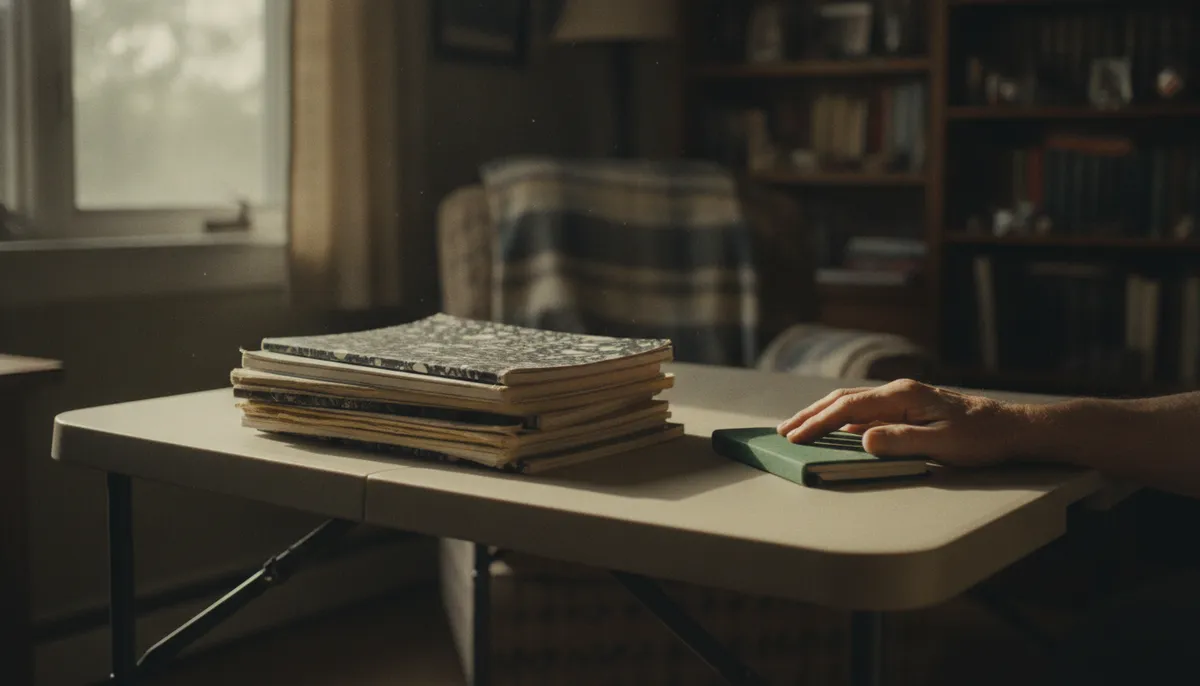
His atlas rode between the seats with a rubber band around the Kansas spine. The margins are a second book: names, arrows, a phone number for a grain elevator, and one crossed-out good pie? from 1994 that he can't explain anymore - whether the pie was bad, or whether he never stopped to find out. He trusts the margins over the stars on any app, because a margin note costs somebody a pencil groove and a four-star average costs nothing.
On the fourth morning we crossed into Kansas before six, and the first town was twelve buildings, a water tower, and a diner with no name on the window, just a phone number painted in the lower corner, as if you might need to call ahead. A county road-crew truck sat in the lot beside a Chevy with a cracked rear window and a dog asleep in the bed. Three of the four stools were taken by men in the same canvas jacket wearing different colors of the same dirt, and the open stool had a mug on it turned upside down, which I didn't understand until the woman behind the counter lifted it, set it right side up, and filled it without looking at Ray's face.
The pie case was fogged at the bottom corner where the cherry had sat longest. The man two stools down slid a folded flyer toward Ray without looking up from his eggs - a church rummage sale notice he had been using as a coaster, soft and damp along the bottom edge. On the back, in pencil, somebody had written a name, Eula's, and a town that wasn't a dot on any page of the atlas, just a county line and a curve of state route. Ray copied it into the Kansas margin, pressing hard enough to leave a groove, the way you press when forgetting is not an option. The canvas jackets paid with coins they'd had ready in their pockets and were gone, trucks running, before Ray finished his second cup.
That was the last thing the laminated menu had to teach me, and it took the whole trip to see it. The good places don't get found so much as handed along, penciled on the backs of damp flyers by people who will never post a review of anything. All the wear on that sheet of plastic - the matte patch, the cloth-soft corners - is just the same handing along, written by thumbs instead.
Ray capped the pen and laid it across the open page like a road barrier, marking where they meant to go next. June finished her coffee. I own an atlas of my own now, secondhand and a decade out of date, with a rubber band around the spine of the state where I live. There is one name in the margin so far. The groove is deep.