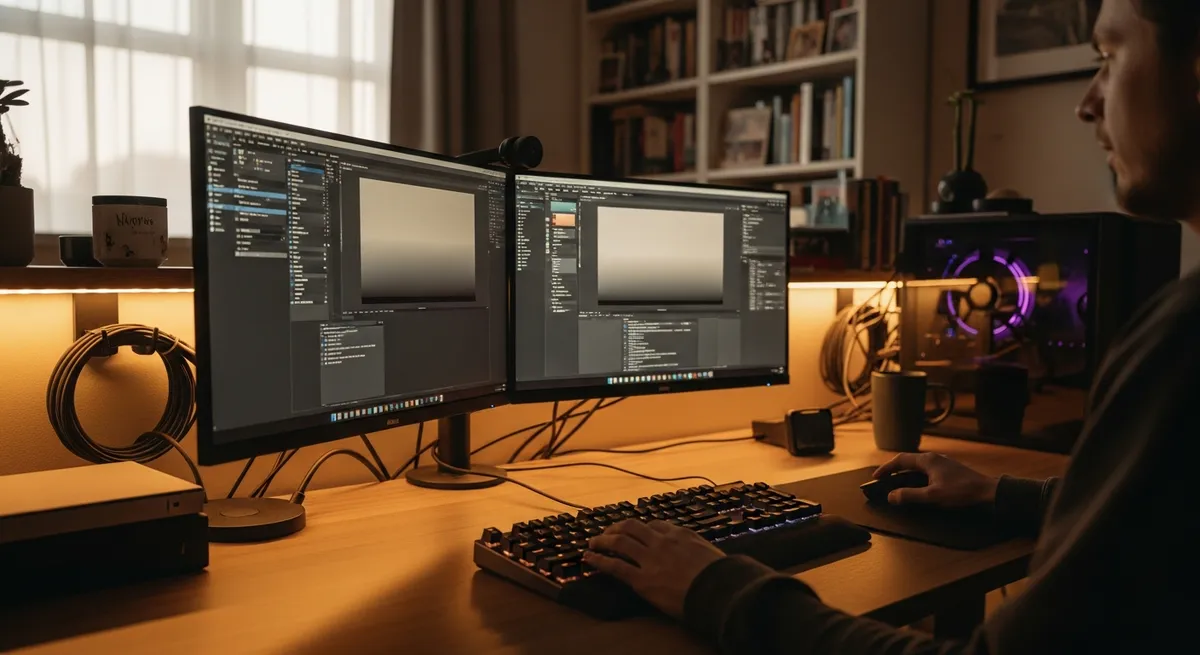
I am presently ensconced in a chair that cost significantly more than my first motorized vehicle, yet my lower back feels as if it were processed by a Victorian laundry mangle. (I have never actually seen a laundry mangle in person, but the imagery feels appropriately violent for a Tuesday morning.) My first car was a 1994 hatchback with a broken heater and a suspicious smell of wet dog, but at least that vehicle did not actively try to fuse my vertebrae together while I was trying to check my email. (The car preferred to simply stall in the middle of busy intersections, which was a different kind of stress entirely.)
(I am not being theatrical; I am being strictly medical about this calamity.) We are living in an era where we spend more time staring at glowing rectangles than we do interacting with other human beings, and we are doing so in positions that would make a contortionist weep with pity. (My chiropractor, a man named Dr. Aris who has a very nice collection of vintage fountain pens, tells me that my neck resembles a question mark.)
Just this past Tuesday, my neighbor Arthur - a gentleman who once attempted to seal a pipe with sugary bubble gum - unveiled his new workspace, which was merely a kitchen stool and a laptop balanced on a stack of dusty encyclopedias. (I use that term loosely, as one might use the word "gourmet" for a microwave burrito.) He asserted it was minimalist, but the man looked exactly like a stone gargoyle attempting to crack a difficult crossword puzzle. (He also complained of a persistent headache, which I suspect was the encyclopedias' revenge for being ignored for thirty years.) Arthur is a lovely man, but his understanding of the human skeletal system is roughly on par with a sack of wet flour. (He once told me that posture is a "social construct," right before he pulled a muscle reaching for a napkin.)
We are failing ourselves. We treat the home office as if it were a minor hobbyist nook, but it is actually the central engine room of our entire professional existence. (Or at least the place where we send emails that definitely could have been text messages.) If the engine room is chaotic, dim, and physically agonizing, the entire vessel is destined to sink. (My ship has been listing to the left since 2021, and I am pretty sure the hull is breached.) We treat our workspaces as afterthoughts, as though the place where we earn our living is less important than the place where we keep our spare towels. (I have seen guest bathrooms with better ergonomics than the average remote worker's desk, which is a tragedy of Shakespearean proportions.)
The Statistics Of Our Physical Stupidity
It is irrelevant how many productivity applications you install if your cervical spine feels like it is being held together by oxidized metal staples. (I checked the app store; there are no digital fixes for "rusted staple neck.") Per the Bureau of Labor Statistics, musculoskeletal disasters were responsible for 33 percent of every worker injury and illness case in 2022. (Thirty-three percent!) That is one third of us literally falling apart because we refuse to sit like normal human beings. It is a staggering number. It is an epidemic of the slouch.
We do not consciously architect these spaces; we simply accumulate them over time. You begin with a laptop on the sofa, migrate to the dining table because the sofa makes your limbs go numb, and eventually settle in a corner of the guest room with a desk that vibrates every time you strike a key. (My initial home office was a literal storage closet, which felt industrial until I realized I was inhaling dust that had been undisturbed since 1974.) This total lack of intentionality builds a physical environment that actively prevents deep intellectual work. (It is a one-sided war, and you are losing.) We think we are being thrifty by using a folding chair from the garage, but we are actually just financing a future of physical therapy and expensive heating pads. (My heating pad has a name; it is named "Warmth-a-lot," and it is my only true friend during the winter.)
When your physical form is in distress, your brain redirects half of its processing power to managing that specific discomfort. Your body is constantly searching for a snack or a nap to escape the pain. You are not actually contemplating your complex spreadsheet; you are focused on the persistent, rhythmic throb in your right shoulder. (I have named my shoulder throb "Gary," and Gary is a very demanding roommate.) Gary does not care about your deadlines. Gary only cares about making sure you know he is there, pulsating like a small, angry sun beneath your skin. (I once tried to bribe Gary with ibuprofen, but he just laughed and sent a shooting pain down my arm.)
We are essentially asking our brains to perform high-level cognitive tasks while our bodies are screaming for mercy. It is like trying to compose a symphony while someone is poking you with a stick. (The stick is your chair, and you are the one holding it.) A 2022 report from the National Institute for Occupational Safety and Health confirms that the risks of prolonged sitting in poor conditions are not just physical; they are psychological. (Stress is a feedback loop, and your bad posture is the microphone.)
Why Intentionality Is Not Just A Corporate Buzzword
We frequently imagine that a superior monitor or a faster network connection is the primary secret to productivity. It is not the case. (The key is not being in constant physical pain.) A 2023 study published in the Journal of Occupational Health found that ergonomic interventions can improve productivity by up to 25 percent. (Imagine being 25 percent better at your job just by sitting correctly! I could finally finish that novel I have been "writing" since 2012.)
But we ignore the math. We buy the $12 lamp from the discount bin because it looks "quirky." (Quirky is just another word for "will give you eye strain by noon.") We use a chair that was designed for a 1970s conference room and wonder why our hips feel like they are being squeezed by a giant. (It is because they are being squeezed by a giant, and that giant is your own bad taste in furniture.) (My dog, Barnaby, does not improve this situation, as he interprets my working hours as a personal invitation to stare at my face until I finally yield.) He is convinced that if I stare at the screen for more than twenty minutes, I am clearly in a trance that can only be broken by a walk to the park.
Without a sharp distinction between zones, the stress of the office inevitably leaks into the sanctuary of the home. You are never entirely at work, and you are never entirely at peace. You are simply a weary individual sitting in a poorly illuminated room. (Envision a small, heavy child sitting on your skull all day; that is essentially your current situation.) This lack of boundaries is why we find ourselves checking work messages at 10:00 PM while sitting on the edge of the bed. (The bed is for sleeping and hiding from responsibilities, not for formatting cells in a document.)
(My friend Dave uses a single naked lightbulb in his basement office, and he wonders why he resembles a Victorian orphan by three in the afternoon.) Dave is a software engineer who earns a very respectable salary, yet he chooses to live like a character in a Charles Dickens novel. The American Optometric Association notes that "Computer Vision Syndrome" is a genuine medical condition, caused largely by inadequate lighting and screen glare. (It is not just that you are tired; your eyes are literally exhausted from trying to decipher text through the glare of a poorly placed window.)
The Ritual Of The Reset
You must be absolutely ruthless when evaluating your current office inventory. Begin by removing every single item from the surface of your desk. (Yes, even the dying succulent and the ceramic mug that proclaims you are the "World's Best Something.") Place your chair in the center of the room and sit in it with intention. Does it support you? Or does it allow you to collapse into a heap like a discarded puppet? Go find a chair that provides genuine, measurable lumbar support. (I once attempted to use a yoga ball as my primary seat, but I ended up collapsing into a bookshelf during a very high-stakes digital conference.) Your chair is the most vital piece of machinery currently in your possession. Accord it more respect than you give your actual computer. (The computer can be replaced; your spine is a limited edition.)
Your eyes should ideally be level with the top third of your computer screen. If you are using a laptop, you cannot achieve this without employing a separate keyboard and mouse. (I know it feels like an extra step, but your neck will thank you.) Cables are the visual equivalent of a stranger screaming directly into your ear. They are distracting, they gather immense amounts of dust, and they are a constant tripping hazard. Purchase some hook-and-loop straps and bundle those wires together immediately. (I prefer the versions that come in neon colors so I can pretend I am operating a sophisticated spaceship.) Clear desk, clear cognitive function. It is a total cliché because it is fundamentally true. When your physical environment is organized, your brain is not forced to waste energy processing the surrounding clutter.
Finally, you must set a timer. Regardless of how exquisite your configuration is, the human body was not evolved to remain motionless. (We are essentially highly advanced monkeys that decided to sit down and never get up again.) Fix your gaze on something twenty feet away for a duration of twenty seconds. (This is the 20-20-20 rule, and it is the only thing preventing me from transforming into a pillar of salt.) According to research from the Mayo Clinic, sitting for extended periods is linked to a cluster of health issues that no amount of pricey furniture can fully solve. You must move. (I recommend a brisk walk or a dramatic dance to a song you would never admit to liking.)
The Essential Revelations
The Final Reckoning
At the conclusion of the day, your home office is a direct reflection of how much you value your own personal energy. If you treat your workspace as an afterthought, your work will eventually feel like one as well. Invest significant effort into your physical surroundings. It is not about purchasing the trendiest gadgets or having a room that looks like a sterile stock photo. It is about designing a space that allows you to vanish into your work without your body shouting for assistance. Start with the minor adjustments. Your future self - and your medical provider - will certainly thank you. (And perhaps you can finally cease looking like a stone gargoyle.)
Frequently Asked Questions ❓
How high should my desk actually be for the best ergonomics? 🤔
Your desk elevation should enable your elbows to rest at a ninety-degree angle while your shoulders stay completely relaxed. (This sounds simple, but most people fail this test immediately.) If the desk is too elevated, you will shrug your shoulders all day; if it is too low, you will slouch over. Most standard desks are about twenty-nine inches high, which is actually too tall for a great many people. (I discovered this when I realized I was typing with my chin resting on the space bar.)
Is a standing desk really worth the investment for a home office? ⏱️
Standing desks are excellent for interrupting long periods of sitting, but they are not a magical fix for your life. (They are not a treadmill for your career.) The objective is to rotate between sitting and standing throughout the day rather than sticking to just one. Standing all day can lead to its own set of complications, such as lower back strain and significant leg fatigue. (I once stood for eight hours straight and I am fairly certain my ankles turned into stone.)
What is the best way to handle lighting to prevent eye strain? 🔴
You should strive for balanced light that removes shadows on your workspace and glare on your screen. (Shadows are for noir films, not for your spreadsheets.) Position your monitor so that windows are to the side rather than directly in front of or behind you. Using a dedicated task lamp with adjustable brightness can help you calibrate the light as the day moves forward. (I prefer a lamp that does not make me feel like I am being interrogated by a detective.)
Do I really need a separate keyboard if I use a laptop? 🟢
Yes, you absolutely do if you care even a little bit about your neck and wrists. (The laptop is a marvel of engineering, but it is an ergonomic disaster.) By using an external keyboard, you can elevate the laptop screen to eye level while keeping your hands in a neutral position. It is the only way to avoid the "laptop hunch" that is currently ruining a generation of spines. (I have three keyboards, which is perhaps excessive, but each one has a different "click" that I find soothing.)
How can I make a small space work for a productive office? ❓
Verticality is your greatest ally in a small space. (Think up, not out.) Use wall-mounted shelving for storage and a slim-profile desk that fits the room without dominating it. Most importantly, keep the area strictly devoted to work so your brain learns to concentrate the moment you enter that small footprint. (If you work in your bed, your brain will think it is time for a nap every time you open a PDF.)
References
Disclaimer: This article is for informational purposes only and does not constitute medical or professional ergonomic advice. Consult a qualified healthcare provider or ergonomics specialist before making significant changes to your workspace or if you are experiencing chronic pain.