I am currently hunched over my kitchen table at four in the morning, squinting at a cup of tepid coffee and a spreadsheet that looks like it was written in a language I have never encountered. (I am quite certain that four in the morning is the precise moment when the universe decides to interrogate you about every terrible life choice you have ever made, like that time I tried to learn the unicycle in 2012.) My neighbor, a guy named Gary who wears sandals during blizzards and owns a truly disturbing collection of lawn gnomes, once told me that Sleep Hygiene is a hobby for people who do not have real jobs. Gary is currently in the middle of his third divorce and looks exactly like a piece of fruit that has been sitting in the sun for about three weeks too many. Do not be like Gary. (Gary also attempted to sell me a pre-owned watercraft in the middle of October, which reveals everything you need to know regarding his cognitive state.)
According to the Centers for Disease Control and Prevention, one out of every three adults in the United States does not get enough sleep on a regular basisI. One in three. (That is a staggering number of people walking around with the temperament of a wet cat and the reaction time of a glacier.) It is a national crisis that we somehow treat like a tiny inconvenience or a badge of honor. We boast about our exhaustion as if it were a professional milestone. We consume more espresso and pretend our brains are not slowly dissolving into a puddle of poor choices. But the reality is much more disgusting than a simple case of the yawns. It is a slow-motion collapse of our collective ability to function as rational primates.
The Trash In Your Head
When you choose to power through the night to finish a project, your brain does not just stay awake. It starts to break down in ways that are both very quiet and deeply unsettling. (I know this because I once tried to pay for a taco with my library card after a twenty hour shift, and I was genuinely offended when the cashier did not accept it.) Your prefrontal cortex, which is the part of your brain that stops you from insulting your boss or your mother-in-law, basically decides to go on an unauthorized lunch break. The National Institute of Neurological Disorders and Stroke explains that while you sleep, the gaps between your brain cells get bigger, which lets the cerebrospinal fluid wash away nasty proteinsII. If you do not sleep, those nasty toxins just sit there and fester. Think about what happens if you never take the trash out of your kitchen. After a week, you do not have a room; you have a hazardous waste site. (This is exactly what you are doing to your head every time you stay up late watching strangers pressure wash their driveways for three hours.)
I am not sitting here on some high horse of perfect health. I have been there and I have paid the price in actual currency. I once spent three thousand dollars on a business venture because I was too tired to realize it was a pyramid scheme. (It involved selling high-end magnets to people who already possessed magnets; it was not my finest hour.) Exhaustion makes you unintelligent. Skipping sleep is not some secret trick to get more done. It is a slow-motion car wreck that ends with you weeping in a parking lot because you forgot where you left your vehicle. You are not a hero for skipping sleep. By the year 2026, the medical community will likely look back at our current sleep habits with the same horror we reserve for Victorian doctors who prescribed cocaine for a toothache. To be honest, your work is just not good enough to justify the brain damage you are doing to yourself. I say this with love, and with the authority of a man who once put his car keys in the freezer.
The Cold Hard Truth About Your Bedroom
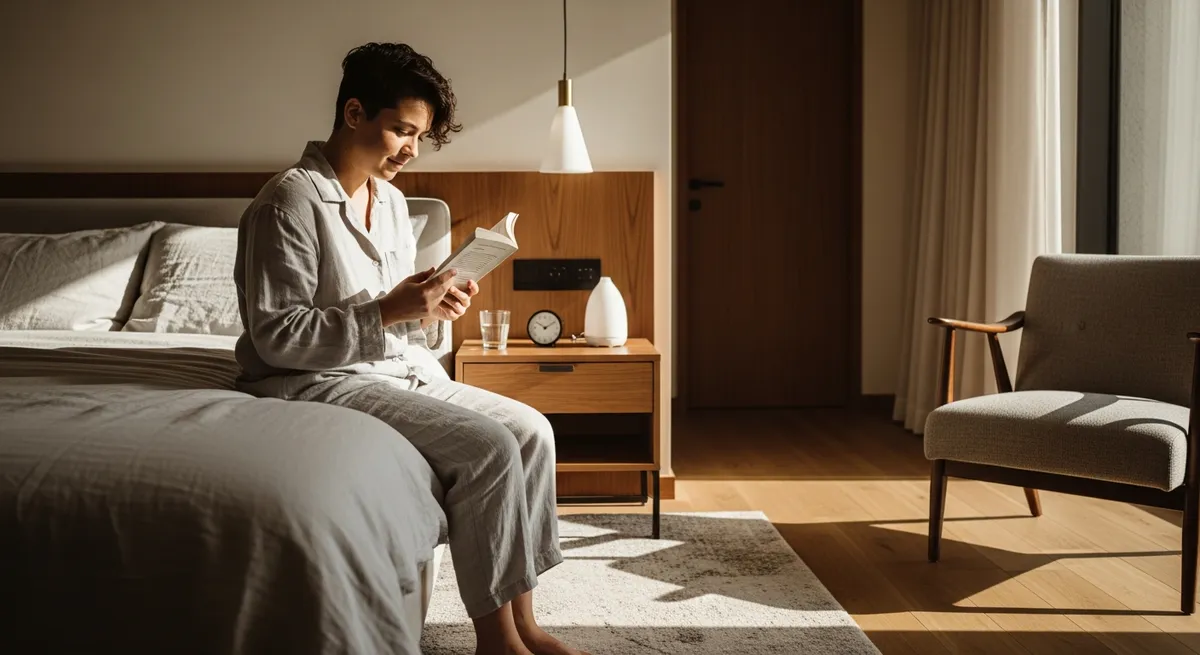
This is known as your circadian rhythm, and it is more sensitive than a poet in a drafty old house. If even a tiny bit of light gets through your curtains, your pineal gland decides melatonin is not needed and returns to its slumber. (My pineal gland is basically a very lazy worker who wants any excuse to quit.) I finally spent seventy dollars on blackout curtains that make my room look like a tomb, and it was the best money I have ever spent. It is even better than the time I bought those little umbrellas for my drinks. My wife, who I am certain is a lizard wearing a human costume, likes our house to be as hot as a pizza oven. But the National Sleep Foundation says that the perfect temperature for sleep is actually between sixty and sixty-seven degrees FahrenheitV. Your body has to lower its temperature to start the sleep process. If you are buried under three blankets in a room that is seventy-five degrees, you are just roasting yourself like a turkey. You will wake up at three in the morning covered in sweat, wondering why you feel like you just finished a race in a sauna. (I had to work out a peace treaty with my wife that involved a fancy fan and a very specific thermostat setting that required more diplomacy than a global trade deal, but it worked.)
How To Build A Routine That Actually Sticks
You cannot just hit a button and expect your brain to turn off. It does not work that way. (Your brain is a bureaucratic machine that requires several forms to be filled out in triplicate before it agrees to shut down.) You need a ritual to wind down and tell your nervous system that the day is finished. I used to work until ten minutes before I went to bed, and then I wondered why my head was still buzzing like a power line in a thunderstorm. Now, I have a hard rule: I do not look at screens sixty minutes before I sleep. Harvard Medical School has proven that blue light stops melatonin for twice as long as green light and messes with our internal clocks twice as muchVI. When you stare at your phone, you are basically screaming "WAKE UP" at your head. I am a fan of caffeine. I want to be buried in a casket filled with dark roast. But a study in the Journal of Clinical Sleep Medicine found that having caffeine even six hours before bed can cut your sleep time by over an hourVII. I had to quit the stuff after two in the afternoon. It was a very dark time. I was extremely grumpy for a week. (I did apologize to the mailman for staring at him with such intensity, but I do not think he is over it yet.) But the results were very real. I stopped feeling like a dead man walking in a suit. If you want to perform at your best, you have to pay the cost. You do not need a fancy mattress that tracks your heart and judges your life. You just need to kill the lights, cool the air, and put your phone in another room. The math is not difficult. But simple is not the same as easy. (If it were easy, Gary would be doing it, and Gary is currently busy trying to fix his lawn gnomes with tape.)
Pro Tip
Try the 10-3-2-1-0 rule. No caffeine ten hours before bed. No food three hours before. No work two hours before. No screens one hour before. Zero is the number of times you should hit the snooze button in the morning. (Every time you hit snooze, you are lying to yourself before the day has even started, and that is a terrible way to live.)
The Economic Cost of the Yawn
We do not talk about the financial price of being tired. A report from the RAND Corporation estimated that the United States loses up to four hundred and eleven billion dollars a year due to sleep deprivationIII. That is billions with a B. This loss comes from reduced productivity and the increased risk of making mistakes that cost money. (Like my magnet business, which still haunts my bank account.) When you are tired, you lack the mental bandwidth to negotiate effectively or to spot the pitfalls in a contract. You are basically a walking liability. I have seen professionals make million-dollar errors because they thought they were too important to sleep. They were not. They were just expensive disasters waiting to happen. Looking forward to the health outlook of 2026, I suspect we will finally treat a full eight hours as a non-negotiable asset rather than a luxury. The American Academy of Sleep Medicine points out that keeping a strict schedule is a fundamental pillar of healthIV. If you want to be successful, you must protect your rest like it is your most valuable asset. Because it is. Your brain is the only thing you have that generates income. (Unless you are Gary, who I suspect lives on a diet of pure spite and alimony payments.)
The Long Game
At the end of the day, your performance is a direct reflection of your recovery. I spent half my career thinking I was a "night owl" when I was actually just a person with very poor habits and a caffeine addiction. (Self-diagnosis is a dangerous game, especially when you are doing it at midnight on a Tuesday while eating cold pizza.) Once I prioritized my rest, the work actually got easier. I am convinced that by 2026, the corporate world will finally stop rewarding burnout and start rewarding sleep. You start to feel like a human being again. You stop wanting to cry when you see a flight of stairs. It is worth the effort. Your brain is a magnificent machine, but even the best machines need to be powered down and cleaned. Take the trash out. If I can do it, anyone can. Sleep well. Your brain needs a car wash, and your bank account will probably thank you too.
Frequently Asked Questions
How long does it take to see results from better habits?
You will probably feel more alert after just a few days of following these rules. However, it can take several weeks for your body to fully adjust its internal clock and pay off long-term sleep debt. Do not get discouraged if the first night feels a bit strange or difficult. (Your brain is just confused because it is used to being a mess.)
Is it okay to catch up on sleep during the weekend?
Sleeping in on Saturdays might feel good in the moment, but it can actually confuse your circadian rhythm further. Experts generally suggest keeping your wake-up time consistent within an hour, even on your days off. Consistency is much more valuable to your brain than a one-time binge of rest that leaves you feeling groggy on Monday.
Does exercise help with improving rest quality?
Physical activity is one of the most effective ways to deepen your sleep and reduce the time it takes to fall asleep. Just try to avoid very intense workouts right before bed, as the spike in body temperature can keep you awake. Morning or afternoon exercise is usually the most beneficial for your nightly rest and your overall mood.
Should I use a tracking device to monitor my cycles?
While data can be interesting, many people find that tracking their sleep creates more anxiety, which then makes it harder to fall asleep. If you find yourself obsessing over the numbers on your wrist, it might be better to put the tracker away. Focus on how you feel in the morning rather than what a gadget tells you. (Technology is not always the answer to biological problems.)
What is the best way to handle a night of bad sleep?
The best approach is to stay as close to your normal routine as possible the next day. Avoid taking long naps or drinking excessive amounts of extra caffeine, as this will only make it harder to sleep the following night. One bad night is a setback, but it is not a disaster unless you let it ruin your entire week of progress.
References
Disclaimer: This article is for informational purposes only and does not constitute professional medical advice. Always seek the advice of your physician or other qualified health provider with any questions you may have regarding a medical condition or sleep disorder.