At 2:00 AM, you sit in front of a glowing monitor. You are staring at a 1920 census record that finally links your surname to a village in Calabria or the coast of Galway. The harsh blue light is the only thing keeping me awake in a room that smells faintly of cold coffee and old dust. Across the screen, a long-dead clerk’s looped cursive-it looks like dying spiderwebs, honestly-finally connects my own surname to a village in Calabria. I can't even pronounce the name of the town yet (and I’ll probably butcher it when I get there). But the link is there. Most heritage journeys start this way-not with a glossy brochure, but with a quiet obsession that forces you to swap your screen for a boarding pass. Searching for the physical coordinates of your own existence matters more here than a standard vacation. You aren't simply booking a holiday; you are hunting for the physical coordinates of your own life.
We are seeing a tectonic shift in global travel as the search for identity moves from suburban kitchens to mud-caked ancestral streets. Standing in a crumbling graveyard to trace weathered headstone letters or waiting for ledgers in a fluorescent municipal office becomes your new reality. Or maybe you're sitting in a fluorescent-lit municipal office in Palermo, waiting for a bored clerk to pull a dusty ledger from 1895. It is a deeply personal form of exploration that turns a standard map into a living family tree you can actually touch. Standard maps transform into living family trees you can touch during this deeply personal form of exploration. You stop being just another tourist the moment you start this specific mission.
The Digital Rabbit Hole and the Need to Touch the Past
You start with a name. Then a date. Soon, you're looking at ship manifests and military draft cards. The National Trust for Historic Preservation, based in Washington D.C., found 56 percent of the U.S. population included heritage activities in their travel, while more recent data from major credit card firms shows 72 percent of travelers are now looking for these roots-focused journeys.1, 2 You might find yourself scrolling through old records late at night, wondering if the house your grandmother described still stands or if the local church still holds the handwritten notes of your family's births and deaths. That was based on 2017 data. Since then, the numbers have gone through the roof. A report from a major credit card firm recently showed that 72 percent of travelers are interested in heritage-focused trips in 2026.2 That's nearly three-quarters of the people you see at the airport. They aren't booking for the watered-down drinks at the all-inclusive buffet or the infinity pool. They're going for the bones, quite literally.
For many, these journeys mend the links broken by time and migration. This travel style is about more than the past. Migration and time have a way of severing connections until we feel like we're floating. Staring at the past through a window is only half the story for this emotional travel style. It is about building your identity in a world that feels disconnected. Walking through a village where your surname is still on the shop signs fundamentally changes how you perceive your place in the world. You aren't just a random face in a crowd anymore. You are part of a long, unbroken line. It is a powerful way to ground yourself when the world feels too loud. You end up choosing a path that someone else laid out for you decades ago. And you do it because, for some reason, you feel like you have to.
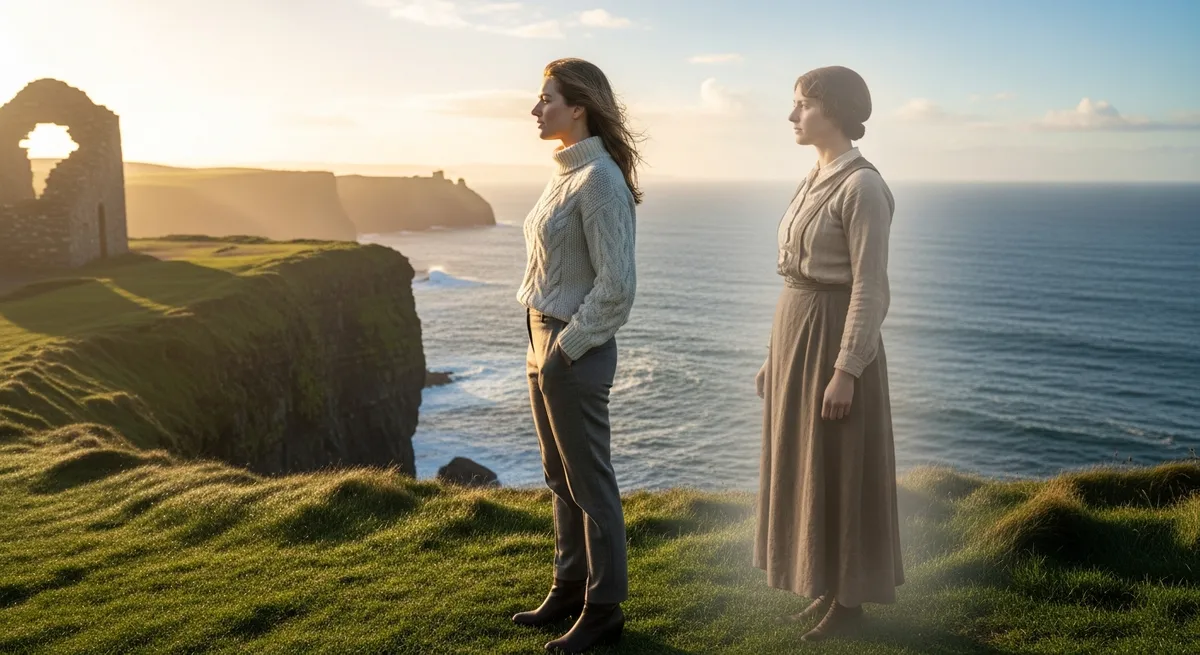
I have personally watched this play out in dozens of tiny, remote villages. I saw a woman from Ohio stand in front of a jagged stone wall in Ireland, crying because her grandmother once lived in the house that used to stand right there. (The house is a total ruin now, mostly just serving as a home for some very confused-looking sheep.) It doesn't matter that the roof is gone. The dirt is the same. The air is the same. That physical connection is something a DNA test result on a PDF can never give you. You need to feel the wind. You realize you actually need to smell the acrid peat smoke or the sharp salt air for it to feel real. It’s the difference between just reading a menu and actually eating the meal.
How the Travel Industry Is Shifting Toward Purposeful Journeys
Tourism Ireland executive Alison Metcalfe noted that post-pandemic travelers prioritize "travel with purpose," specifically seeking out familiar places where they feel a sense of safety and welcome.3 They want to feel a sense of safety and welcome. They are looking for places that feel familiar, even if they’ve never actually set foot there before. You are essentially trading the unknown for the ancestral, choosing a path that was laid out for you decades or even centuries ago. This isn't just some passing trend. It is a fundamental change in the core reason why we pack our bags in the first place. We're looking for safety in the familiar lines of our own history.
The firms that sell these trips are getting more specific. You can now hire "genealogy concierges" at high-end hotels in places like Scotland or Italy. These aren't just tour guides. They're researchers who spend their days in archives so they can hand you a folder when you check in. They show you exactly where the farm was. They might even find a distant cousin who still lives down the road. It’s a specialized service that can cost a fortune-sometimes more than what you'd spend on a decent used car-but for people looking for answers, the price tag doesn't seem to matter. They are effectively buying back a piece of their own story. And stories are expensive.
But you don't necessarily need a fancy concierge to pull this off. Most travelers still choose to do it the hard way. They handle the "boots on the ground" research entirely on their own. This usually involves sitting in drafty small-town cafes, showing grainy old photos to locals, and praying someone remembers a story. It’s slow. It is incredibly frustrating (and it drives people crazy sometimes). Sometimes, you hit a total dead end. But when it works? But when a local priest swings open a heavy church door and shows you a handwritten record of your family’s births from the 1800s? That is the exact moment that makes the entire trip worth the hassle. You feel like you've won a lottery you didn't even realize you were playing.
Dealing With the Silence of the Archives and the Paper Trail
If you’re planning one of these trips, I promise you'll eventually end up in an archive. These are never the bright, airy libraries you see in the movies. They are usually tucked away in the damp basements of municipal buildings or in the back of some crumbling old church. They always smell like damp paper and that sour old glue. You sit in a plastic chair that was probably bought back in the 1980s. You wait for a clerk who might not speak a word of English to pull a heavy ledger for you. And you wait. And you wait. The silence in these rooms is heavy. Everyone in that room is looking for something they feel they've lost. It is a room full of people trying to find their way back home through stacks of paperwork.
I remember sitting in a records office in Dublin. The guy sitting next to me was from Chicago. He had a stack of papers that was at least three inches thick. He’d been coming to that same office for four days straight. He wasn't there to see a castle or a museum. He was looking for one specific name on a ship manifest from 1847. When he finally found the name, he didn't even cheer. He just sat back and breathed. "There he is," he just whispered, like he was afraid the name might vanish again. It felt like he’d finally caught someone who had been running away for a century. That's the pull. It's the hunt. It's the need to prove that these people existed, and because they did, you do too.
Many local archives-especially in rural Europe-have never been digitized. You have to be there in person to see the books. You might arrive in a remote village only to find the church is locked or the records are written in a script you can't read. Professional genealogists often warn that DNA kits only give you a general region, not a specific street address. To find the real data, you often need to hire local experts or pre-book appointments with regional archivists who understand the local dialects and history.
The Physical Reality vs. the Digital Dream
Reality rarely matches the dream. Prepare for the fact that physical reality often clashes with the digital dream you built online. Your "ancestral home" might be a parking lot now. Or a shopping mall. Or a field of weeds. I once tracked a family address to a specific street in London, only to find a modern glass office building where the tenement used to be. It was jarring. You expect a Dickensian scene, and you get a popular coffee chain. But even then, you're standing on the spot. You realize you're breathing the same air they did. The street layout is often exactly the same as it was a hundred years ago. You can still follow the exact path they took to get to work.
There is a profound grief that comes with finding out the thriving village from your grandfather's stories is now a modernized suburb or a literal ghost town. You have to be ready for the fact that the place you are looking for might only exist in your family's memories and old letters. The emotional weight of these places is real. Research from the University of Central Florida suggests that heritage travel can lead to a deeper sense of self-actualization.4 It's a fancy way of saying you feel more like yourself when you know where you came from. You see the challenges they faced. You see the hills they climbed. You realize you come from a long line of people who survived. They survived famines, brutal wars, and long, miserable boat rides across the ocean. That realization gives you a kind of strength that is incredibly hard to find anywhere else. You're the result of their survival. Don't waste it.
Sometimes, the "reality check" gets even more personal. You might find out your ancestors weren't exactly the heroes you imagined. They might have been difficult people. They might have been poor, or in some serious trouble with the law. But that is part of the story, too. A real heritage trip doesn't just look for the royalty in the family tree. It looks for the truth. It’s about accepting the whole mess-the good, the bad, and the dusty records. You're looking for ancestors, not saints. And honestly? The messy stories are usually more interesting anyway.
Logistical Hurdles and the Red Tape Reality
It is a mistake to think that ancestry travel is only for retirees with plenty of time on their hands. Recent data from travel groups indicates that 60 percent of Millennials now prioritize authentic cultural experiences. They view heritage travel as a key part of their identity. During the recent surge in interest, memberships on leading genealogy platforms increased by about 30 percent, which means millions of people are digging into their history. You are seeing a younger generation use these trips to build a sense of belonging in a world that often feels rootless. They are looking for more than just a photo for social media; they are looking for a physical connection to their own history. They are willing to cut back in other areas of their lives to fund a trip that feels like a once-in-a-lifetime homecoming.
These trips are often longer and more complex than a standard holiday. You are staying in smaller towns, hiring specialized guides, and spending hours in dusty libraries or municipal buildings. Because you are going where your family was-not necessarily where the tourists are-you are often paying a premium for transportation and lodging in areas that aren't set up for high-volume visitors. You have to budget for the unexpected, like a car rental that costs more because of the remote terrain or a local researcher who charges by the hour to help you translate old property deeds.
Navigating the 2026 Real ID Requirements and Travel Rules
The deadline for REAL ID enforcement is set for 2026, and it will change the way you move through every airport in the country.5 You might be planning to follow the path of the Great Migration-the movement of millions of Black Americans from the rural South to Northern and Western cities-but you could find yourself stuck at the security gate without the right ID. Significant boarding issues await anyone without a compliant license or a valid passport. It is a logistical hurdle that can stop your trip before you even leave home. This deadline matters for domestic travelers who might not have a passport because they didn't think they were going "abroad." You need to check your current license today for the star in the top right corner. Waiting until the last minute is a mistake. The rush at the DMV could cause you to miss your window. Dealing with this now keeps your focus on the emotional journey instead of the paperwork.
Then there’s the cost. A full-scale heritage trip can be pricey. Between the flights, the car rentals (get the insurance, those village roads are narrow), and the professional researchers, the bill adds up fast. It’s often comparable to what you’d spend on a decent used car. But for many, this is a "once in a lifetime" expense. They save for years. They skip the yearly beach trip to fund this one big journey. And they don't regret it. You can always go to the beach next year. Your great-grandfather’s village isn't getting any younger, after all.
The Lasting Impact of Your Journey: Finding More Than Just Names
Heritage trips are a unique mix of historical digging and emotional discovery that change your perspective. If you have done the digital legwork and feel the pull, you have to move beyond the screen. But you must be ready for the physical truth to clash with your digital tree. If you hit a wall in the archives, hiring a local expert before you book your flight is a smart move. It is often the difference between closed doors and a true homecoming. This shift toward "purposeful travel" is about a deep human need to know where we started. What you find in those records might not be what you expected. But it will be yours. The data shows that this interest in our roots is not going away in 2026. For those who go, the emotional return is the most valuable thing they bring home.
Quick Takeaways
Frequently Asked Questions
How do I start planning an ancestry trip?
You should begin with a solid foundation of digital research, gathering as many specific names, dates, and locations as possible from census records and immigration documents. Once you have a specific town or parish, contact local historical societies or archives in that region to see if they have non-digitized records that match your family history before you book your flight. Dig into your paperwork at home first. Using leading genealogy platforms helps you find specific towns and names before you look abroad. Don't just fly to Ireland and hope for the best. You need a map.
Are heritage trips more expensive than regular vacations?
They can be. You aren't just paying for a hotel and food; you're often paying for researchers, archive fees, and specialized tours. Plus, these trips often take you to rural areas where car rentals are necessary. Expect to spend a bit more than a standard tourist trip, but remember that you're buying a unique experience that can't be replicated. It is an investment in your own history.
What if I find out my family history is different than I thought?
That happens more often than you'd think. DNA testing and deep archival research can uncover "non-paternal events" or hidden stories. My advice? Embrace it. The truth is always more powerful than the legend. These trips are about discovery, not just confirmation. If your history takes a turn you didn't expect, follow it. That is where the real story lives.
Do I need to hire a professional genealogist?
While not strictly required, a professional can help you handle language barriers and local archival systems that are often confusing for outsiders. If your family comes from a region with complex record-keeping or a different primary language, a local expert can save you days of frustration and ensure you actually find the homestead or records you are looking for. More than half of the serious researchers I've met handle the broad work themselves and then hire a pro for a few days of deep diving once they arrive. It is a good middle ground.
What is the biggest mistake people make on these trips?
The most common error is assuming that the town will look exactly like the stories passed down through your family or that every record will be available online. Many travelers arrive under-prepared for the physical reality of modern Europe or the Americas and find that they cannot access the very documents they traveled thousands of miles to see.
References
Disclaimer: