I sat at my heavy mahogany desk last Tuesday, nursing a cup of coffee that had cooled enough to grow its own miniature ecosystem, when I opened my traffic reports and felt my internal organs drop into my shoes. One specific article I wrote three years ago, which I used to consider my pride and joy, looked like a mountain range that had suddenly decided to become a flat, boring plain. (I harbored the delusion that I was an evergreen genius of the written word; I was, in actual fact, a complete and utter blockhead.) The search rankings for my most valuable work were plummeting with more speed than my dignity at a high school reunion. It is a sobering moment when you realize that your digital assets are not like fine wine; they are more like bags of baby spinach forgotten in the back of the refrigerator. (You are familiar with the phenomenon; the greens transform into a tragic, emerald puddle if you neglect them for a mere seven days.) This decay is not just an aesthetic problem; it is a financial hemorrhaging that most creators ignore until the patient is already cold.
🔴 The Staggering Financial Toll of Professional Lethargy
Breathing life into your antiquated material is not a mere suggestion for the bored. It is a vital act of maintenance that prevents your intellectual property from becoming a digital fossil. I once left a guide about digital privacy unedited for eighteen months and lost forty percent of my monthly revenue before I noticed the leak. (I am still haunted by this oversight, and my accountant, a remarkably austere woman named Martha, continues to mention it with a judgmental sniff during our annual reviews.) It was a staggering failure of oversight that cost me more than a few sleepless nights. When a user clicks your link and sees a broken image or a link to a defunct website, they bounce back to the search results faster than a rubber ball. This sends a loud, clear signal to the search engines that your content is no longer relevant. You are being pushed down the rankings not because your writing is poor, but because your facts have expired. It is also worth noting that the technical standards for what makes a good webpage are constantly shifting. What was considered a fast loading time in 2019 is now considered a glacial pace that would frustrate a monk. (I once waited ten seconds for a page to load and felt like I had aged a decade.) If you are not looking at your old content through the lens of modern performance, you are fighting a losing battle. The search engines want to provide a seamless experience, and your dusty, slow, outdated posts are an obstacle to that goal. You cannot simply hope for the best while your traffic numbers look like a sinking ship. You must take control of the situation before the damage becomes irreversible.
🤔 Identifying Your Zombie Pages Before They Feast on Your Traffic
Before you start hacking away at your keyboard, you need a plan that does not involve blind guessing. I spent years randomly updating paragraphs whenever I felt guilty, which is a strategy that is about as effective as trying to empty the ocean with a tiny teaspoon. You must begin with a thorough audit of your existing assets to identify which pages are actually worth saving. Not every piece of content deserves a second life. You must focus your energy on the "Zombie Pages" first. These specific articles are the ones that boast a high number of impressions but practically zero clicks. (They are the digital equivalent of people staring at a restaurant menu but never walking through the door.) According to the Pew Research Center, roughly a quarter of Americans say they are online "almost constantly," which means the competition for their fleeting attention is brutal.I This usually means your title or meta description is no longer enticing, or perhaps you are ranking for the wrong keywords entirely. It is not glamorous work, and it usually requires a large glass of wine to get through the boredom, but it is the only way to see the big picture. You are looking for the "Low Hanging Fruit" - pages that are sitting on the second page of search results and only need a small nudge to reach the top. Once you have your list, you must decide on the level of intervention required. Some pages only need a "Face Lift," which involves updating a few dates and checking for broken links. Other pages require "Reconstructive Surgery," which means rewriting entire sections to include new data or better examples. (I have had to perform this surgery on my own work many times, and it always hurts my ego to see how much I have improved since the original draft.) You must be honest with yourself about the quality of the work. If the writing is embarrassing, do not try to fix it; just start over. The goal is to create something that is genuinely better than anything else currently available on the topic. If you are not aiming for excellence, you are just wasting your time and mine.
Key Takeaways
⏱️ The Precise Surgical Strike of Content Restoration
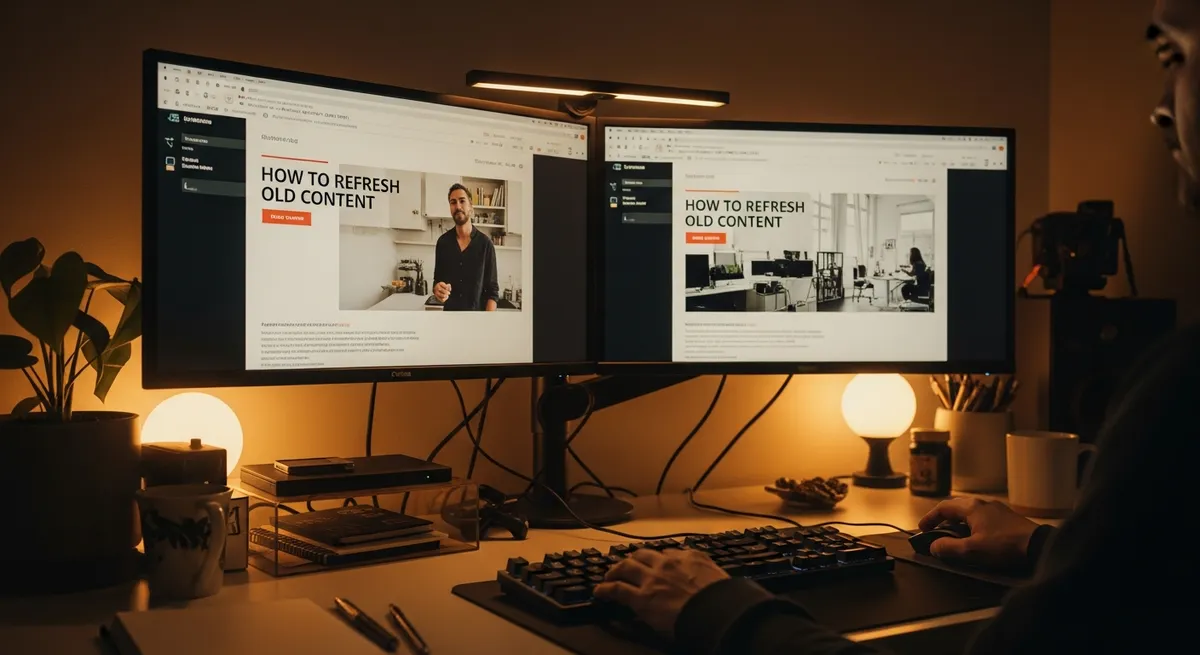
Now we reach the part where you actually do the work, and I suggest you do it with the precision of a surgeon rather than the chaos of a toddler. The first step is to update your primary heading and your opening paragraph. You want to signal to both readers and search engines that this content has been revitalized for the current year. But do not just change the date in the title and call it a day; that is a deceptive practice that will eventually get you in trouble. This might mean adding a new section that addresses a recent development in your industry or including a fresh quote from a reputable institution like the U.S. Census Bureau.II (I once cited a 2012 census report as if it were a shocking new revelation, and my neighbor Bob, who is a retired history teacher, laughed at me for a week.) Next, you must address the visual and technical elements of the page. Replace those grainy, low-resolution images that look like they were taken with a damp root vegetable. (I once used a photo that was so blurry a reader asked if I needed glasses.) Ensure that your internal links are pointing to your newer, more relevant articles. This creates a web of connectivity that helps search engines understand the structure of your site. If you are linking to a website that no longer exists, you are leading your readers into a dead end. I make it a point to find at least two new, high-authority sources to cite in every refresh. This adds weight to your arguments and shows that you are keeping up with the latest research. Finally, you need to think about the user experience. Break up those long, intimidating walls of text with subheadings and bullet points. (People do not read on the internet; they skim until they find something that looks interesting.) Use bold text to highlight key points, but do not overdo it or your page will look like a ransom note. Once you have finished the edits, you must ask the search engines to crawl the page again. This is like ringing the dinner bell and telling them that a fresh meal is ready.
Pro Tip
Do not merely swap a few adjectives and assume the task is complete. You must provide at least three hundred words of entirely new, valuable insight. The algorithms can easily distinguish between a genuine improvement and a lazy person moving the furniture around to pretend they have been cleaning. (My former editor, Susan, used to offer the same critique regarding my early manuscripts.)
🟢 The Final Word on Your Digital Estate
Maintaining a website is a lot like owning a house; if you do not fix the leaks and paint the walls, eventually the whole thing is going to fall down around your ears. I have spent twenty years in this industry, and I have made every mistake in the book, from deleting pages that were actually making money to ignoring a traffic collapse because I was too busy starting a new project. (I am not proud of it, but at least I am honest.) The most successful people I know are not the ones who write the most; they are the ones who take the best care of what they have already written. My friend Gary - who manages a thriving fitness empire and possesses more manic energy than a dozen caffeinated squirrels - reminded me that ignoring your archives is like burning money in your own backyard. He was right. According to a 2019 report from the National Center for Education Statistics, adult literacy and comprehension are shaped by how clearly information is presented.III Treat your archives with respect, and they will reward you with consistent, high-quality traffic for years to come. Now, if you will excuse me, I have a three-year-old article about office ergonomics that is currently screaming for my attention. It is time to get to work.
💡 Frequently Asked Questions
How often should I review my old articles for updates?
You should ideally perform a content audit at least once every six months to catch any significant traffic drops. This allows you to stay ahead of the decay curve and ensure your most valuable pages remain competitive. If you wait longer than a year, the amount of work required to fix a page often doubles. (I have ignored this rule before, and I ended up spending my entire summer vacation in a dark room fixing broken links while everyone else was at the beach.)
Is it better to update an old post or just write a brand new one?
It is almost always more efficient to revitalize a page that already has a history and existing connections from other websites. You are building on an existing foundation rather than starting from scratch. (Deleting a page with existing backlinks is like burning money in your backyard.) However, if the topic is completely different or the original quality is beyond saving, a fresh start might be necessary.
Should I change the original URL when I refresh a page?
You should absolutely avoid changing the URL unless it is an emergency or contains an old date like "best-tips-2015." (Changing URLs is a great way to break your site and make your hair turn gray prematurely.) If you must change it, ensure you set up a proper 301 redirect to pass the authority to the new address. Keeping the original URL preserves the strength of any external links you have earned over the years.
How much new content do I need to add to see a difference?
There is no magic number, but I aim to add at least 300 to 500 words of fresh material to any substantial update. (Adding a single sentence and a new photo is not enough to fool the search engines or help your readers.) Quality always beats quantity, but a visible increase in thoroughness is a strong signal for rankings recovery. (Think of it as adding a new room to a house rather than just buying a new rug.)
What is the most common mistake people make when refreshing content?
The most frequent error is changing the "published date" without making any actual improvements to the text. You must ensure that the content is actually better and more accurate than the previous version. Authenticity is the only long-term strategy that works in a digital market that is increasingly obsessed with shortcuts and low-effort hacks. (If you try to cheat the system, the system will eventually find a way to punish you.)
References
Disclaimer: This article provides general information regarding search engine optimization and digital content management for educational purposes. It does not constitute professional technical or marketing advice. Search engine rankings are subject to complex algorithms and market competition that are beyond the control of any individual. Always consult with a qualified digital strategist before making substantial changes to your website structure or business strategy.