I was sitting in a mahogany-paneled boardroom last Tuesday, observing a project manager named Sheila who was vibrating with a frequency so high that I expected her molars to reach critical mass and detonate. (I suspect she was drinking her fourth double espresso, but I cannot prove it in a court of law.) She gripped a printed spreadsheet as if it were the secret blueprint for a clandestine moon base, while her left eye pulsed in a rhythm that I am fairly certain was a frantic Morse code plea for a stiff drink. We are all Sheila now. We are currently existing at a level of agitation that simply does not work for a creature meant to gather berries and hide from rain. It is messy. It is loud. It is exhausting. (I am writing this while my own jaw is clenched tight enough to crack a walnut, so please understand that I am a fellow traveler in this disaster.)
The High Cost of Being a Human Pressure Cooker
Stress is a bureaucratic nightmare that we have collectively accepted as a standard operating procedure. The Occupational Safety and Health Administration (OSHA) notes that workplace stress is a financial sinkhole that costs American corporations billions of dollars every year in lost output and medical bills. (That is billions with a capital B, which is a number I usually reserve for national debts and the ego of my second husband.) It leads to lost productivity. It leads to massive healthcare expenses. My neighbor Bob ended up in the local urgent care center with chest pains exactly three weeks later. He was convinced he was having a heart attack. It was actually just the physical manifestation of a very angry electronic message from a client in New Jersey. Stress is not a badge of honor. It is a slow-motion train wreck for your nervous system. (Bob is fine now, but he still hides under his desk when his phone chimes.)
The core of the problem is that our internal hardware is still calibrated for life on the savannah rather than for constant digital pings. When your supervisor sends an electronic message that only says "Do you have a moment?" your lizard brain acts as if a large predator is currently sizing up your jugular. (This is a physiological overreaction of the highest order, but my heart refuses to listen to reason.) Your stress hormones surge, your blood pressure spikes, and suddenly you lack the mental capacity to decide between turkey or ham for lunch, let alone manage a complex budget. We are living in a state of constant, low-grade panic that we have rebranded as hustle culture. I have spent years trying to outrun this feeling by working harder, which is like trying to put out a bonfire with a canister of premium gasoline. It does not work. We are not designed to be active for sixteen hours a day, yet we carry our offices in our pockets like electronic leashes. I once dropped my expensive smartphone in a bowl of lukewarm tomato soup and felt a momentary flash of pure, unadulterated joy before the panic set in regarding my missed calendar invites. (It was the most peaceful ten seconds of my fiscal year.)
According to the National Institute for Occupational Safety and Health (NIOSH), workplace stress is linked to a higher risk of cardiovascular disease and musculoskeletal disorders. (My own back currently feels like it was assembled by a disgruntled furniture contractor.) This is not a minor inconvenience. It is a biological mutiny. When we ignore the signals our bodies are screaming at us, we are essentially asking for a system failure. I remember a specific Tuesday at my old marketing firm where I spent three hours staring at a blinking cursor because my brain had effectively checked out of the building. I was physically present, but mentally I was a puddle of grey sludge. That is what chronic stress does. It robs you of your competence and leaves you with nothing but a twitchy eye and a caffeine habit. (And let us be honest, the caffeine does not even work anymore.)
This Is Where Mindful Meditation Enters the Room
This is the exact moment where mindful meditation walks into the room, typically wearing sensible footwear and appearing annoyingly tranquil. I used to loathe the very idea of it. I thought it was exclusively for people who owned too many crystals and did not have thirty-year mortgages. (I was wrong, which is a sentence I do not enjoy typing, even with my expensive fountain pen.) The National Center for Complementary and Integrative Health (NCCIH) has funded numerous studies showing that mindfulness can actually change the physical structure of your brain, which is a feat that even my most expensive espresso machine cannot accomplish. It works. The data is stubborn. It is not magic. It is just training your brain to stop screaming at shadows. (Shadows that usually look like an unread inbox.)
My friend Gary is a corporate lawyer who bills four hundred dollars an hour to be miserable. He recently started practicing mindfulness because his physician told him his heart was beating like a frantic drum solo. Gary was skeptical. He was profoundly skeptical. (He actually asked me if he had to start wearing velvet robes, which I assured him was entirely optional.) After three weeks of sitting quietly for ten minutes every morning, he told me that he no longer wants to bite his own mailbox when he returns home after a long day. That is progress. The NCCIH research suggests that regular practice can actually change how the brain processes emotions. It makes you less reactive. You become the person who stays cool while the building is metaphorically on fire. I want to be that person. I am tired of being the fire. (Being the fire is very hard on the upholstery.)
It is important to remember that you will not be good at this at first. You will feel bored. You will feel like you are wasting your precious time. (I felt all of those things, plus a sudden and intense desire to organize my sock drawer by color and fabric weight.) Eventually, you will notice that the things that used to make you vibrate with rage - the traffic, the emails, the Sheilas of the world - simply do not have the same power over you. You will still be in the storm, but you will have a much sturdier umbrella. Researchers at Harvard University discovered that mindfulness practice can increase gray matter density in the hippocampus, which is the part of the brain involved in learning and memory. (I could certainly use more gray matter, considering I still cannot remember where I put my car keys half the time.) At the same time, it decreases gray matter in the amygdala, which is the part of the brain responsible for fear and stress. It is like upgrading your brain from a temperamental dial-up connection to high-speed fiber optics. You still receive the same data, but you can process it without the spinning wheel of death appearing in your field of vision.
Pros and Cons
Pros:Lower blood pressure without expensive pills.A brain that does not scream at inanimate objects.Increased gray matter density in the hippocampus.
Cons:You have to sit with your own thoughts (terrifying).It is incredibly boring for the first week.Your coworkers might think you have joined a cult.
How to Actually Start Without Feeling Like a Total Fraud
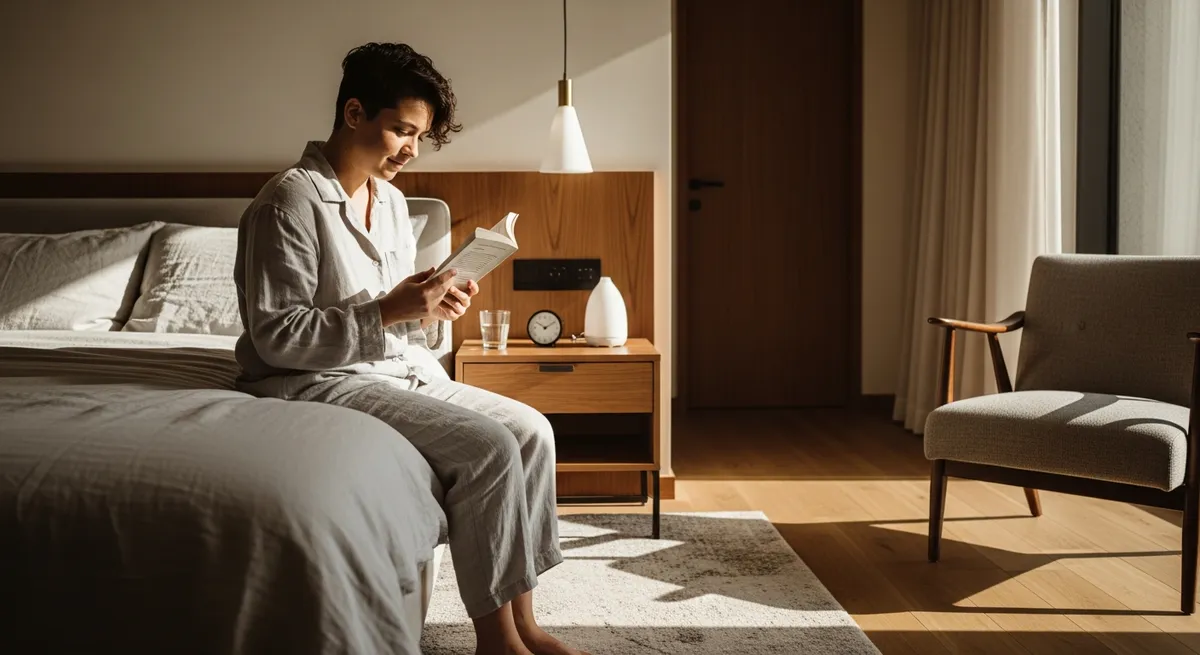
You do not need a mountain. You do not need a robe. You just need a chair and a few minutes where nobody is asking you for a status update. All you need to do is sit in a chair. The kind of chair you are probably sitting in right now while you ignore your mounting list of tasks. (I find that locking myself in the bathroom is the only way to achieve this at my house, although the cat usually tries to paw under the door.) Set a timer for five minutes. Five minutes is less time than you spend scrolling through your feed looking for a decent show on a streaming service, so do not tell me you are too busy. Close your eyes and just breathe. That is the whole thing. It is embarrassingly simple, which is probably why we find it so difficult to actually do. (Humans love to overcomplicate things; it makes us feel important.)
When you start, your brain will immediately try to sabotage you. It will remind you that you forgot to buy almond milk. It will replay a conversation from 2014 where you said something awkward to a person whose name you cannot remember. (Your brain is a noisy neighbor that refuses to move out.) The goal of mindful meditation is not to stop these thoughts, but to notice them and then return your attention to your breath. You do this over and over again. Every time you bring your focus back, you are getting stronger. You are training yourself to be the boss of your own attention, rather than a slave to every random impulse that floats through your skull. I recommend doing this in the morning before the world has a chance to punch you in the face. If it can work for Gary, it can certainly work for you. Just sit down, shut up, and breathe. It is the most productive thing you will do all day. (And it is much cheaper than a trip to the urgent care clinic.)
We are living through a grand experiment in human endurance, and frankly, we are not winning. The modern professional environment is a pressure cooker that expects us to be constant, consistent, and caffeinated at all times. But we are biological entities, not software programs. We require a way to step back from the edge of the abyss before we fall in. Mindfulness is not a luxury or a hobby for the idle rich; it is a survival skill for the rest of us who are just trying to get through the week without losing our minds. Do not wait for your body to stage a coup before you take this seriously. Sit in your chair for five minutes and just be a person instead of a productivity machine. Your brain will thank you, your blood pressure will thank you, and your coworkers will probably appreciate the fact that you have stopped twitching during video conferences. It is a small price to pay for your sanity. (And quite frankly, it is much cheaper than professional therapy.)
Frequently Asked Questions
Do I have to clear my mind completely to be successful?Success in mindfulness is not about achieving a blank slate in your head, as that is a feat usually reserved for statues and certain types of tropical fish. The point is to notice when your mind wanders and gently bring it back to your breath without judging yourself for being a human being. If your mind wanders a thousand times, you simply bring it back a thousand times. That is the practice. (It is like training a puppy that has no interest in following your instructions.)
How long does it take to see results from meditation?Many people report feeling a sense of relative calm after just one session, but the structural changes in the brain typically require more consistency. Research from institutions like the National Institutes of Health suggests that eight weeks of daily practice can lead to significant improvements in emotional regulation. Think of it like going to the gym for your mind; you will not get six-pack abdominal muscles in a day, but you will feel the difference in how you carry yourself almost immediately.
Can I meditate while I am sitting at my desk?You can absolutely practice mindfulness at your desk, provided you are not currently in the middle of a high-stakes video call where people expect you to look busy. Simply plant your feet on the floor, rest your hands on your lap, and focus on the physical sensation of your breath for a few minutes. It is a discreet way to reset your nervous system without alerting your colleagues to the fact that you are engaging in self-care. (They will just think you are deep in thought about a spreadsheet.)
Is mindful meditation a religious practice?Mindful meditation has roots in various ancient traditions, but the secular version practiced in professional settings today is focused entirely on psychological and physiological health. You do not need to adopt any specific belief system or change your worldview to benefit from the reduced stress and improved focus it provides. It is a tool for mental hygiene, much like brushing your teeth is a tool for dental hygiene. (Though it involves much less peppermint.)
What if I am too restless to sit still for five minutes?Restlessness is actually one of the best reasons to meditate, as it indicates that your nervous system is stuck in a high-arousal state. If five minutes feels like an eternity, start with two minutes or even sixty seconds. The duration is less important than the act of stopping and observing your internal state. Even the most frantic professional can manage sixty seconds of breathing. (I promise the world will not end in those sixty seconds, even if your inbox suggests otherwise.)
References:Information regarding the costs and physical impacts of stress was sourced from the National Institute for Occupational Safety and Health (NIOSH) and the Occupational Safety and Health Administration (OSHA). Data on the efficacy of meditation for anxiety and brain structure changes was provided by the National Center for Complementary and Integrative Health (NCCIH) and studies conducted at Harvard University regarding gray matter density in the hippocampus and amygdala.
Disclaimer: This article is for informational purposes only and does not constitute professional medical or mental health advice. Stress can have serious health implications. Always consult with a physician or a mental health professional before starting a new wellness routine or if you are experiencing physical symptoms of stress.