Last October, I stood next to a senior buyer for a big department store while he stared at a pair of pants shaped exactly like parentheses. We were in a dark Paris showroom, which is the kind of spot where the coffee is bitter and the talk is even sharper. He held the hanger out, squinting at that weird, bowed curve on the side. "Nobody will wear these," he said, tossing them back with a quick flick of his wrist (he was wrong, of course). "They look like a cartoon," he added. I checked the sales data for his region three months later. Those exact barrel leg pants were his top-selling item, outmoving every slim-cut chino in the building by a factor of three to one. He wasn't just off; he was dead wrong. The retail world is seeing a complete takeover of this silhouette.
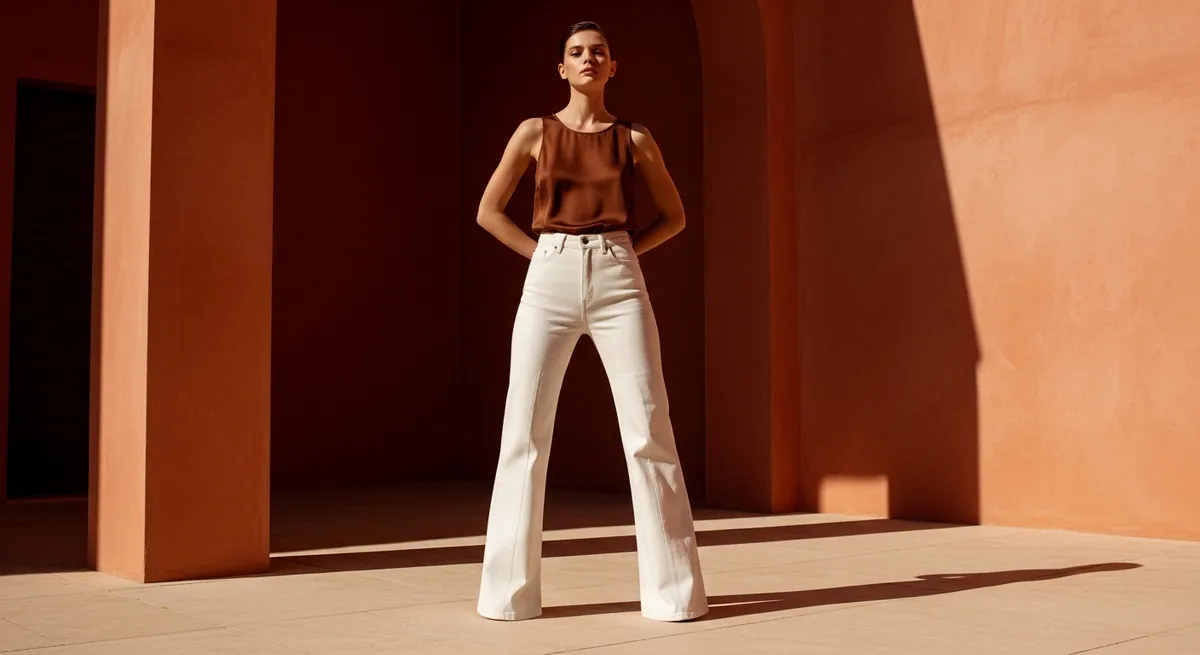
We are witnessing one of those rare instances where an architectural runway concept successfully breaks into the mass-market consciousness, finally ending the ten-year dominance of the skinny jean. It's a big shift where your comfort and the look of the clothes finally beat that old need to look as thin as you can. My research into consumer data suggests this shape signals a period where comfort and structural interest finally beat the old goal of trying to look as thin as you can. If you still reach for tight chinos every morning, you are likely missing the most significant shift in the apparel industry since wide-leg trousers returned to the scene. This isn't just a fad. It's a real fix for your closet. Your phone screen is flat, but your pants shouldn't be. Let's look at why this "horseshoe" shape is winning the war for your closet.
The Global Fashion Index and the Death of the Luxury Gatekeeper
The numbers tell a story that most fashion critics would rather ignore. A prominent industry index for Q3 2025 showed a top luxury house in the sixth spot, while a high-street minimalist retailer joined the hot products list with an oversized cashmere sweater1, 4. For the first time, a mass-market player has unseated traditional luxury giants in that specific ranking, a move driven almost entirely by the feverish demand for their version of the curved leg.
I pulled the data last month and the numbers are not encouraging for the old guard. When a brand like the high-end sibling of a fast-fashion giant starts dictating the global "hottest products" list, the power dynamic has shifted. You used to wait for Milan to tell you what was cool. Now, you're looking at what's actually selling in London and New York. The barrel leg pants phenomenon is the tip of the spear. High-end designers might have the prestige, but the mass market has the volume. And right now, the volume is screaming for volume.
So, why does this matter for you? It means the stuff you see on the street isn't just a weak copy of a runway show from six months back. They are the real show. The space between high fashion and what you wear to buy milk is gone. When you go to a shop now, you aren't just buying pants; you're buying a shape. You're buying into a global data trend that says the human leg doesn't need to look like a pencil anymore.
Global Fashion Groups and the 165 Billion Yen Question
Look at Japan if you want to see where the cash is going. Revenue for a global apparel conglomerate hit 165.8 billion yen in early 2025, and they noted this specific leg shape was the main reason for their success2, 5. Just think about that. That is a ton of money for just one design tweak. Beyond the design win, this represents a logistical triumph for the factories involved.
Manufacturing a pair of pants with such a specific, non-linear seam is much harder than building a basic straight leg. I've talked to factory managers who hate these things. A standard straight leg is easy to cut and easy to sew. Building a pant with such a specific, non-linear seam requires much more complex manufacturing than a standard straight leg. It uses more fabric. It requires more precise stitching. But the market wants them so bad that brands pay more to make them and keep them on the shelves.
You might find the shape slightly jarring at first. I get that. For fifteen years, we were told that slim was the only way to go. But the 165.8 billion yen figure suggests a massive segment of the population disagrees. They're tired of fabric clinging to their calves. They want air. They want structure. They want to sit down without feeling like their circulation is being cut off by a denim tourniquet.
The Physics of Raw Denim vs. Softer Blends
Not all barrel legs are created equal, and this is where most people mess up. Stiff, heavy raw denim holds the barrel shape more aggressively, which can easily overwhelm a smaller frame. I've seen guys look like they were in actual barrels because they picked 14-ounce denim with a huge 32-inch leg. It's just too much fabric. It looks like a costume, not a real outfit.
For those who want the look without all the bulk, I suggest looking for jersey or lightweight cotton blends. This is the essential recommendation for anyone transitioning out of 90s minimalism. A senior editor at a leading lifestyle publication suggests these soft versions are the best way to move away from 90s styles into new looks3, 7. They drape. They move. They won't stand up in the corner of your room like a pair of ghost pants.
Just view it as a tool. If you're tall and thin, heavy denim adds a look that makes you seem more solid. If you're short or athletic, soft fabric stops that horseshoe shape from making you look too wide. You need to match the fabric weight to what you're doing that day. You wouldn't wear a tuxedo to a backyard barbecue, and you shouldn't wear structural raw denim barrel legs if you're just trying to survive a three-hour flight in economy class.
The Footwear Pitfall: Avoiding the Clown Shoe Effect
This is the part where most men fail. They buy the pants, they love the fit, and then they ruin everything with the wrong shoes. Since the ankle is so tapered, wearing a bulky sneaker can create a clown shoe effect that ruins the proportions. The pant bows out, then cinches in, and then, BAM, you have a giant, puffy basketball shoe sticking out the bottom. It looks ridiculous. It's a visual disaster.
Current data from menswear influencers suggests that low-profile loafers or slim boots are the preferred pairing for this cut. You want something that continues the taper rather than fighting against it. This combination creates a clean line that lets the architectural curve of the pant take center stage. I've seen it work with a slim Chelsea boot, or even a very basic canvas sneaker. But if you wear chunky "dad shoes," the whole look falls apart. You lose the sharp look and just look like your clothes are too big.
Your shoes are the dot at the end of the sentence. If the point is "I'm wearing cool pants," that dot shouldn't be a neon sneaker. It should be something quiet. Something that lets the pants do the talking. I've spent years watching people over-complicate their footwear, but with the barrel leg, the rule is simple: stay low, stay slim, and let the curve be the star of the show.
Why Comfort and Style Are Winning in 2026
We live in a world that is over the skinny look. That old goal of "looking slim" was always a bit of a trick, right? It acted like the only reason to dress was to hide how bodies actually look. But by 2026, the goals have changed. We want clothes that feel like they have a job. We want structural interest. We want people to see the shape of the pants, not just the shape of our legs. It's a subtle change, but it's enough to make a basic t-shirt and jeans combo feel like a high-fashion choice.
This shift isn't just happening in fashion. It's happening with sofas, cars, and popular electronics too. In a world of flat screens and two-dimensional social media feeds, clothes with a strong three-dimensional presence pop much more effectively. This helps explain why you see so many influencers churning out content about these pants; they offer visual interest from every angle.
But some community voices warn that this can lead to a distorted view of how these clothes actually move in the real world. In a world of fake filters, that horseshoe shape feels more human and messy. It's weird. It doesn't follow the straight lines of a spreadsheet. A perfect horseshoe in a still photo can sometimes look like a diaper fit when you are actually walking down the street. When you wear them, you care more about the look of your outfit than what the person next to you thinks. That's a strong place to be.
How to Change Your Closet Without Going Crazy
A persistent myth exists that aggressive fashion trends are only for the under-30 crowd. A well-known stylist and founder of a style community for mature women argues that these curved trousers actually redefine basic wardrobe items for women over 608. You don't have to toss every pair of pants you own. That would be pricey and, quite frankly, nuts. Wearing a long, baggy sweater over a pair of barrel pants causes you to lose all the structural benefit and just look like you're wearing clothes that are two sizes too big.
Using a French tuck or a slim-fitting turtleneck provides the balance needed to make the volume look like a choice rather than an accident. The biggest block is your own mind. You were taught that more fabric looks messy. It's not. It's intentional. When you see barrel leg pants styled correctly, they look more professional than a pair of tight chinos ever did. The goal is to create a deliberate silhouette that shows you know exactly what you are doing with your proportions.
I'm looking at the 2026 trends now, and that curve is staying. Ultimately, the barrel leg pant is a tool for self-expression. Like any tool, it works best when you understand the mechanics of the fit. It isn't a magic pant that will make everyone look like a supermodel, but it is a versatile piece that updates almost any wardrobe. If you can get past the initial "insane" feeling of the extra volume, you might find that it becomes the most effortless staple in your rotation. The numbers don't lie; the world is moving toward the barrel shape, and it will likely stay for years.
Quick Takeaways
The Bottom Line
If you are looking to update your wardrobe in 2026, the barrel leg pant is the most logical investment you can make. It represents a rare moment where a high-fashion architectural concept has been successfully translated for the mass market without losing its edge. Whether you choose a designer version from a sell-out collaboration or a more accessible pair from a high-street giant, you are participating in a global shift toward structural interest over simple flattery. Always keep in mind that you remain in control of your own silhouette. Don't be afraid of the volume. If the horseshoe curve feels too extreme, start with a softer fabric or a cropped length. Your next step is to find a pair that hits your ankle at the right spot and start experimenting with the proportions of your favorite tops. The "wooden cask" look might just be the most sophisticated thing in your closet.
Do barrel legs work for short people?
Yes, but you must watch the length. If they bunch up at your shoes, you'll look shorter. The trick is letting them hit your ankle bone. This shows a gap between the pant and shoe, so you stay tall while keeping that bowed shape.
Can I wear these to the office?
Absolutely. Menswear arrivals for this silhouette grew by 243% in 2025, with designers focusing on utilitarian, bare bones designs that emphasize a strong, masculine frame6. When paired with boots or clean loafers, the barrel leg offers a modern, polished look that is more interesting than a standard chino. The key is the tuck and the taper. Ensure your pants are cropped to show the ankle, which is the narrowest part of your leg. By tucking in your shirt to define your natural waistline, you prevent the volume of the pants from dragging your entire silhouette downward.
What's the difference between barrel and wide legs?
It's all about the taper. Wide legs stay wide from your hip to the floor. Barrel legs bow out at the knee but pull back in at the ankle. This creates a sharp look that doesn't just look like your pants are too big.
References
Disclaimer: The information provided in this article is for educational and informational purposes only and does not constitute professional fashion, financial, or retail advice. While our research team has made every effort to ensure the accuracy of the data cited from industry reports and financial statements, market trends and retail performance can change rapidly. Readers should conduct their own research or consult with professional stylists before making significant wardrobe or investment decisions. No specific brand endorsements are intended, and all trademarked names remain the property of their respective owners.